The Only Four Types Of Podcasts Worth Your Time For Language Learning
by Olly Richards
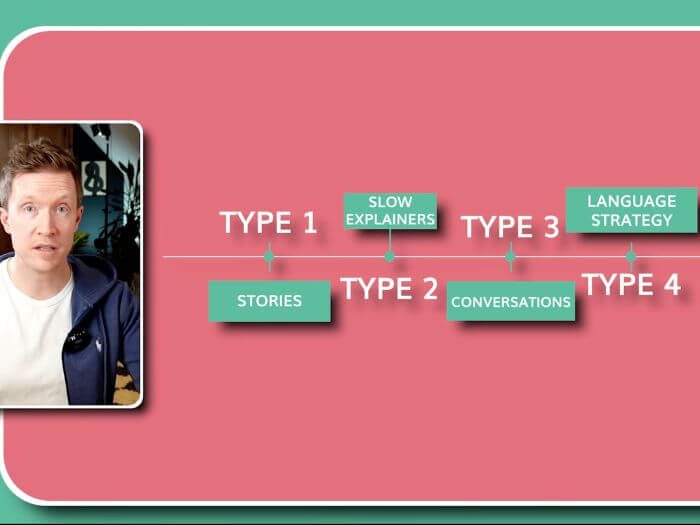
There are more than 4.5 million podcasts out there, but if you're figuring out how to use podcasts for language learning, only four specific types are actually worth your time. The rest? You can skip them.
I learned this the hard way. I spent years listening to podcasts, trying to learn the eight languages I've learned, and most of that time was wasted.
Not because podcasts don't work – they most certainly do – but because the wrong ones make listening much harder than it needs to be and actually work against you.
Once I figured out which four types of podcasts actually help you learn fast, my language learning got a lot better. And I'm going to share them with you.
Pro Tip
By the way, if you’re serious about improving your language skills, online language courses for fluency can make a huge difference.
I'm offering top-rated online language courses for beginners to advanced learners, covering Mandarin, Spanish, French, Italian, German, Japanese and more.
If you prefer watching videos to reading, hit play on the video version of this post at the top of this page. Otherwise, here's what you'll discover in this post:
Table of Contents
Why Do Most People Choose The Wrong Podcasts?
If you've ever chosen a podcast because it looked fascinating but ended up losing the thread after five seconds, that's exactly the problem. It's not a story you can follow. It's someone explaining difficult concepts fast, all at once.
And when you're a beginner, it doesn't matter how clever you are – you won't understand a podcast about black holes and super colliders. It's just not going to happen.
This is where a lot of people get listening wrong right from the start. They pick something that sounds super cool. Maybe it's even something they're interested in, which normally is good, but it's so hard that they're lost by the second sentence.
The experience is a bit soul-destroying, really. You can't understand a thing. You start blaming yourself. And now podcasts are working against you.
What you want to do instead is start with something that is both interesting and accessible – something that feels good from the start.
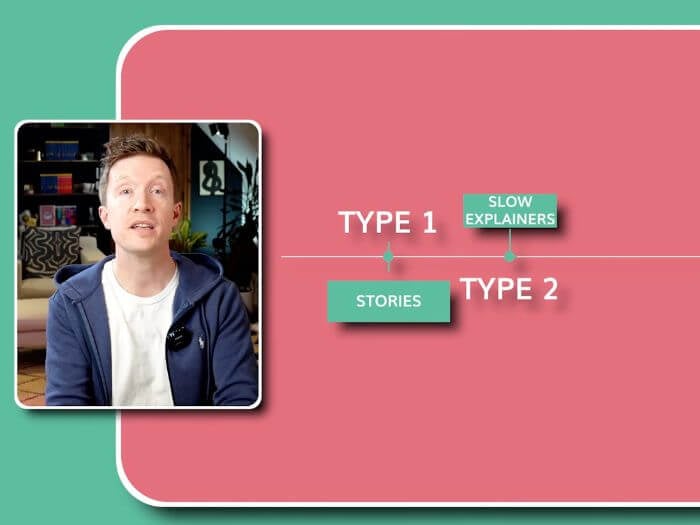
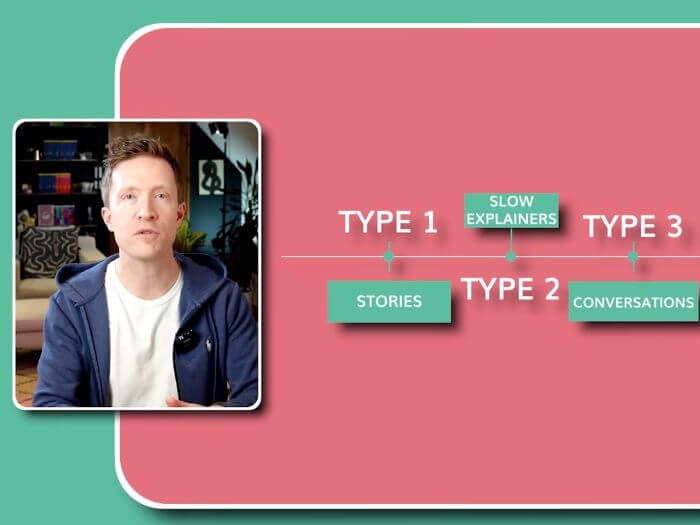
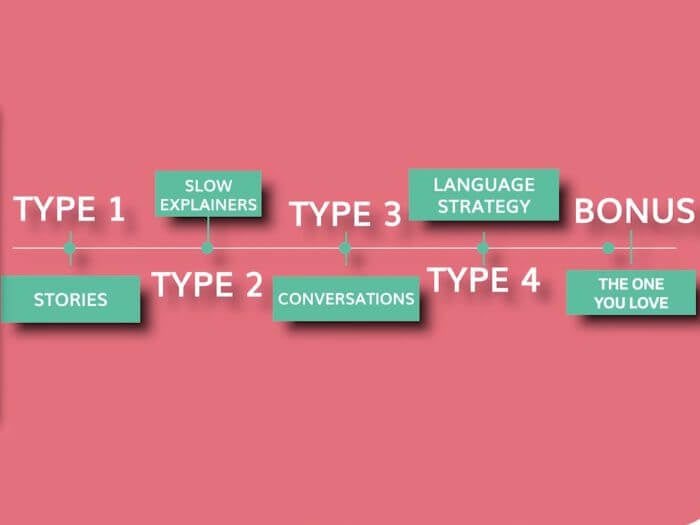
Type 1: Story-Driven Podcasts
Story podcasts are the easiest wins of all when you're learning how to use podcasts for language learning, because they're not information dumps like so many specialist podcasts are.
Stories are designed to take you on a journey, which naturally supports your understanding. There's a person, a situation, a bit of tension or curiosity. The story builds naturally from one moment to the next.
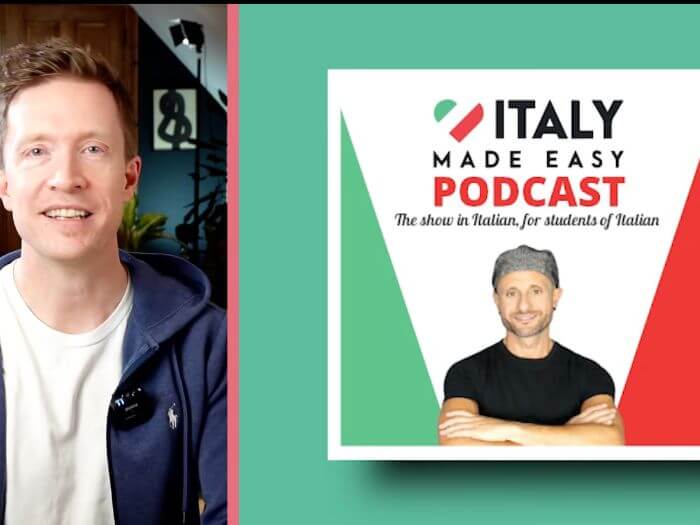
There's one I really like in Italian, for example – a guy called Manu telling stories about his life in Italy, like a road trip he took down the coast as a teenager. It's full-on escape-to-Italy vibes.
And the key thing is it's real Italian, but he speaks so clearly that I can actually follow what's happening as a learner. That's the difference that stories make.
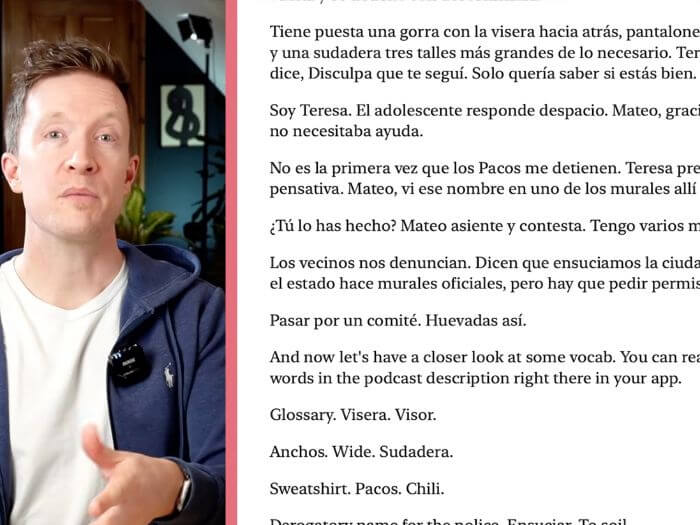
Stories can be about anything, really. True crime, history and short fiction all work brilliantly. The StoryLearning Spanish podcast, for instance, uses stories set somewhere in Spain or Latin America.
When you get hooked on the plot, the language just kind of sneaks in alongside. And early on, that's exactly what you want.
It's not a language lesson.
It's not an information dump.
It's just the language in your ear – the rhythm, the sounds, the flow – something accessible that you can actually get to grips with.
Stories also naturally repeat language. You hear the same ideas said in lots of different ways, and your brain can start picking up the patterns. More and more these days, podcasts also come with free transcripts, so you can read along as you listen, which is obviously super helpful.
Type 2: Slow, Explained Podcasts Build Deeper Understanding
Story podcasts are great when you just want to listen and not stress about understanding every word, but at some point you start craving a bit more than that.
Let's say you're learning French and you overhear French people chatting somewhere, or you click on a video, and while it's playing you're thinking to yourself, “Yeah, I'm following this. I got this.”
Then if someone asked you what they were actually talking about – the idea behind it, the nuance – you'd be a bit stuck. Ever had that happen? Yeah, me too. And you'd definitely struggle to explain it in French as well.
This is a very common learner experience because recognising words is not the same as actually understanding thoughts. And that's where slow, explained podcasts come in. When these are done well, they're downright addictive.
The host will slow things down just a bit, speak clearly and naturally, and when something tricky comes up, they pause, unpack it, and then later on they might come back to the same idea and say it in a different way.
These podcasts are usually someone talking about everyday stuff – culture, cooking, daily life, what's going on in the world.
I do like a bit of News in Slow French. I also like the longer podcasts from InnerFrench. They get into some pretty edgy topics too, like why French people love to provoke others just to get a reaction.
Don't worry – these podcasts aren't too dumbed down. They hit a really nice sweet spot where you're not just following along anymore. You could probably pause and explain what they've just said.
Some people call this comprehensible input, which sounds very fancy, but all it really means is you understand the majority of what's going on and it's still stretching you enough to improve your skills.
With some podcasts, the episodes will get progressively more challenging, which is a good sign.
Personally, I like my type two podcasts to be all about culture and daily stuff – the sort of things that actual people in the country end up thinking about, because that's why I'm learning languages really, to connect with people in those countries.
But honestly, as long as it's on a topic you enjoy, it ends up not feeling like studying at all. It's just really interesting and very satisfying.
After a few episodes, you get used to the voice of the host, their style, the way they explain things. The important thing is you really have to like the host, or it isn't going to work. I've had podcasts like this where I really enjoy listening to the host, and if I miss a few days I actually start to miss them.
That's how you know this kind of podcast is really working on a deep level, because it's the bridge from “yeah, I can kind of follow this” to “hey, I really get this and I could even explain it back to you.”
But understanding on its own still isn't the whole story. Because what are you going to do the moment you're surrounded by real native speakers? Unfortunately, nobody is going to slow down for you in real life.
Type 3: Conversational Podcasts
You might be doing great with stories. You might love slower, explained podcasts. But then you hear two real people talking and suddenly things are not so clear.
Why? Because this is what the language actually sounds like in real life. And if you never get used to this kind of real listening, how are you ever going to know how to speak?
Speaking is always going to feel unnatural because you've never spent any time listening to the way that people actually speak.
This is where conversational podcasts come in. You get to hear the language in action. Real dialogue, two hosts chatting, friends talking over each other, interviews that go off on weird tangents.
People interrupt, hesitate, argue, use slang, trail off halfway through a sentence, then do a complete 180.
It's a bit chaotic, but it's the language in its true colours. And that's exactly why this kind of podcast trains your ear in a way that nothing scripted ever can.
You're not listening for perfect sentences anymore. You're getting used to real-life conversation. And this matters because even before you start speaking much yourself, your brain is already building a picture of how conversations actually work.
You're learning what normal sounds like in Italian, Norwegian, Japanese – whatever language you're working on.
This kind of listening can feel rough at first. It can be a bit of a fire hose. There's less control, especially if people are messing around.
But here's the interesting bit: if you can follow even part of a real conversation, something finally clicks in your head. You suddenly have a reference point.
Your brain goes, “Oh, this is how people actually talk.” No slowing down, no carefully explaining – just real, walking-down-the-street language. And once you've got that, speaking starts to become a reality.
Type 4: Educational Podcasts
Just when you think you've cracked it, you start second-guessing everything you're doing. This last type of podcast is the one that makes all the others pay off. It's not immersion. It's not even practice. But without it, everything else takes twice as long.
You could do everything right. You're listening loads. You've got great podcasts on rotation — stories, explained content, conversations — and still feel like the language is just sieving straight out of your brain.
Then you try to speak with your own mouth, your own voice, and it still feels like miles away.
That gap between what you understand and what you can actually say – this is where panic begins. Trust me, I get it. In all my language learning, there's always a certain point where you're torturing yourself over speaking.
You kind of feel you're there, but then you just don't have quite enough language in your head and it all collapses around you. You start thinking, “Am I missing something obvious here?”
And the annoying answer is, well, kind of – but not because you're doing anything wrong. It's just that you don't always know what every stage of a language is supposed to be like, or what you're supposed to be listening for.
This is the gap the last type of podcast fills. It's the educational podcast that says, “Right, when you're learning a language, here's what counts. Here's what doesn't count. And here's what's normal at this stage of your learning.”
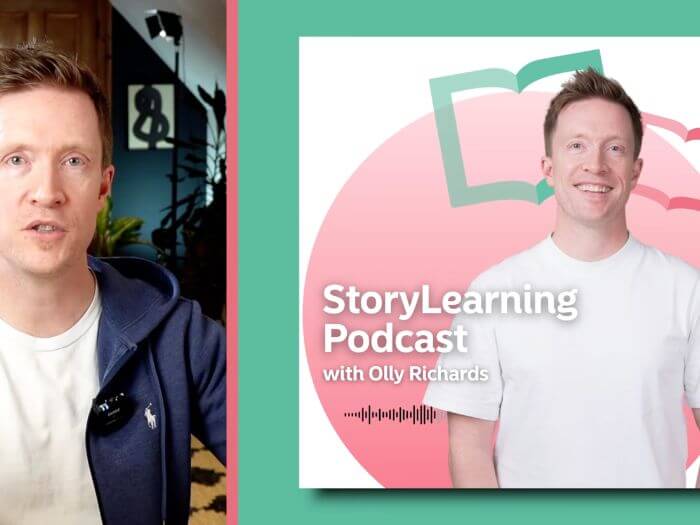
This is the whole concept behind my StoryLearning podcast that I record every week. It's talking about the meta strategies of learning – here is how to learn, here is what is normal, here's what you should and shouldn't be able to do at different stages of the language learning journey.
Because if you understand that and you understand what's normal, you can stop worrying, panicking and overthinking. You realise, “Hey, I'm actually doing pretty well.”
And when you finally understand your own learning journey, it's like you can breathe again because now you can actually use all of these different podcasts and enjoy the process.
The One Principle That Makes It All Work
After all of this, there is one guiding principle for all listening and all language learning, for that matter: if you don't actually love the podcast you're listening to, none of this stuff works.
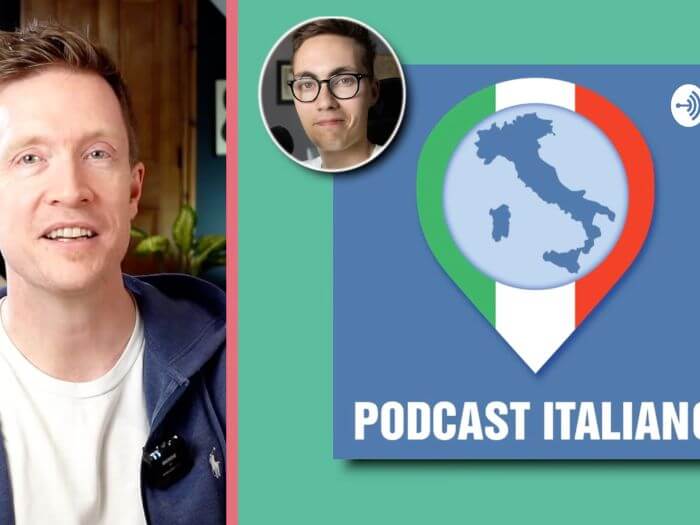
When I was learning Italian back in 2018 or so, I kept going back to the show from my friend Davide who records Podcast Italiano. I loved listening to it and I didn't care if I'd already heard the episode.
I would go back and listen to it over and over again because I just really enjoyed his Italian and the way he talked about everything. It was the perfect thing for me at that stage of my learning.
That's why the best podcast of all is still the one you keep coming back to, because repetition beats perfection every day of the week.
How To Use Podcasts For Language Learning FAQ
Can You Learn A Language Just By Listening To Podcasts?
You can improve your listening skills and pick up vocabulary by listening to podcasts, but it’s unlikely you’ll become fluent through podcasts alone.
Listening helps you get used to pronunciation, rhythm, and natural speech, especially if the content matches your level.
For full language development, it’s best to combine podcasts with speaking, reading, and active practice.
How To Use Podcasts For Language Learning: A Recap
Learning how to use podcasts for language learning doesn't have to be complicated, but it does require being intentional about what you listen to.
Start with story-driven podcasts that give your brain something to hold onto – a character, a plot, a sense of direction.
When you're ready for more depth, move into slow, explained podcasts that help you go from passively following along to truly understanding the ideas behind the words.
Then challenge yourself with real conversational podcasts that train your ear for how people actually speak.
And throughout it all, lean on educational podcasts to give you perspective on your own learning journey, so you know what's normal and can stop second-guessing yourself.
The thread running through all four types is enjoyment. If you love what you're listening to, you'll keep coming back, and that consistency is what actually builds fluency over time.
Olly Richards
Creator of the StoryLearning® Method
Olly Richards is a renowned polyglot and language learning expert with over 15 years of experience teaching millions through his innovative StoryLearning® method. He is the creator of StoryLearning, one of the world's largest language learning blogs with 500,000+ monthly readers.
Olly has authored 30+ language learning books and courses, including the bestselling "Short Stories" series published by Teach Yourself.
When not developing new teaching methods, Richards practices what he preaches—he speaks 8 languages fluently and continues learning new ones through his own methodology.
FREE
Get Your Free Guide:Best Binge-Worthy Resources for Fluency
All the best movies, TV shows, and podcasts hand-picked so you can learn your language just by watching what you already love.
Which language are you learning?
What is your current level in [language]?
Which language are you learning?
What is your current level in [language]?
Which language are you learning?
What is your current level in [language]?
Which language are you learning?
What is your current level in [language]?
Which language are you learning?
What is your current level in [language]?
Which language are you learning?
What is your current level in [language]?
Which language are you learning?
What is your current level in [language]?
Which language are you learning?
What is your current level in [language]?
Which language are you learning?
What is your current level in [language]?
Which language are you learning?
What is your current level in [language]?
Which language are you learning?
What is your current level in [language]?
Download this article as a FREE PDF?
What is your current level in Latin?
Download this article as a FREE PDF?
What is your current level in Norwegian?
Download this article as a FREE PDF?
What is your current level in Swedish?
Download this article as a FREE PDF?
What is your current level in Danish?
Which language are you learning?
What is your current level in [language]?
Download this article as a FREE PDF?
Download this article as a FREE PDF?
What is your current level in Arabic?
Download a FREE Story in Japanese!
Enter your email address below to get a FREE short story in Japanese and start learning Japanese quickly and naturally with my StoryLearning® method!
What is your current level in Japanese?
Download Your FREENatural Japanese Grammar Pack
Enter your email address below to get free access to my Natural Japanese Grammar Pack and learn to internalise Japanese grammar quickly and naturally through stories.
What is your current level in Japanese?
What is your current level in Portuguese?
What is your current level in German?
Train as an Online Language Teacher and Earn from Home
The next cohort of my Certificate of Online Language Teaching will open soon. Join the waiting list, and we’ll notify you as soon as enrolment is open!
Train as an Online Language Teacher and Earn from Home
The next cohort of my Certificate of Online Language Teaching will open soon. Join the waiting list, and we’ll notify you as soon as enrolment is open!
Download this article as a FREE PDF?
What is your current level in Portuguese?
Download this article as a FREE PDF?
What is your current level in Portuguese?
Download this article as a FREE PDF?
What is your current level in Turkish?
What is your current level in French?
What is your current level in Italian?
What is your current level in German?
What is your current level in Japanese?
Download Your FREEJapanese Vocab Power Pack
Enter your email address below to get free access to my Japanese Vocab Power Pack and learn essential Japanese words and phrases quickly and naturally. (ALL levels!)
What is your current level in Japanese?
Download Your FREE German Vocab Power Pack
Enter your email address below to get free access to my German Vocab Power Pack and learn essential German words and phrases quickly and naturally. (ALL levels!)
What is your current level in German?
Download Your FREE Italian Vocab Power Pack
Enter your email address below to get free access to my Italian Vocab Power Pack and learn essential Italian words and phrases quickly and naturally. (ALL levels!)
What is your current level in Italian?
Download Your FREEFrench Vocab Power Pack
Enter your email address below to get free access to my French Vocab Power Pack and learn essential French words and phrases quickly and naturally. (ALL levels!)
What is your current level in French?
What is your current level in Portuguese?
What is your current level in Russian?
What is your current level in Russian?
What is your current level in Italian?
What is your current level in Italian?
What is your current level in French?
What is your current level in French?
What is your current level in Spanish?
What is your current level in Spanish?
What is your current level in Spanish?
What is your current level in Arabic?
What is your current level in Portuguese?
What is your current level in Turkish?
What is your current level in Korean?
What is your current level in Russian?
What is your current level in Japanese?
What is your current level in Chinese?
What is your current level in Spanish?
What is your current level in Italian?
What is your current level in French?
What is your current level in German?
Download Your FREENatural Portuguese Grammar Pack
Enter your email address below to get free access to my Natural Portuguese Grammar Pack and learn to internalise Portuguese grammar quickly and naturally through stories.
What is your current level in Portuguese?
Download Your FREENatural Russian Grammar Pack
Enter your email address below to get free access to my Natural Russian Grammar Pack and learn to internalise Russian grammar quickly and naturally through stories.
What is your current level in Russian?
Download Your FREENatural German Grammar Pack
Enter your email address below to get free access to my Natural German Grammar Pack and learn to internalise German grammar quickly and naturally through stories.
What is your current level in German?
Download Your FREENatural French Grammar Pack
Enter your email address below to get free access to my Natural French Grammar Pack and learn to internalise French grammar quickly and naturally through stories.
What is your current level in French?
Download Your FREENatural Italian Grammar Pack
Enter your email address below to get free access to my Natural Italian Grammar Pack and learn to internalise Italian grammar quickly and naturally through stories.
What is your current level in Italian?
Download a FREE Story in Portuguese!
Enter your email address below to get a FREE short story in Brazilian Portuguese and start learning Portuguese quickly and naturally with my StoryLearning® method!
What is your current level in Portuguese?
Download a FREE Story in Russian!
Enter your email address below to get a FREE short story in Russian and start learning Russian quickly and naturally with my StoryLearning® method!
What is your current level in Russian?
Download a FREE Story in German!
Enter your email address below to get a FREE short story in German and start learning German quickly and naturally with my StoryLearning® method!
What is your current level in German?
Download a FREE Story in Italian!
Enter your email address below to get a FREE short story in Italian and start learning Italian quickly and naturally with my StoryLearning® method!
What is your current level in Italian?
Download a FREE Story in French!
Enter your email address below to get a FREE short story in French and start learning French quickly and naturally with my StoryLearning® method!
What is your current level in French?
Download a FREE Story in Spanish!
Enter your email address below to get a FREE short story in Spanish and start learning Spanish quickly and naturally with my StoryLearning® method!
What is your current level in Spanish?
FREE Download:
The Rules of Language Learning
Enter your email address below to get free access to my Rules of Language Learning and discover 25 “rules” to learn a new language quickly and naturally through stories.
Which language are you learning?
What is your current level in [language]?
Download Your FREESpanish Vocab Power Pack
Enter your email address below to get free access to my Spanish Vocab Power Pack and learn essential Spanish words and phrases quickly and naturally. (ALL levels!)
What is your current level in Spanish?
Download Your FREENatural Spanish Grammar Pack
Enter your email address below to get free access to my Natural Spanish Grammar Pack and learn to internalise Spanish grammar quickly and naturally through stories.
What is your current level in Spanish?
Free Step-By-Step Guide:
How to generate a full-time income from home with your English… even with ZERO previous teaching experience.
Download this article as a FREE PDF?
What is your current level in Thai?
Download this article as a FREE PDF?
What is your current level in Spanish?
Download this article as a FREE PDF?
What is your current level in Cantonese?
Download this article as a FREE PDF?
What is your current level in Russian?
Download this article as a FREE PDF?
What is your current level in Korean?
Download this article as a FREE PDF?
What is your current level in Japanese?
Download this article as a FREE PDF?
What is your current level in Italian?
Download this article as a FREE PDF?
What is your current level in German?
Download this article as a FREE PDF?
What is your current level in French?
Steal My Method?
I’ve written some simple emails explaining the techniques I’ve used to learn 8 languages…
Which language are you learning?
What is your current level in [language]?
Which language are you learning?
What is your current level in [language]?
I want to be skipped!
Join 84,574 other language learners getting StoryLearning tips by email…
“After I started to use your ideas, I learn better, for longer, with more passion. Thanks for the life-change!” – Dallas Nesbit
Which language are you learning?
What is your current level in [language]?
Download this article as a FREE PDF?
What is your current level in Chinese?
Which language are you learning?
What is your current level in [language]?
Find The Perfect Language Course For You!
Looking for a breakthrough in your language learning?
Complete this short survey to find the perfect course for you!