The Nonsense Of Reading Children’s Books To Learn A Language
by Olly Richards
There’s a piece of advice I hear so often that I’ve finally decided to go on record about it. Whenever someone sets out to learn a language, somebody will pop up and tell them that the best place to begin is with children’s books.
The thinking seems sensible enough: children’s books are simple, children are brilliant at picking up languages, so surely reading children’s books to learn a new language is the obvious shortcut. I understand the appeal.
But the idea taken as a blanket rule, is mostly wrong — and I want to explain why, because the assumptions underneath it don’t hold up nearly as well as people imagine.
Pro Tip
By the way, if you’re serious about improving your language skills, online language courses for fluency can make a huge difference.
I'm offering top-rated online language courses for beginners to advanced learners, covering Mandarin, Spanish, French, Italian, German, Japanese and more.
If you prefer watching videos to reading, hit play on the YouTube version of this post at the top of the page. Or listen to the podcast version below. Otherwise, here's what you'll discover in this post:
Table of Contents
Why Do People Recommend Children’s Books?
When people suggest children’s books, it almost always comes from a good place. After, reading in a foreign language is one of the fastest and most enjoyable ways to get fluent.
The logic runs something like this: children are still learning their mother tongue, children’s books are written for them, therefore children’s books must be simple, and if they’re simple they must be a gentle on-ramp for adult learners too. You can follow the reasoning, and I have some sympathy with it.
It’s the same instinct that leads people to say children are the best language learners. That belief comes from watching a child acquire their first language as if by magic and concluding that children simply soak up languages.
The conditions that make a child’s first language look effortless — years of total immersion, constant interaction, no fallback option — are nothing like the conditions most of us learn in.
The recommendation of reading children’s books to learn a new language inherits the same flaw: a reasonable-sounding observation stretched into a rule that doesn’t quite fit.
A Reader Who Made The Case For Children’s Books
Back in 2018, I shared with readers that I’d started learning Italian, and that my plan for the first month was to flood myself with input.
One reader pushed back. He encouraged me to read children’s fairy tales and adaptations, arguing that children’s material is written with simpler grammar and higher-frequency words than adult material.
Because of all that repetition of common words, he reckoned, a month spent only with native children’s material would leave me with more vocabulary and grammar than a month spent with adult material.
It’s a thoughtful argument, and he made it well. I’ll admit one thing rubbed me up the wrong way, though: the insistence that this is simply how it works best.
I’m wary of that kind of certainty. Whenever I come down on the side of a particular strategy, I try to give both sides and to back up my reasoning with research, with the wider literature and with my own experience.
Dogmatic, one-size-fits-all claims tend to be unhelpful in language learning, because learners and their goals differ so much.
But the heart of his argument is a testable claim — that children’s material uses simpler grammar and higher-frequency words — so let’s actually test it.
Does Reading Children’s Books To Learn A New Language Actually Work?
I picked three well-known children’s books aimed at different ages and looked closely at the language in them. You can judge for yourself whether it really is simpler and more frequent than the language in adult material.
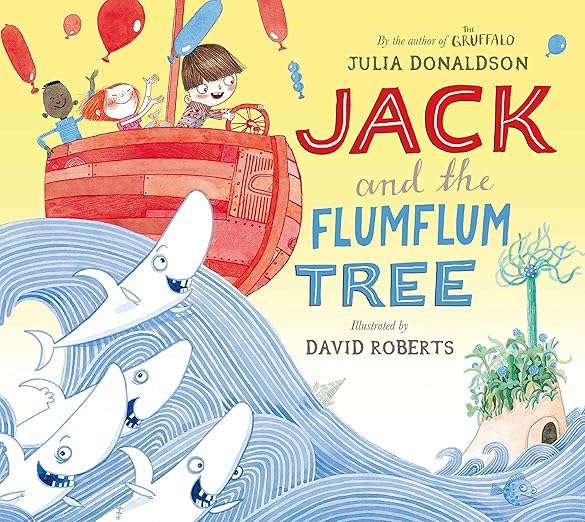
The first is Jack and the Flumflum Tree by Julia Donaldson, the much-loved author whose books fill entire shelves in any bookshop.
It’s aimed at roughly three-year-olds — about as young as it gets.
Yet it’s written in galloping rhyme and built around invented words: a made-up illness (the moozles), a made-up tree (the flumflum tree) and a string of nonsense names (stubble-cheeked Stu).
For a small child being read to, that’s pure delight. For an adult learner trying to decode the literal meaning, invented vocabulary and rhyme-driven word order are exactly the sort of thing that causes confusion. There’s very little plain, high-frequency everyday language to lean on.
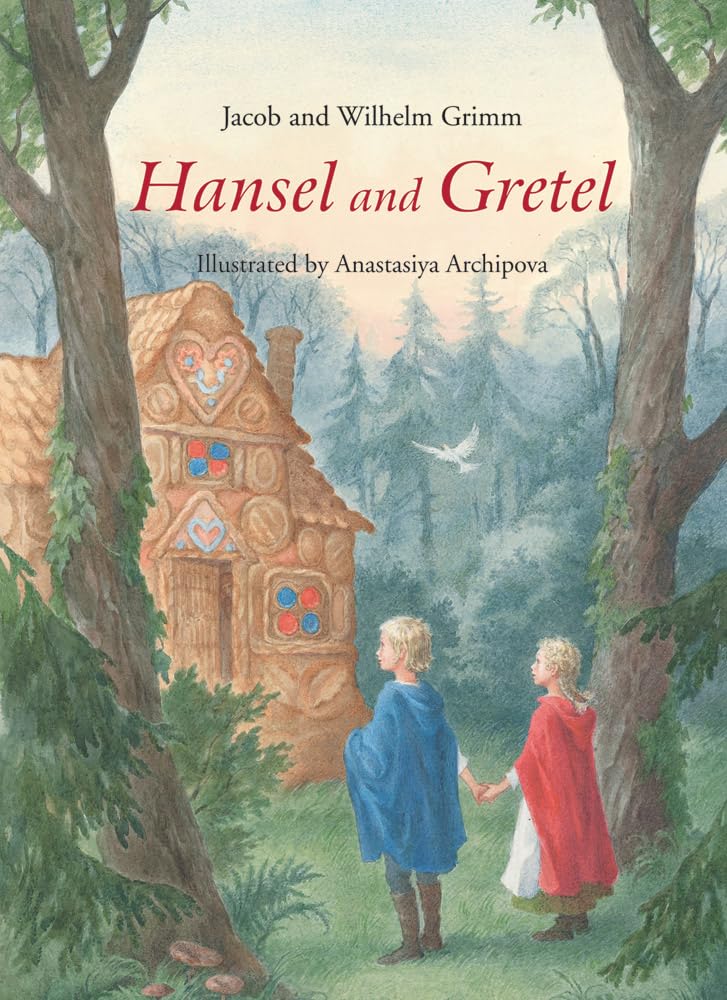
Next, a picture-book retelling of Hansel and Gretel, aimed at slightly older children.
The passage describing the witch is dense with atmospheric, literary language — elaborate similes, strings of adjectives, words like enchantments and yearned, and long, winding sentences.
Lovely for a bedtime story; a long way from the simple, repetitive, high-frequency vocabulary a beginner supposedly needs.
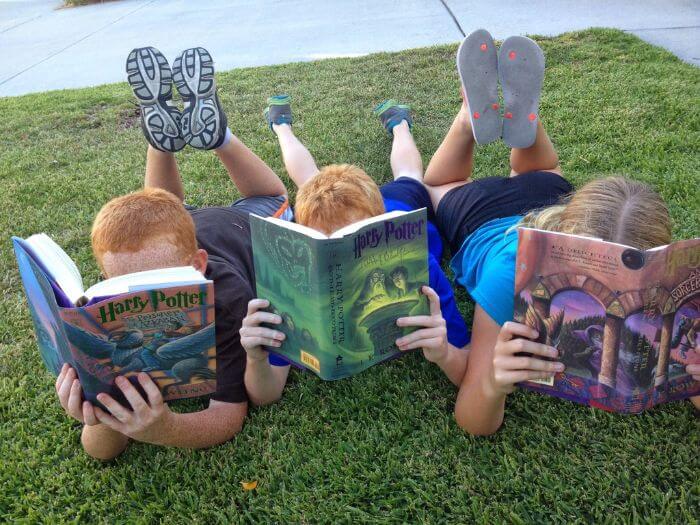
Finally, Harry Potter and the Philosopher’s Stone, pitched at older children and read happily by adults the world over.
Its famous opening is delivered through a television news broadcast, complete with British place names, idiomatic turns of phrase and complex sentence structures. There’s nothing remedial about it.
Read those three side by side and the premise starts to wobble. “Children’s book” is not a synonym for “simple.”
A great deal of children’s writing is linguistically rich, playful and demanding — which is precisely what makes it wonderful for children, and often quite hard for learners.
When Children’s Books Genuinely Earn Their Place
None of this means children’s books are useless. I want to be clear about that, because I’m not a fan of dogma in either direction. Almost anything can be a good resource if it’s chosen carefully and used in the right way for the right person.
Even older approaches that often get sneered at, like grammar-translation, have worked beautifully for plenty of people.
A children’s book can absolutely earn a place in your learning if you choose it deliberately — perhaps a graded or simplified edition, perhaps a story whose language genuinely matches your level, perhaps one you already know well (such as Harry Potter) so the familiar plot carries you through.
The mistake is assuming that the children’s label, on its own, guarantees simplicity and therefore suitability. It doesn’t. Selection, and how you use the material, matter far more than the age the book was written for.
Reading Children's Books To Learn A New Language FAQ
Is reading kids books good for learning a language?
Not automatically, no — and that's the myth I'd gently push back on. People assume children's books must be simple because they're written for children, but that simply isn't true.
Plenty of them are packed with invented words, playful rhyme and rich, literary language that's genuinely demanding for a learner.
That said, I'd never write them off either. A children's book can be a lovely resource if you choose it deliberately — one that actually matches your level, or a story you already know well.
The label “children's book” isn't a shortcut; what matters is picking the right material and using it in the right way.
Is it easier to learn a language through children's books?
It can be, but it's far from guaranteed — and that's where people trip up.
The assumption is that children's material uses simpler grammar and higher-frequency words, so it must be the gentler path.
In practice, a lot of it does the opposite: invented vocabulary, galloping rhyme, elaborate description and sentences that don't behave like everyday speech. None of that makes for an easy ride.
What genuinely makes learning easier is material pitched at your level and used the right way — and only some children's books happen to fit that bill. So judge the book in front of you, not the age it was written for.
So, Should You Use Children’s Books To Learn A New Language?
Honestly, I’ll leave that one up to you. My aim here isn’t to ban children’s books; it’s to dismantle the lazy assumption that reading children’s books to learn a new language is automatically the simplest, smartest place to start.
As those three examples show, children’s writing can be every bit as rich, strange and challenging as anything written for adults — full of invented words, literary flourishes and structures that don’t behave like everyday speech.
So by all means use children’s books if you enjoy them and if the language genuinely suits your level. Just choose them with the same care you’d apply to any books for language learners, rather than reaching for them because someone told you it’s simply the best way.
Stay flexible, question the advice you’re given — including mine — and pick the materials that actually move you forward. That, far more than any single method, is what learning a language well is really about.
Olly Richards
Creator of the StoryLearning® Method
Olly Richards is a renowned polyglot and language learning expert with over 15 years of experience teaching millions through his innovative StoryLearning® method. He is the creator of StoryLearning, one of the world's largest language learning blogs with 500,000+ monthly readers.
Olly has authored 30+ language learning books and courses, including the bestselling "Short Stories" series published by Teach Yourself.
When not developing new teaching methods, Richards practices what he preaches—he speaks 8 languages fluently and continues learning new ones through his own methodology.
FREE
Get Your Free Guide:Best Binge-Worthy Resources for Fluency
All the best movies, TV shows, and podcasts hand-picked so you can learn your language just by watching what you already love.
Which language are you learning?
What is your current level in [language]?
Which language are you learning?
What is your current level in [language]?
Which language are you learning?
What is your current level in [language]?
Which language are you learning?
What is your current level in [language]?
Which language are you learning?
What is your current level in [language]?
Which language are you learning?
What is your current level in [language]?
Which language are you learning?
What is your current level in [language]?
Which language are you learning?
What is your current level in [language]?
Which language are you learning?
What is your current level in [language]?
Which language are you learning?
What is your current level in [language]?
Which language are you learning?
What is your current level in [language]?
Download this article as a FREE PDF?
What is your current level in Latin?
Download this article as a FREE PDF?
What is your current level in Norwegian?
Download this article as a FREE PDF?
What is your current level in Swedish?
Download this article as a FREE PDF?
What is your current level in Danish?
Which language are you learning?
What is your current level in [language]?
Download this article as a FREE PDF?
Download this article as a FREE PDF?
What is your current level in Arabic?
Download a FREE Story in Japanese!
Enter your email address below to get a FREE short story in Japanese and start learning Japanese quickly and naturally with my StoryLearning® method!
What is your current level in Japanese?
Download Your FREENatural Japanese Grammar Pack
Enter your email address below to get free access to my Natural Japanese Grammar Pack and learn to internalise Japanese grammar quickly and naturally through stories.
What is your current level in Japanese?
What is your current level in Portuguese?
What is your current level in German?
Train as an Online Language Teacher and Earn from Home
The next cohort of my Certificate of Online Language Teaching will open soon. Join the waiting list, and we’ll notify you as soon as enrolment is open!
Train as an Online Language Teacher and Earn from Home
The next cohort of my Certificate of Online Language Teaching will open soon. Join the waiting list, and we’ll notify you as soon as enrolment is open!
Download this article as a FREE PDF?
What is your current level in Portuguese?
Download this article as a FREE PDF?
What is your current level in Portuguese?
Download this article as a FREE PDF?
What is your current level in Turkish?
What is your current level in French?
What is your current level in Italian?
What is your current level in German?
What is your current level in Japanese?
Download Your FREEJapanese Vocab Power Pack
Enter your email address below to get free access to my Japanese Vocab Power Pack and learn essential Japanese words and phrases quickly and naturally. (ALL levels!)
What is your current level in Japanese?
Download Your FREE German Vocab Power Pack
Enter your email address below to get free access to my German Vocab Power Pack and learn essential German words and phrases quickly and naturally. (ALL levels!)
What is your current level in German?
Download Your FREE Italian Vocab Power Pack
Enter your email address below to get free access to my Italian Vocab Power Pack and learn essential Italian words and phrases quickly and naturally. (ALL levels!)
What is your current level in Italian?
Download Your FREEFrench Vocab Power Pack
Enter your email address below to get free access to my French Vocab Power Pack and learn essential French words and phrases quickly and naturally. (ALL levels!)
What is your current level in French?
What is your current level in Portuguese?
What is your current level in Russian?
What is your current level in Russian?
What is your current level in Italian?
What is your current level in Italian?
What is your current level in French?
What is your current level in French?
What is your current level in Spanish?
What is your current level in Spanish?
What is your current level in Spanish?
What is your current level in Arabic?
What is your current level in Portuguese?
What is your current level in Turkish?
What is your current level in Korean?
What is your current level in Russian?
What is your current level in Japanese?
What is your current level in Chinese?
What is your current level in Spanish?
What is your current level in Italian?
What is your current level in French?
What is your current level in German?
Download Your FREENatural Portuguese Grammar Pack
Enter your email address below to get free access to my Natural Portuguese Grammar Pack and learn to internalise Portuguese grammar quickly and naturally through stories.
What is your current level in Portuguese?
Download Your FREENatural Russian Grammar Pack
Enter your email address below to get free access to my Natural Russian Grammar Pack and learn to internalise Russian grammar quickly and naturally through stories.
What is your current level in Russian?
Download Your FREENatural German Grammar Pack
Enter your email address below to get free access to my Natural German Grammar Pack and learn to internalise German grammar quickly and naturally through stories.
What is your current level in German?
Download Your FREENatural French Grammar Pack
Enter your email address below to get free access to my Natural French Grammar Pack and learn to internalise French grammar quickly and naturally through stories.
What is your current level in French?
Download Your FREENatural Italian Grammar Pack
Enter your email address below to get free access to my Natural Italian Grammar Pack and learn to internalise Italian grammar quickly and naturally through stories.
What is your current level in Italian?
Download a FREE Story in Portuguese!
Enter your email address below to get a FREE short story in Brazilian Portuguese and start learning Portuguese quickly and naturally with my StoryLearning® method!
What is your current level in Portuguese?
Download a FREE Story in Russian!
Enter your email address below to get a FREE short story in Russian and start learning Russian quickly and naturally with my StoryLearning® method!
What is your current level in Russian?
Download a FREE Story in German!
Enter your email address below to get a FREE short story in German and start learning German quickly and naturally with my StoryLearning® method!
What is your current level in German?
Download a FREE Story in Italian!
Enter your email address below to get a FREE short story in Italian and start learning Italian quickly and naturally with my StoryLearning® method!
What is your current level in Italian?
Download a FREE Story in French!
Enter your email address below to get a FREE short story in French and start learning French quickly and naturally with my StoryLearning® method!
What is your current level in French?
Download a FREE Story in Spanish!
Enter your email address below to get a FREE short story in Spanish and start learning Spanish quickly and naturally with my StoryLearning® method!
What is your current level in Spanish?
FREE Download:
The Rules of Language Learning
Enter your email address below to get free access to my Rules of Language Learning and discover 25 “rules” to learn a new language quickly and naturally through stories.
Which language are you learning?
What is your current level in [language]?
Download Your FREESpanish Vocab Power Pack
Enter your email address below to get free access to my Spanish Vocab Power Pack and learn essential Spanish words and phrases quickly and naturally. (ALL levels!)
What is your current level in Spanish?
Download Your FREENatural Spanish Grammar Pack
Enter your email address below to get free access to my Natural Spanish Grammar Pack and learn to internalise Spanish grammar quickly and naturally through stories.
What is your current level in Spanish?
Free Step-By-Step Guide:
How to generate a full-time income from home with your English… even with ZERO previous teaching experience.
Download this article as a FREE PDF?
What is your current level in Thai?
Download this article as a FREE PDF?
What is your current level in Spanish?
Download this article as a FREE PDF?
What is your current level in Cantonese?
Download this article as a FREE PDF?
What is your current level in Russian?
Download this article as a FREE PDF?
What is your current level in Korean?
Download this article as a FREE PDF?
What is your current level in Japanese?
Download this article as a FREE PDF?
What is your current level in Italian?
Download this article as a FREE PDF?
What is your current level in German?
Download this article as a FREE PDF?
What is your current level in French?
Steal My Method?
I’ve written some simple emails explaining the techniques I’ve used to learn 8 languages…
Which language are you learning?
What is your current level in [language]?
Which language are you learning?
What is your current level in [language]?
I want to be skipped!
Join 84,574 other language learners getting StoryLearning tips by email…
“After I started to use your ideas, I learn better, for longer, with more passion. Thanks for the life-change!” – Dallas Nesbit
Which language are you learning?
What is your current level in [language]?
Download this article as a FREE PDF?
What is your current level in Chinese?
Which language are you learning?
What is your current level in [language]?
Find The Perfect Language Course For You!
Looking for a breakthrough in your language learning?
Complete this short survey to find the perfect course for you!