
You tap through your words for the day, green tick after green tick, and close the app satisfied. Two days later, you need one of those words in a sentence, and it isn't there.
There's a reason Drops is easy to like. Five minutes is the whole session. The pictures do half the work, and a streak gives you a small win on a day when nothing else got done.
That part is genuine.
The real question is whether those words ever become a language you can actually use.
I learned my own languages as an adult, and I've got opinions about whether this sticks.
Here's the short version.
Drops is worth paying for if you want to build vocabulary quickly across more than 50 languages, one word or short phrase at a time, with a picture and a recording for each one.
It's not worth paying for if you want to speak or hold a conversation, because Drops doesn't teach conversation and has no speaking practice today. The free plan gives you five minutes of play every ten hours, which is enough to find out which of those two learners you are.
That's the honest split, and it costs nothing to find out.
If you decide to pay, here's the number. As of September 2026, Drops Premium costs 12.99 US dollars a month, 69.99 US dollars a year, or 159.99 US dollars once for lifetime access. That's the full premium price in US dollars.
I haven't used Drops myself, and I want to say that plainly. A writer on my team tested it hands on for the first version, published in April 2022.
For this update I checked every price and feature against Drops' own pages, as of September 2026, and also drew on what long-term users of Drops say publicly.
StoryLearning rating: 3.5 out of 5. Very good at one job, and that job is only part of learning a language.
The cost: free, or Premium at 12.99 US dollars a month, 69.99 US dollars a year, or 159.99 US dollars once, as of September 2026.
Table of Contents
What Is Drops?
Drops is an app for learning vocabulary in a new language through picture cues and repeated word activities. It describes its method as word games combined with mnemonic associations. In other words, it's a vocabulary trainer first.
It's made by PlanB Labs, a company registered in Tallinn, Estonia, and it's been part of the Kahoot group since November 2020.
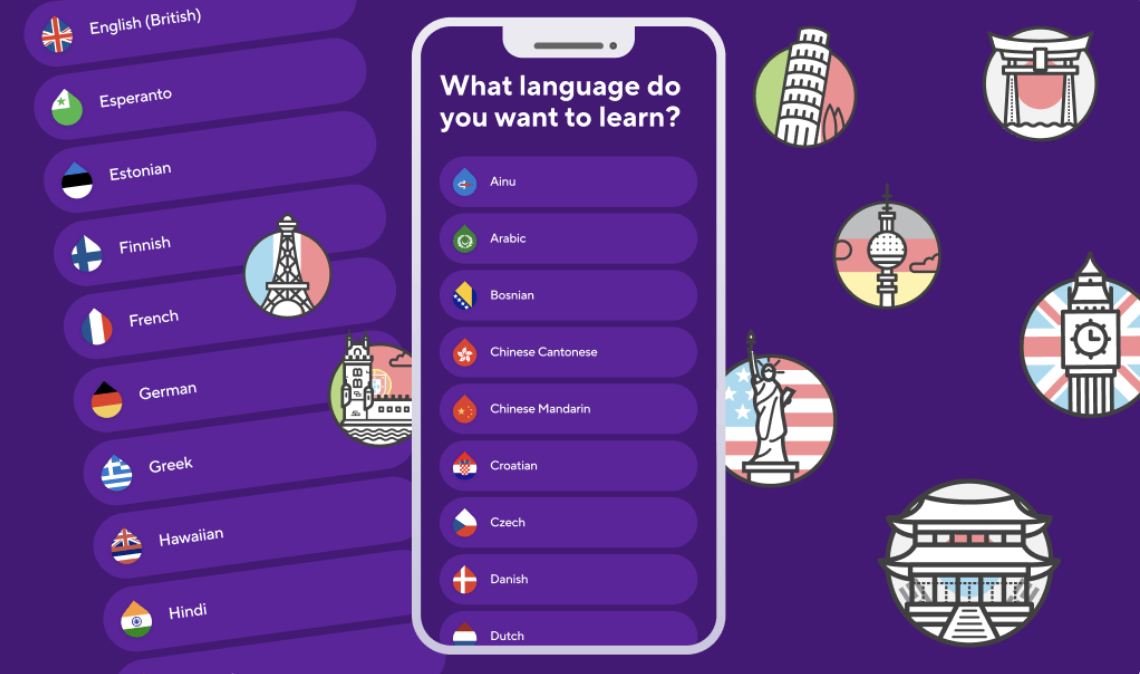
As of September 2026, Drops' own languages page lists 56 languages and varieties. That catalogue includes Maori, Tagalog, Yoruba and Hawaiian, all of which are hard to find in most language apps.
If your target language is one of these, Drops becomes more like a specialist tool than a general one.
Drops runs on iPhone, on Android and in a web browser, so the core experience isn't tied to a single device. Progress is saved to your account when you're logged in while learning, but Drops' own help centre lists using more than one device as one of the reasons it may not save. Sync isn't guaranteed if you jump between phone and laptop.
There are two sister apps. Scripts is a separate Drops app for alphabets and character systems. Droplets is Drops' app for children aged 8 to 17, and a Drops Premium subscription includes it.

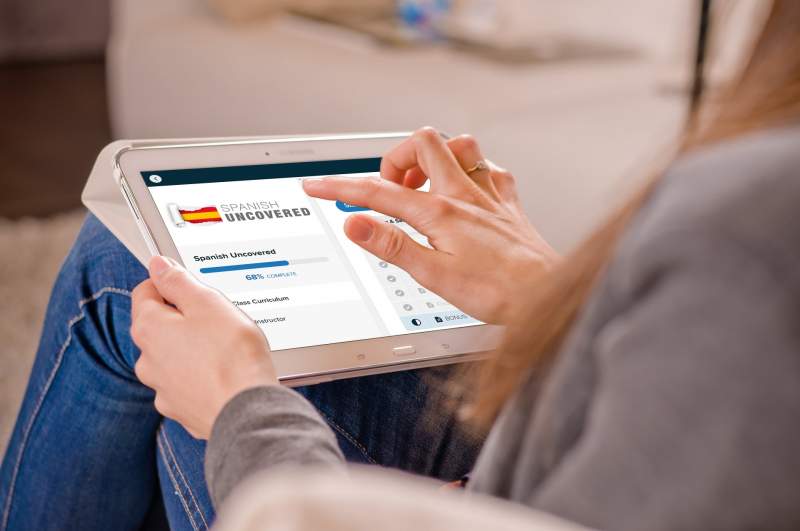
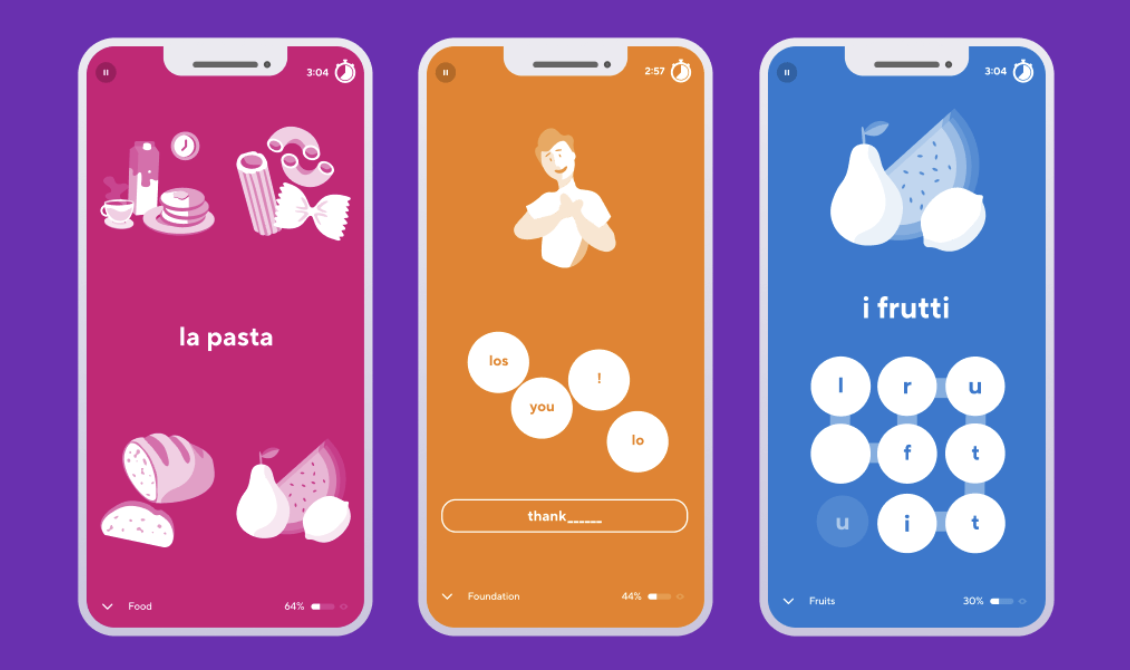
The screenshots on this page come from the first version of this review, when a writer on my team tested Drops hands on. The app's layout has changed since.
What's New In Drops
A fair bit has changed since the first version of this review went up in April 2022, and two of the old criticisms have moved.
The first version said Drops didn't teach grammar at all. That criticism no longer holds.
Drops added grammar lessons on 11 March 2026 for English, Spanish, German and European Portuguese. As of September 2026, the home page lists nine languages with grammar lessons: those four plus Brazilian Portuguese, Korean, Japanese, Tagalog and French.
Each grammar lesson runs five minutes and uses exercises rather than long rule explanations. That's a welcome change, but it isn't a full grammar course.
The help centre is blunt about the limit: the grammar lessons aren't a full standalone grammar course, and Drops suggests combining them with other grammar resources.
Speaking practice is a different story. Drops built an AI pronunciation check called Speak Practice, and Drops' help centre says it was removed in early March 2026 and is no longer available. That leaves no speaking or pronunciation exercise in Drops today.
Two smaller changes are worth knowing. Topics are now grouped into Packs, which replaced a single path called Language Voyage. The Review Dojo now opens after 14 words, not the 50 the first version of this review said, so it becomes available much earlier.
What hasn't changed is the core. Drops is still, at its core, a vocabulary app, and everything new is built around that.
A Look Inside Drops
You open the app, pick a topic, and a five-minute timer starts running. Before you've settled in, the first word is in front of you and the app is already asking you to do something with it.
Topics sit inside Packs, so you always know what you're working through next. On the free plan they open one at a time as you play, but Premium learners can open any topic straight away.

Drops doesn't publish how many words each language holds, so any per-language figure you've seen quoted is somebody's estimate.
Every word arrives with a simple picture and a recording, and that pairing repeats through the games. If a picture isn't clear, you tap it and the word shows in your own language. A setting called Native Assist keeps that translation on screen, and it's available in ten learner languages.

A writer on my team tested Drops for the first version of this review, and the games were tapping, swiping, matching and spelling.
As of September 2026, Drops' help centre describes a listening exercise where you hear a word and choose the matching illustration.

There's also a writing exercise for languages with other writing systems, such as Mandarin, Japanese, Korean and Russian, and you switch both on in the app's settings.
The Review Dojo opens after you've met 14 words and uses a spaced repetition system. A word counts as mastered after ten successful interactions. The Review Dojo is the tool that does the real work.
Favourites lets you choose which words to review, and Word Collection holds every word you've learned so far.
Quiz Mode mixes question types, but it needs five available questions before it starts and caps out at seven in a session. It's not offered for Ainu, Hawaiian, Sanskrit, ASL or Maori.
Audio Mode lets you review finished topics hands free, about five minutes a topic, though automatic play across topics is Premium only and Audio Mode isn't available in every language.
The Visual Dictionary is a free picture dictionary on the web holding the words from Drops' topic lists. You pick the language you speak and the one you're learning, then search for a word.
It's the same vocabulary as the app, arranged visually, and you can also reach it from a word list inside the app.

How Much Does Drops Cost, And Is It Worth It?
No two reviews of Drops seem able to agree on what it costs. That's not bad reporting. Drops changes its prices with the customer's country, and the iPhone and Android apps set their own prices separately from the website.
As of September 2026, a customer in the United States sees Drops Premium at 12.99 US dollars a month, 69.99 US dollars a year, which Drops shows as 5.83 US dollars a month, or 159.99 US dollars once for lifetime access.
Those figures shift by country. Loaded from the United Kingdom on the same day, the same page showed 9.89 pounds a month, 53.30 pounds a year and 121.83 pounds for lifetime.
| Plan | US price, as of September 2026 | What you get |
|---|---|---|
| Free | Nothing | Five minutes every ten hours, topics opening one at a time, ads |
| Premium monthly | 12.99 US dollars a month | Recurring |
| Premium yearly | 69.99 US dollars a year | Drops shows this as 5.83 US dollars a month |
| Lifetime | 159.99 US dollars once | A single payment, no renewals |
So is Drops free? There is a free plan, and it's genuinely free. You get five minutes of play every ten hours, topics open one at a time as you play, and you'll sit through ads.
What you won't lose by not paying is the review side. The free plan includes Favourites, the Review Dojo, Quiz Mode and Word Collection, plus audio mode and multiplayer matches.
Premium adds the things that make daily use comfortable:
- unlimited time,
- the freedom to open any topic,
- offline learning,
- no ads,
- automatic audio play,
- and Premium access to Droplets, the children's app.
Premium members can also set their own session length in the app's settings.
Now the arithmetic, because that's where the real decision lives. Twelve monthly payments come to 155.88 US dollars, against 69.99 US dollars for the same year on the yearly plan.
Lifetime access at 159.99 US dollars costs about the same as two years and three months of the yearly plan.
Drops' terms describe the lifetime plan as a single payment with no renewals, valid until Drops stops offering the service. So it isn't a trick, but it does depend on Drops continuing to exist and to serve the language you chose.
Before you pay, check the trial and refund terms carefully. Drops offers a seven day free trial that becomes a yearly subscription unless you cancel it first. Some web offers carry no free trial at all, so read the price screen before confirming.
Web purchases are handled by Paddle, and Drops gives no refunds more than 14 days after purchase. If you bought through the Apple or Google stores, the refund comes from Apple or Google, not from Drops.
My recommendation is short. Start free and see whether the five-minute rhythm survives your real week.
If you pay, pay yearly.
Take lifetime only if you're certain you'll still be using Drops in a couple of years.
What Drops Does Well, And Where It Stops

There's a quiet gap between what people say about Drops and what it actually sets out to do. People call it a language app, but it really sells vocabulary, in a polished design. That isn't a criticism on its own, and the praise is real.
The design is what users praise in the reviews and forum posts I read for this page, across the App Store, Trustpilot and a long-running forum thread.
Underneath the polish, Drops animates and improves the flashcard method. One App Store reviewer wrote in February 2024: “The unique and beautiful design makes it fun to look at and prevents boredom.”
The store ratings tell the same story. Drops holds 4.7 out of 5 from about 72,000 ratings on the US App Store and 4.3 out of 5 from about 318,000 reviews on Google Play, as of September 2026. Ratings like that measure enjoyment more than learning.
That five-minute timer is the reason a short session survives a bad day. You can do a full session while the kettle boils and your tea brews, and the free plan enforces the limit so you can't drift. Drops also lists 56 languages and varieties, several of which few other courses cover.
The review system is built in, and it's clever. Words you get wrong come back more often, by design, through the Review Dojo.
One App Store reviewer wrote in January 2023: “The system is smart and shuffles back to the ones you flubbed on recently so you can practice them more.”
A language is more than a vocabulary list.
A beginner in French was taught the word for an air fryer before they could order a coffee. In a language built on cases, a picture doesn't show you why a word's ending changes. And a word can be technically right but not the one a native speaker would actually reach for.
A Trustpilot reviewer wrote in April 2024: “It's more of a vocabulary app than a ‘learn the language' app”. Another Trustpilot reviewer, two years into a lifetime plan, wrote in July 2024 that Drops was a useful vocabulary builder but wasn't helping them actually speak.
Drops' Trustpilot page holds only 16 reviews total, so it's a handful of voices rather than a survey.
One Trustpilot reviewer wrote in January 2024 that the app had become so sluggish and buggy that they contacted support and lost their progress, which is one review out of sixteen.
The grammar lessons don't close that gap. They cover nine of Drops' languages, and Drops says itself that they're not a full standalone grammar course. There's no speaking or pronunciation practice today.
The pictures can also trip you up. An independent review site wrote in February 2026 that some images are hard to tell apart, so you'll likely get them wrong in your review.
A learner of Japanese, a year into using Drops, said on a community forum that the battery picture looked like a water bottle.
Drops offers a fix: tap a picture to show the word in your own language, and the Native Assist setting keeps it showing.
Four of the 16 Trustpilot reviews describe billing problems: an unexpected charge, a trial that became a subscription, a lifetime plan showing as one year, and a refused refund. That's four people, and worth knowing before you hand over a card.
My own view is simpler. Words stick when you keep meeting them in context, inside something you want to finish. That's what I mean by comprehensible input: reading or listening you can mostly follow, where new words keep turning up in a story that matters to you.
Drops does what it sets out to do, and it does it well.
Best for: the learner who wants to build vocabulary in small daily doses, and who wants the breadth of 56 languages and varieties.
Not for: the reader whose real problem is following or joining a conversation rather than collecting words, because Drops won't fix that.
If You Want A Reading Habit As Well
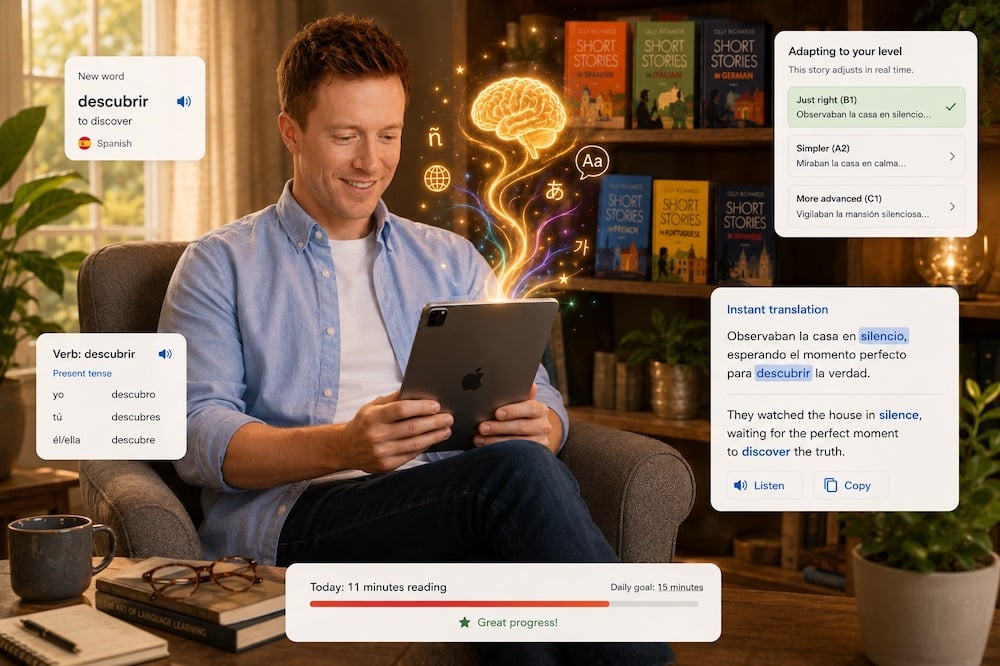
The StoryLearning App is mine, it's a reading app, and it won't replace Drops. I'm going to lean harder on the StoryLearning App's weaknesses than I did on Drops's, because the StoryLearning App is my own.
Drops gives you vocabulary in 56 languages and varieties, among them Maori, Tagalog, Yoruba, Hawaiian and Ainu. It runs as an iPhone and Android app, and paying members can learn offline. The StoryLearning App doesn't do any of that.
A word you meet in Drops on Monday and can't find on Friday hasn't gone anywhere. It just hasn't turned up since.
Reading is where the language keeps turning up, in sentences and stories you can mostly follow, and 15 minutes a day of it is the habit the StoryLearning App is built around.
If you're not going to base your study on reading, tell me what you're going to do instead.
The stories are written for you by AI, at your level, in the genres you pick from a list of eight. As you read, you save the words you want to keep, and the app writes them back into later stories, days and weeks apart, until they stick.
That's spaced repetition, but it happens inside new stories rather than on flashcards. The approach has a name, comprehensible input, which just means learning from stories you can mostly understand.
You can trial the audio narration with a free audio each month, and full narration for every story is available on a separate plan.
The StoryLearning App costs $15 a month, or $135 a year, as of September 2026. That buys up to 20 new stories a month across all your languages together. There's no free trial.
The StoryLearning App has no speaking practice of any kind. You won't get a conversation with an AI or a tutor.
It's not for complete beginners, whereas Drops is built for people starting from nothing, so if you're at the very start you can't use the StoryLearning App yet and you'll need an elementary foundation first.
It runs in a web browser on a phone, tablet or computer, and there's nothing to install. It isn't in the App Store or Google Play, and you can't read offline. It launched in 2026.
It covers ten languages, all European. A reader who chose Drops for Maori, Tagalog, Yoruba, Hawaiian or Ainu cannot use the StoryLearning App at all.
Best for: a reader who wants a daily reading habit and is happy to meet new words inside stories rather than on flashcards.
Not for: a complete beginner, a learner who needs speaking practice, or a learner studying a language outside the StoryLearning App's ten.
The StoryLearning App
Price: $15 a month, or $135 a year (US dollars), as of September 2026
Free trial: none
New stories: up to 20 a month, across all your languages (re-reads not counted)
Audio: a free audio each month to trial the narration; full narration for every story on a separate plan
Languages: Danish, Dutch, English, French, German, Italian, Norwegian, Portuguese, Spanish and Swedish, with separate Spain and Latin American Spanish, and European and Brazilian Portuguese
Level: from about A2 (elementary) to advanced; not for complete beginners
Where it runs: web browser on a phone, tablet or computer; not in the App Store or Google Play
An Alternative To Drops: Uncovered Courses

Uncovered is a comprehensive online beginner course that takes you from a complete beginner in a language to an intermediate level.
Far from simply memorising vocabulary, it uses an enjoyable and unique teaching method called StoryLearning® to teach you to read, write, speak and understand in a new language.
StoryLearning teaches languages naturally, just as you learn best when you're a child – through stories. In Uncovered, you'll find yourself gripped by an original that's unveiled, serial-style throughout the course.
Each word and sentence in the story has been carefully chosen to help you learn vocab and grammar in context.
Of course, we don't let you read a story and then leave you hanging. You also have an experienced teacher to help along the way. They know how it feels when languages seem complicated because they're language learners too.
Your teacher will offer support with explanations in English and tips to help you learn along the way.
Uncovered teaches all of the key aspects of the language: reading, listening, vocabulary, grammar, pronunciation and speaking. So, by the time you've finished, you'll be a confident intermediate level language speaker, ready to go out and use your new language in the real world!
Find out more and claim your free 7-day trial.
Drops Review: The Verdict
StoryLearning rating: 3.5 out of 5.
Drops does one job well: it puts vocabulary in front of you for five minutes a day across more than 50 languages. For that narrow job, it's excellent.
What it won't do is get you speaking. As of September 2026 there's no speaking or pronunciation practice, and the grammar lessons are, in Drops' own words, not a full standalone grammar course. So treat it as a vocabulary drill, not a course.
Start on the free plan first and see if the habit holds. The free plan is generous enough to let you find out whether Drops suits you before you pay.
If you pay, the yearly plan costs less over a year than paying monthly. Lifetime only makes sense if you'll still be using Drops in several years.
You tapped through your words, kept the streak, and two days later the word you needed wasn't there. Drops can keep putting that word in front of you until it sticks. It can't make it arrive at the moment you need it.
The word comes back tomorrow, and the next day, and that's the trade. That's the honest shape of it.
Drops FAQ
Is Drops Free?
Yes, Drops has a free plan, but it's a narrow one. As of September 2026, you get five minutes of play every ten hours, with ads, and new topics open one at a time through play.
The free plan does include the review tools: Favourites, the Review Dojo, Quiz Mode and Word Collection, plus audio mode and multiplayer matches. Premium removes the time limit and opens any topic straight away.
How Much Does Drops Cost?
In the United States, you'll pay 12.99 US dollars a month for Drops Premium, 69.99 US dollars a year, or 159.99 US dollars once for lifetime access, as of September 2026.
There's also a free plan. Prices vary by country, and the iPhone and Android apps set their own prices separately from the website, so what you're shown may differ.
Is Drops Premium Worth It?
Yes, if you already open Drops most days and the five-minute limit is what stops you. Premium removes that limit, opens any topic, adds offline learning and removes the ads.
It costs 69.99 US dollars a year, as of September 2026. If you haven't built the habit yet, you can find that out on the free plan before you spend anything.
Is The Drops Lifetime Subscription Worth It?
It's worth it only if you'll still be using Drops in several years. You'll pay 159.99 US dollars once, as of September 2026.
That's about the same as two years and three months of the yearly plan at 69.99 US dollars. Drops' terms describe it as a single payment with no renewals, valid until Drops stops offering the service.
If you're not sure you'll stick around that long, pay yearly instead.
Does Drops Teach Grammar?
Yes, but only a little. Drops teaches some grammar, and it's available in nine languages as of September 2026.
The lessons launched on 11 March 2026 for English, Spanish, German and European Portuguese. By September the home page also listed Brazilian Portuguese, Korean, Japanese, Tagalog and French.
Each one runs five minutes and is built on exercises rather than long rule explanations. Drops says in its help centre that they're not a full standalone grammar course.
Can You Become Fluent With Drops?
No, not on its own. Drops teaches single words and short phrases with pictures and audio, and long-term users describe it as a vocabulary app rather than a way to learn a language.
Drops' own help centre says its speaking feature was removed in early March 2026, so there's no pronunciation practice in it today, as of September 2026. It's best used alongside reading, listening and real speaking practice.
Does Drops Work Offline?
Drops does work offline, but only with Premium. Offline learning is a paid feature, not something the free plan includes. Drops' help centre says content downloads automatically whenever you open the app while connected, as of September 2026. On the free plan, you'll need an internet connection to use it.
What Is The Drops Visual Dictionary?
The Drops Visual Dictionary is a free picture dictionary on the web that holds the words from Drops' topic lists. You pick the language you speak and the one you're learning, then search for a word instead of scrolling a topic list. The Visual Dictionary was live as of September 2026.

Olly Richards
Creator of the StoryLearning® Method


Olly Richards is a renowned polyglot and language learning expert with over 15 years of experience teaching millions through his innovative StoryLearning® method. He is the creator of StoryLearning, one of the world's largest language learning blogs with 500,000+ monthly readers.
Olly has authored 30+ language learning books and courses, including the bestselling "Short Stories" series published by Teach Yourself.
When not developing new teaching methods, Richards practices what he preaches—he speaks 8 languages fluently and continues learning new ones through his own methodology.