
So, you have a 300-day streak!
The little owl is delighted with you.
Then someone actually speaks to you, in Spanish or French or whatever you have been tapping away at, and your mind goes blank.
You catch three words, smile, and nod.
If that is you, take a breath. You have not failed, and you are not lazy.
You have been using an app that was never designed to get you fluent.
Duolingo is not a serious language-learning tool. It is a brilliantly designed habit machine with a thin layer of language on top.
Recognising that is the first step towards understanding why you 300-day streak has not actually done anything for you, and what to do instead.
Here is the short version, so you can stop reading now if you like:
What separates a real alternative from another time-waster is methodology: a proven approach to how you actually acquire a language, not just how you stay entertained while tapping a screen.
If you want a more serious app that still holds your hand, Babbel and Busuu both go meaningfully deeper, and Busuu is one of the very few apps with genuine B2 content.
If your real problem is that you understand a bit but cannot speak, no app fixes that on its own, so you want real practice: italki for live human tutors, or Langua for unlimited AI conversation.
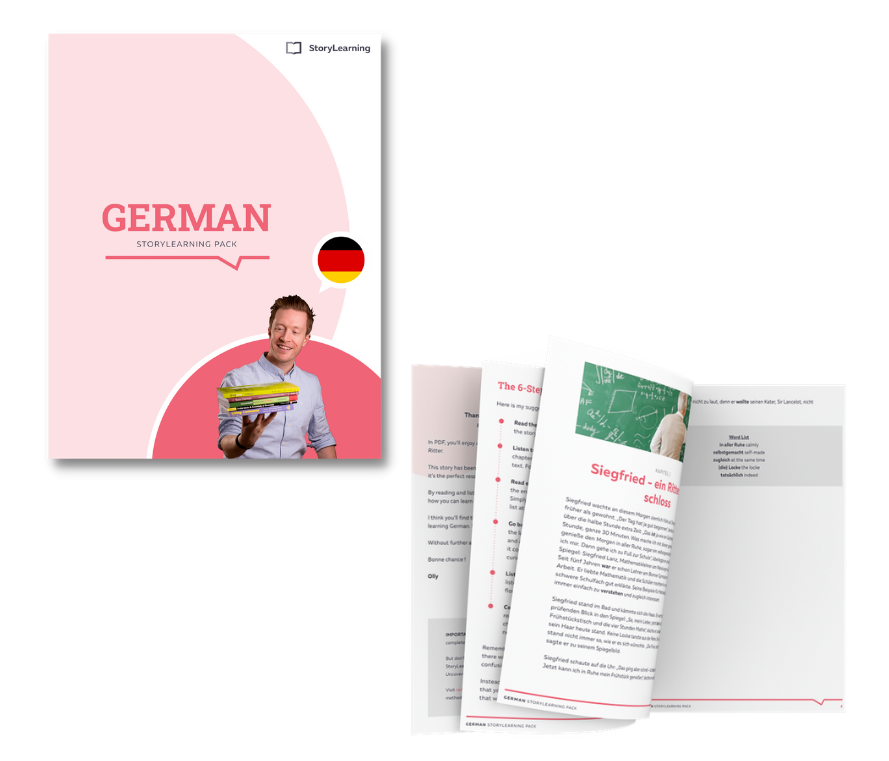
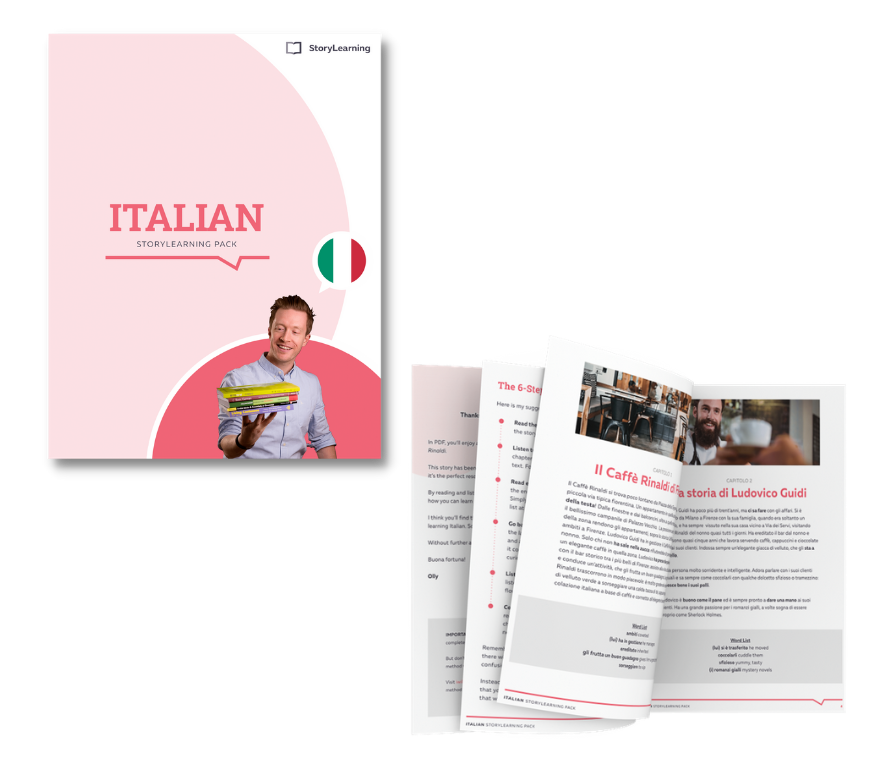
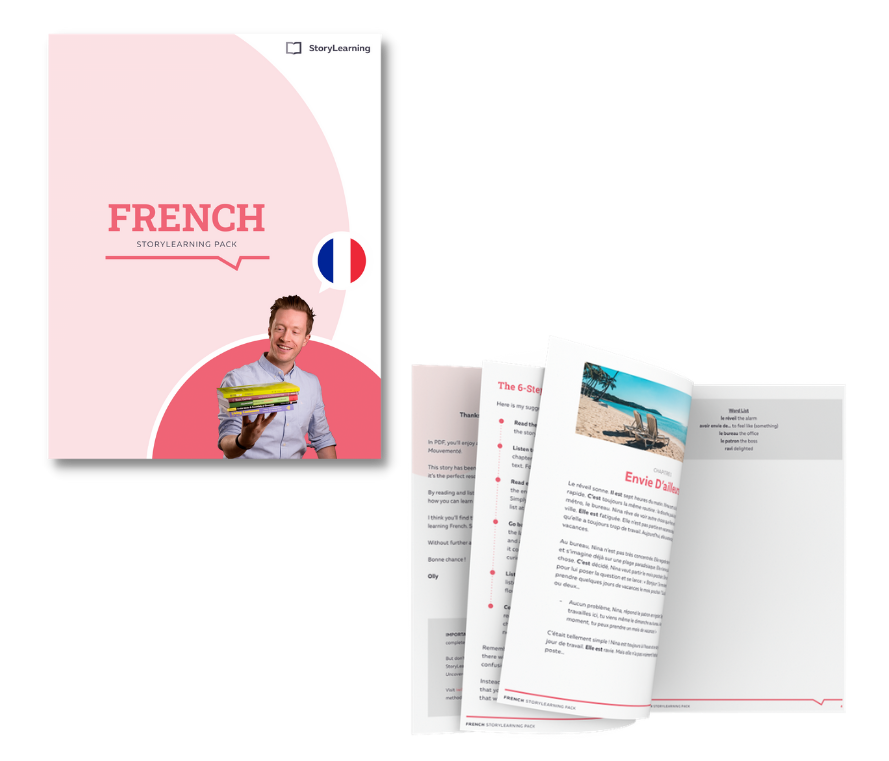
And if you never actually enjoyed the tapping, a story-based course like StoryLearning's Uncovered uses comprehensible input, a method with decades of research behind it, to teach through real stories instead of drills.
The serious move, almost always, is to pair one deeper course with one speaking option, rather than hunting for a single app that does everything.
That pairing is the most important point.
The rest of this guide scores twelve of the biggest names, Duolingo included, on the same eight criteria, so you can see exactly who each one is for and, just as plainly, who it is not for.
We do not link to or earn from any of them (other than our own StoryLearning products). There are no affiliate links on this page.
Table of Contents
Why Serious Learners Need to Move Past Duolingo
Let me say the fair thing first, because it is true: Duolingo is genuinely brilliant at one thing. It builds a daily habit, and it does it for free. That is not nothing.
It is probably what got you started, and there is no shame in having used it.
But here is the uncomfortable part…
Duolingo's primary job is to keep you opening the app. The streaks, the gems, the leaderboards, the guilt-trip notifications: those are engagement mechanics, not teaching methodology.
And what sits underneath the gamification is thin:
There is no coherent pedagogical method driving what you learn or in what order. The exercises are recognition-heavy, all multiple-choice, word-banks, and tile-tapping, which feels like progress but builds a shallow kind of knowledge that collapses the moment someone actually talks to you.
I see this constantly. People write to me saying “I had a 600-day streak and I still cannot hold a conversation.” And it makes complete sense when you look at the numbers. Duolingo's core vocabulary tops out at roughly 2,500 words. B2-level comprehension needs around 5,000.
One analysis put it starkly: that 600-day streak might represent only about 50 hours of genuine input. And because the exercises are almost entirely recognition, not production, you can pass every lesson and still freeze the moment a real person waits for you to finish a sentence.
The researcher Merrill Swain showed decades ago that comprehension can run on half-processing while speaking forces the full grammatical work, live. Duolingo simply does not ask you to do that work.
I had this exact problem myself when I lived in Japan. I had spent a couple of years studying, taking classes, going through textbooks, using flashcards.
And I had exactly this split: I could understand a fair amount, but every time I tried to speak, I would panic. There came a point in Tokyo where I said to myself, look, the only thing I have not done this whole time is a lot of speaking.
So I stopped studying altogether and arranged language exchanges, every evening after work, an hour of English and an hour of Japanese. After three weeks, I had gone from being anxious and fumbling to being genuinely confident.
After three or four months, my Japanese had completely transformed. And it came from one thing: I already had the knowledge in my head; all I needed was to actually use it.
So when you look for a Duolingo alternative, the question is not “which app has better graphics?” It is “what is the actual method, and does it have any evidence behind it?”
A serious alternative needs two things Duolingo never provided. The first is methodology: a proven approach to acquisition, whether that is comprehensible input, graduated recall, or structured immersion, not just gamified flashcards.
The second is production: actually speaking, because no amount of tapping will unfreeze your mouth.
Below, I have scored the biggest names on the same eight criteria, our own StoryLearning included, so you can pick your pair.
| Provider | Best-for CEFR | Primary skill | Speaking support | Structure | Study load | Method | Price (as of July 2026) | Track record |
|---|---|---|---|---|---|---|---|---|
| Duolingo | A0 to A2/low-B1 | Mixed (recognition) | Scripted | Fully sequenced | Light | Gamified SRS | Freemium, Super ~$12.99/mo or ~$95.99/yr | Market leader |
| Babbel | A0 to B1 | Mixed (grammar + dialogue) | Scripted | Fully sequenced | Light to Medium | Structured dialogue lessons | Sub, ~$8.95/mo annual, Lifetime $299 | Long-established, EdTech-credible |
| Busuu | A0 to B1/B2 | Mixed | Feedback (async human) | Fully sequenced | Light to Medium | Lessons + SRS + native correction | Freemium, ~$5.41 to $5.83/mo on long plans | Established (Chegg-owned) |
| StoryLearning (Uncovered) | A0 to C2 | Reading (+ listening) | Guided | Fully sequenced | Medium to Deep | Comprehensible-input story reading | One-time $297/course | Established indie brand |
| Pimsleur | A0 to A2/B1 | Listening / Speaking | Scripted | Fully sequenced | Medium | Audio-immersion, graduated recall | Sub or one-time, ~$20/mo, Lifetime ~$475 | Long-established audio brand |
| italki | Any level, tutor-dependent | Speaking | Live human | Freeform | Deep | Live 1-to-1 tutoring | Pay per lesson, ~$4 to $40/hr | Large established marketplace |
| Langua | A2 to C1 (practice) | Speaking (AI) | Feedback (AI) | Loose path | Flexible | AI conversation + SRS content | Subscription, ~$29.99/mo or $199.99/yr | Newer (2024+), widely reviewed |
| Assimil | A0 to B2 | Reading / Listening | None | Fully sequenced | Medium | Bilingual parallel-text | One-time, ~$50 to $65 | French publisher since 1929 |
| Memrise | A0 to A2 | Vocabulary | Scripted / Guided | Loose path | Light | Vocab SRS + native-speaker clips | Freemium, Pro ~$79.99 to $89.99/yr | Established vocab app |
| Rosetta Stone | A0 to A2 | Vocab + pronunciation | Scripted | Fully sequenced | Light to Medium | Immersion, no translation | Lifetime list ~$399, usually $149 to $199 | Legacy brand (1990s) |
| Michel Thomas | A0 to A2 | Listening / Speaking | Scripted | Fully sequenced | Medium | Audio “no books” method | One-time, full bundle ~$273 | Legacy audio brand |
| Language Transfer | A0 to A2/low-B1 | Listening / Speaking | Scripted | Fully sequenced | Light to Medium | Audio “thinking method” | Free (donation-supported) | Small indie project |
Babbel: The Most Serious Upgrade That Still Holds Your Hand
If you liked the structure of Duolingo but wanted it to treat you like an adult, Babbel is the natural step up.
It is the most polished app on this list, and it is built for grown-ups who want to understand why the grammar works, not just tap the right tile.
The difference is methodology: where Duolingo shuffles you through decontextualised exercises, Babbel builds lessons around structured dialogues with explicit grammar explanations. There is an actual teaching logic underneath.
On the scoring, it covers A0 to B1 and gets noticeably thinner beyond B1, so be clear-eyed about that ceiling. Its primary skill is mixed, grammar and dialogue together, and genuinely it has the clearest grammar explanations of any mainstream app.
Speaking support is Scripted, through speech recognition; Babbel Live adds real classes, but that is a separate paid product, so I will not fold it in here. If you want to see how it stacks up against Duolingo in more detail, I have written a full Babbel vs Duolingo comparison.
Structure is fully sequenced, the thing app-learners tend to want. Study load is light to medium, 10 to 20 minutes, which is realistic for a busy adult. The method is structured dialogue lessons with explicit grammar and vocabulary and some spaced repetition.
On price, it is a subscription for a single language: monthly around $17.95, annual working out around $8.95/mo, with a Lifetime option at $299 for all languages, often discounted to around $170 to $200 (as of July 2026).
Fair value, though note the standard subscription covers one language only. It is long-established and EdTech-credible.
The limit: it is app-bound, with limited real speaking, and it does not have the depth to carry you all the way from B1 to B2 by itself.
Best for: the ex-Duolingo learner who wants clearer grammar and a more grown-up, structured app to build a solid foundation up to B1.
Not for: anyone already at solid intermediate who needs output and real conversation, not more polished input.
Busuu: The App That Actually Reaches B2 (With Human Feedback)
Here is the standout for serious learners. Most apps are a closed loop: you tap the right tiles, pass the lesson, and never once find out whether a real person would actually understand you.
Busuu does the two things that break that loop, and it does them at a very fair price.
On the scoring, it runs A0 to B1 and, crucially, it has genuine B2 content, unlike most apps. That alone makes it a serious step past Duolingo. Primary skill is mixed.
Speaking support is Feedback: async correction of your written output by native-speaker community members. It is the only async human correction in this whole comparison, so be precise about what it is: human, but not live, and the quality varies because the correctors are volunteers.
Structure is fully sequenced and CEFR-mapped, so you always know where you are. Study load is light to medium, 10 to 20 minutes. The method is structured lessons plus spaced repetition plus native-speaker correction.
On price, it is freemium with a Premium tier: roughly $5.41 to $5.83/mo on 12 to 24-month plans, with monthly around $6.99 to $23.49 and annual around $70 to $139.99 (as of July 2026, promo-heavy). Strong value for what you get. It is established, Chegg-owned, with solid independent reviews.
The limit: the native-speaker correction is a real differentiator, but the core lessons are otherwise fairly standard app fare, the feedback depends on who picks up your submission, and it is written, not spoken.
Best for: the learner who wants an affordable, structured app that genuinely reaches B2 and gives real human feedback on their writing.
Not for: anyone whose bottleneck is spoken fluency specifically. Written corrections will not unfreeze your mouth, so pair it with real speaking.
StoryLearning: For The Learner Who Never Enjoyed The Tapping
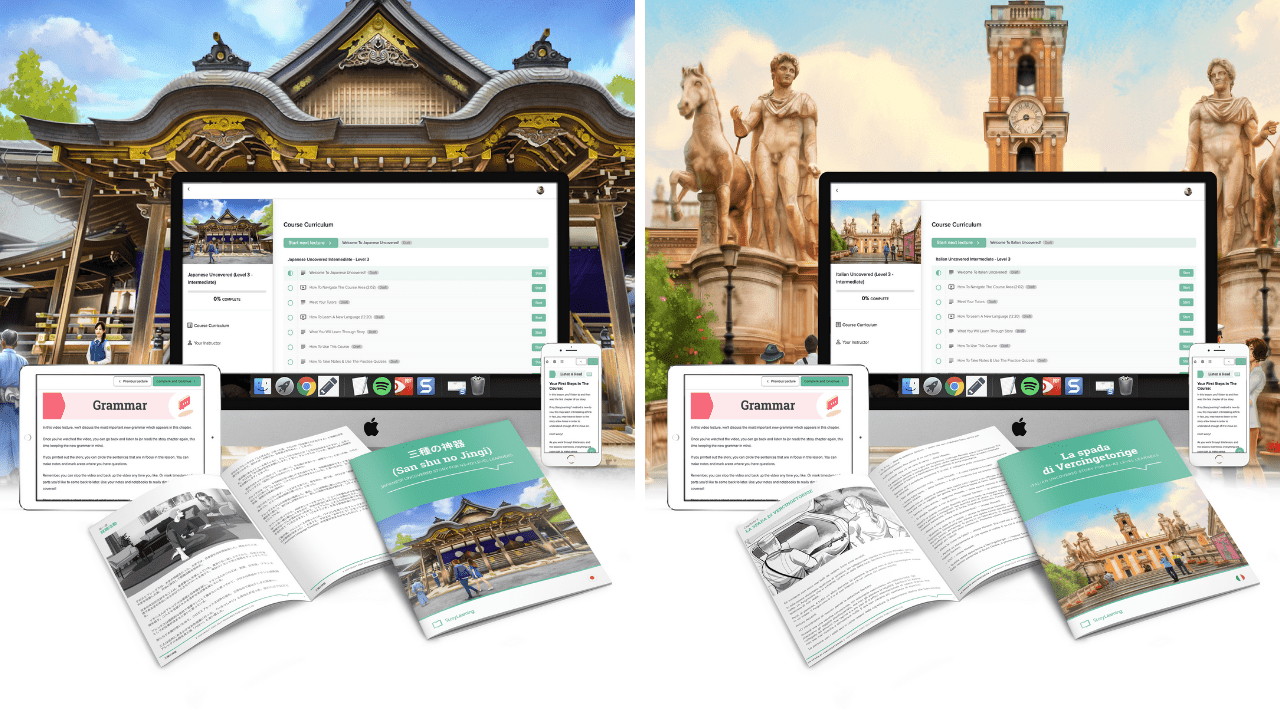
Now my own product, and because it is mine, I will lean harder on its weaknesses than I would for anyone else's. If the thing you disliked about Duolingo was the tapping itself, the sense of doing exercises rather than actually meeting the language, this is the alternative to consider.
The method is the whole point, and it is the opposite of Duolingo's approach. You learn by reading and listening to one continuous story, pitched just easy enough to follow, with the grammar unpacked from the story rather than drilled at you cold.
That is comprehensible input, a method with decades of acquisition research behind it, pioneered by Stephen Krashen. Where Duolingo gives you decontextualised tiles, this gives you a story you actually want to finish.
I always say this on the podcast: if you are not going to base your study on reading, tell me what you are going to do instead. Because Duolingo is not going to do it. And just watching TV is not going to do it. Your Tuesday night French class is not going to give you anywhere near enough exposure.
Reading at your level is the single best way to accumulate the sheer volume of vocabulary and grammar you need, which is why I built the entire method around it.
If you want to understand more about how I learn foreign languages, that is essentially the starting point: massive comprehensible input through stories, then activation through speaking.
On CEFR range it runs from A0 to Mastery – C2. That is the ceiling. You finish a course understanding far more than you can spontaneously say, which is the same split we have been talking about with Duolingo. The primary skill it builds is reading, with listening close behind.
However, the premise of the StoryLearning method is that you need to build your knowledge in order to be able to speak. Long-term, that makes this the best bet of all, provided you are happy to take a long-term view in your learning.
On speaking, and this is the number that matters most, it is Guided only. The course is comprehension-driven with some speaking prompts, but there is no human on the other end and no speech-recognition feedback. It will not unfreeze your mouth by itself.
If active speaking is your bottleneck, this is not the piece that fixes it. Structure is fully sequenced; study load is medium to deep, chapters of 20 to 45 minutes, and it asks for real self-discipline, because there is no streak nagging you to show up.
On price, here it is in full: one-time $297 per course, with three instalments available, a 7-day full-access trial, and a 365-day guarantee. It is frequently discounted to around $147 (as of July 2026).
That is premium next to a monthly app subscription. The trade is that it is a one-time payment, not a recurring one, and there is an upsell ladder of further courses.
If you want daily reading practice alongside the course, or alongside anything else on this list, there is also the StoryLearning app: 15 minutes a day of graded stories in your target language, with 1-tap translations.
It is built as a supplement, not a replacement, and reading at your level is the single most useful daily habit for language acquisition.
Best for: the learner who wants to actually enjoy the process, read and listen to real-ish stories, and will show up without gamified nudges.
Not for: anyone who wants bite-size gamified lessons, needs live speaking practice as their main thing from day one, or wants the cheapest option. It is premium priced, so go in knowing that.
Pimsleur: The Best Way To Get Your Mouth Moving
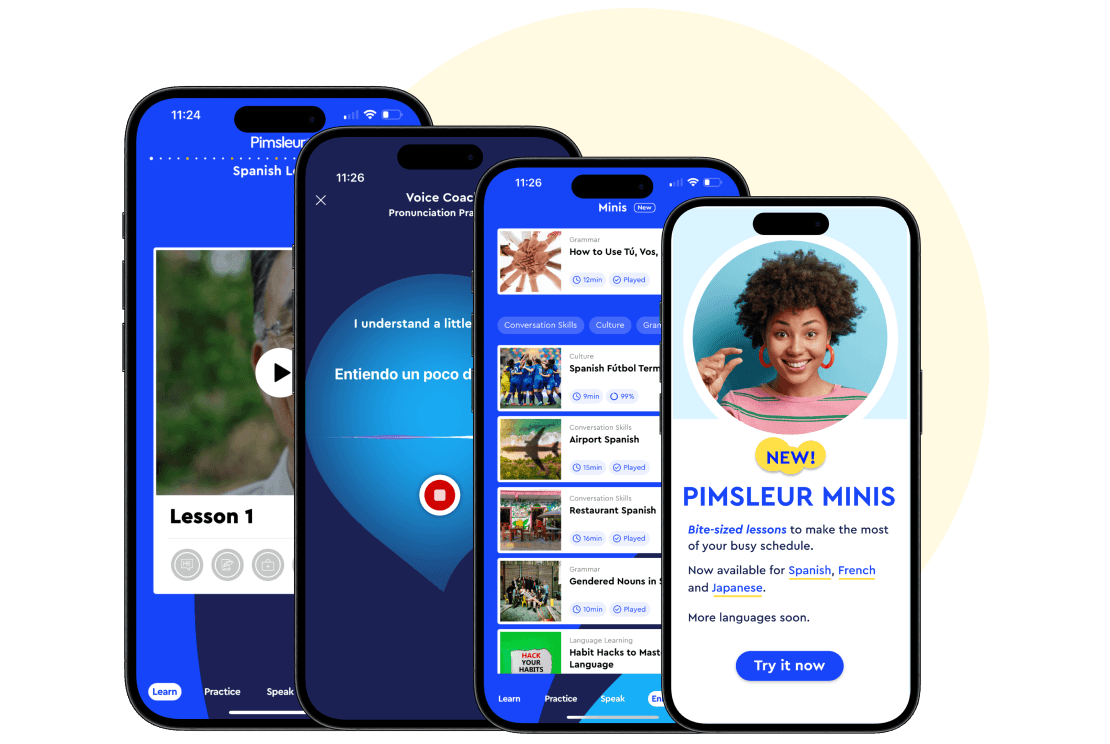
You can do this one with your eyes shut, literally. If Duolingo left you able to read a bit but tongue-tied out loud, Pimsleur attacks exactly that.
It is 30-minute audio lessons that make you produce the language out loud on a graduated-recall schedule, so your mouth gets reps on a walk or a drive.
The methodology, graduated-interval recall, has been around since the 1960s, and it does one thing Duolingo never does: it forces you to produce language from memory, not pick it from a list.
On the scoring, it covers A0 to A2, stretching to B1 for speaking and listening, with no real reading or writing depth. Primary skill is listening and speaking.
Speaking support is Scripted: you repeat and produce spoken language with some speech recognition, but there is no human, so it builds production reps rather than real unscripted conversation. It complements a tutor rather than replacing one.
Structure is fully sequenced, 30-minute audio lessons in order. Study load is medium, about half an hour a lesson. The method is audio-immersion with graduated-interval recall.
On price, it runs as a subscription or one-time purchase: Premium single language around $19.95/mo, All Access around $20.95/mo (annual around $131.96), and Lifetime All Access around $475, with a 7-day trial (as of July 2026). It is a long-established audio brand with a strong reputation for speaking foundations.
The limit: it is slow and repetitive, the vocabulary is narrow, and there is little reading, writing or grammar. Its job is warming up your spoken confidence, not carrying you to B2 alone.
Best for: the learner who can recognise words but freezes out loud, and wants low-effort spoken reps in the car or on a walk.
Not for: anyone who wants reading, writing, grammar depth, or a full route to B2 from one product.
italki: The One Thing No App Can Give You
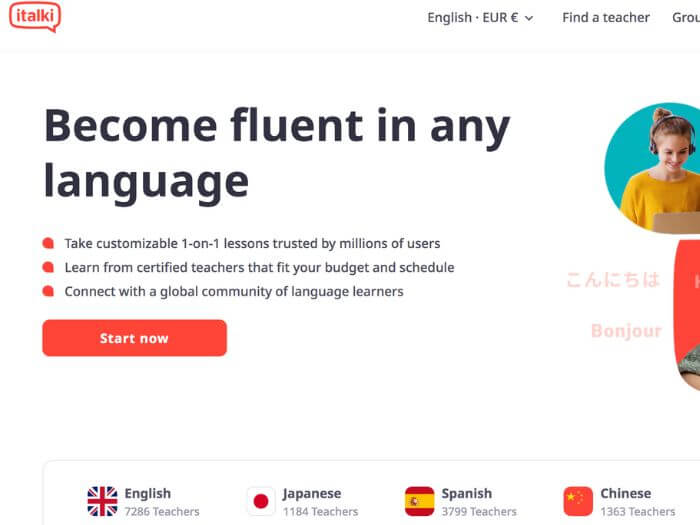
Here is the fact that surprises people. Across every expert source I have read, the single biggest thing that breaks the plateau is not more study.
It is regular, real speaking under mild pressure. And no app, however clever, gives you a real human who is waiting for you to answer. italki does, and it does it cheaply.
I know this from my own experience.
When I was learning Japanese in Tokyo, I had all the knowledge from years of reading and classes, but I could not get it out. The moment I started doing language exchanges every day, speaking became normal within weeks.
Speaking is a skill, like tennis. You could watch videos of the great players and learn the rules, but until you have done a thousand serves, you do not actually have the feel of it in your body. Speaking is just like that: you have to square off against another human, look at them, recover from mistakes, and keep going.
On the scoring, italki works at any level, entirely tutor-dependent. Its primary skill is speaking, tutor-led. On speaking support it is the only Live human option in this whole comparison, real one-to-one conversation with a person who corrects you. Say that plainly, because nothing else here can.
Its weakness is structure. It is freeform, with no built-in curriculum. You or your tutor have to supply the shape, which is a real drawback if you want to be handed a plan. Study load is deep, 30 to 60 minute sessions.
The method is a live tutoring marketplace. On price it is strong: community tutors run roughly $4 to $20 an hour, professional teachers roughly $10 to $40 (as of July 2026).
You pay per lesson, so you can go at your own pace, and cheap trial lessons let you test a tutor's style before committing. It is a large, established marketplace with strongly positive learner sentiment.
Best for: anyone who understands more than they can say, which is most people leaving Duolingo, and needs to practise producing it with correction.
Not for: anyone who wants a set curriculum handed to them, or who finds talking to a stranger on day one too much. Build a little comprehension first, then come back.
Langua: Unlimited Speaking Practice Without The Stage Fright
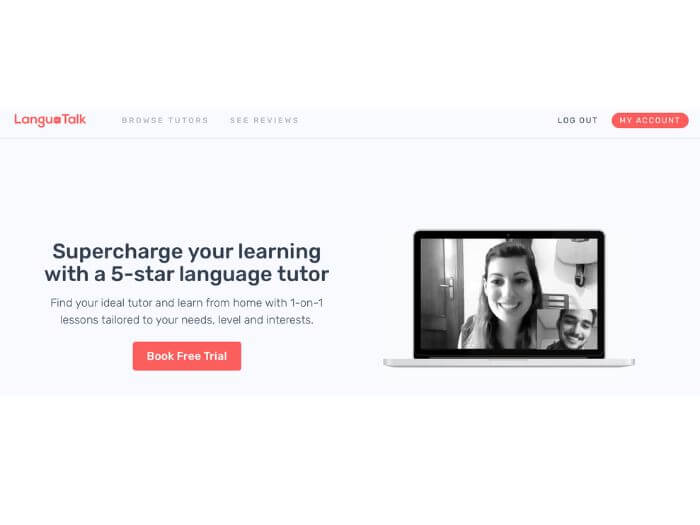
The intimidating thing about speaking practice is another human being hearing you fumble. If booking a real tutor feels like too much just yet, Langua removes exactly that fear.
You can have a real, spoken conversation, out loud, with an AI that sounds unnervingly human, as many times as you like, and nobody is judging you.
On scoring, Langua suits A2 to C1 for practice. It is primarily a speaking practice tool, not a step-by-step course, so it fits people who already have some of the language, which is precisely the ex-Duolingo reader.
Primary skill is speaking, through AI conversation. On speaking support it is Feedback (AI): free-form spoken or written conversation with real-time corrections, a genuinely human-like voice, and a hands-free “Call Mode.”
It is the strongest speaking practice of any app here, but it is an AI, not a real human, so there are no real social stakes. Ranked honestly, it sits below italki's real humans and above every scripted app.
Structure is a loose path today, a practice tool plus content (AI mini-stories, flashcards, immersion clips), not a sequenced curriculum. Study load is flexible, as much as you drive it.
On price it is a subscription: unlimited access around $29.99/mo or $199.99/yr (promo around $159.99/yr), with a Standard tier around $19.99/mo, plus a short free trial and a 30-day guarantee (as of July 2026). Far cheaper per hour than a human tutor if you actually use it.
It is newer, from 2024 onward, though widely reviewed as best-in-class for AI conversation. Worth noting: many of those reviews carry affiliate promo codes, so weigh the “most advanced” claims accordingly.
Best for: the nervous learner who wants unlimited low-stakes speaking reps before, or instead of, facing a real tutor.
Not for: anyone who wants a structured course, or who needs the accountability and real pressure only a booked human provides.
Assimil: The Cheap, Serious Route All The Way To B2
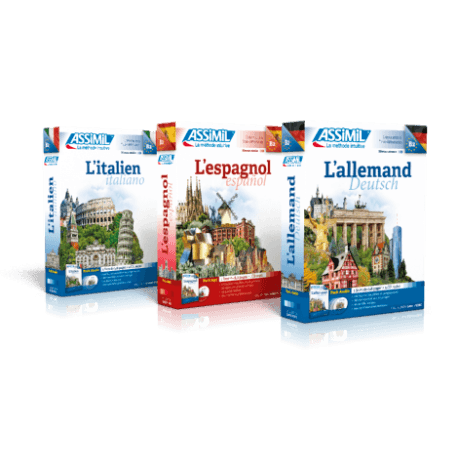
Here is a surprise. A method first published in 1929 outperforms most shiny apps at the one thing they fail at: actually reaching B2.
While Duolingo was optimising its streak mechanics, Assimil was doing what it has done for nearly a century: teaching languages through bilingual parallel texts with a clear pedagogical progression.
If you are a disciplined self-studier who resents subscriptions, it deserves a proper look.
On the scoring, it covers A0 to B2, making it one of the very few self-study courses that genuinely reaches B2. Primary skill is reading and listening, broadening to all-round. Speaking support is None: you shadow the audio, and there are no drills or feedback. That is the trade-off for the price and the depth, so go in clear-eyed.
Structure is fully sequenced, daily numbered lessons on a passive-then-active “wave” method. Study load is medium, around 20 to 30 minutes a lesson. The method is bilingual parallel-text with grammar in context, gentler than old grammar-translation.
On price, it is a one-time book or pack: roughly $50 to $65 for a language edition (as of July 2026). Strong value: it takes a disciplined learner a long way for very little. It has been published in France since 1929 and is a serious self-study classic.
The limit: it is old-fashioned and dry, it demands real self-discipline, and it gives you almost no active speaking. It builds the input half well and the output half not at all.
Best for: the disciplined self-studier who wants a cheap, one-time route toward B2 and will bring their own speaking practice.
Not for: anyone who needs gamified motivation, polish, or any real speaking built in.
Memrise: Better Vocabulary And Real Native Speakers
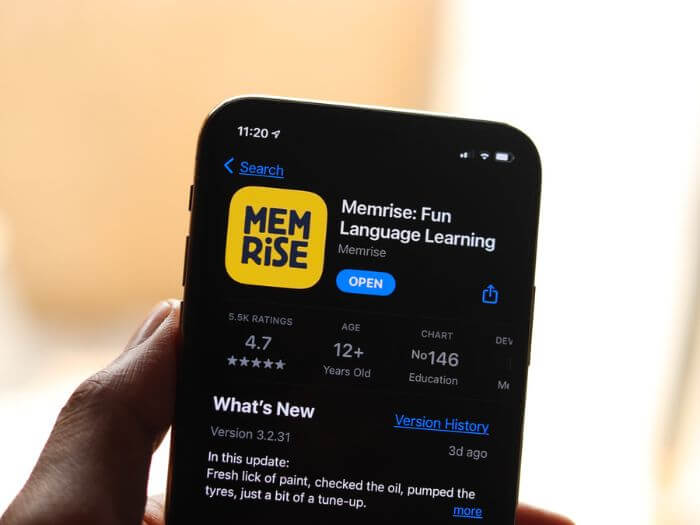
If your specific gripe with Duolingo was the artificial, robotic phrases, Memrise‘s headline feature answers it directly: short video clips of real native speakers saying real things, paired with strong vocabulary drilling.
For closing that 2,500-to-5,000-word gap, it is a genuinely useful tool.
On the scoring, it sits at A0 to A2 and is vocabulary-focused rather than a full course. Primary skill is vocabulary. Speaking support is Scripted or Guided through an AI chatbot, with no human.
Structure is a loose path, not a tightly sequenced curriculum. Study load is light, 5 to 15 minutes. The method is vocabulary spaced-repetition plus those native-speaker clips.
On price, it is freemium with a Pro tier: monthly around $24.99, annual around $79.99 to $89.99, and a Lifetime option that ranges widely, roughly $119.99 to $199.99 and up depending on region and promo (as of July 2026). It is an established vocab app.
The limit: it is not a complete course. The grammar and progression are thin, so it works as a vocabulary-and-listening booster alongside something more structured, not as your one main thing.
Best for: the learner who wants to expand vocabulary and train their ear on real native speech, as a supplement.
Not for: anyone looking for a single, complete course with grammar and clear progression.
Rosetta Stone, Michel Thomas and Language Transfer: Known Names, With Real Limits
These three come up constantly in “Duolingo alternative” searches, and they each do something real. But none of them is built to carry a serious learner from intermediate to B2, so let me place them rather than overselling them.
If you want a more detailed look at how Rosetta Stone compares to Duolingo, I have written a separate breakdown.
Rosetta Stone does decent pronunciation through its TruAccent tool and offers real immersion for absolute beginners, but its no-translation approach frustrates grammar, and it stalls early, around A0 to A2. It feels dated next to newer apps. Price: lifetime list around $399, but almost always $149 to $199 in practice (as of July 2026).
Michel Thomas is the fastest way to get an intuition for how the language actually works when you are starting out, all audio, no books. But the ceiling is low (A0 to A2), the recordings are dated, and there is no reading or writing. It is a one-time purchase, with the full Spanish bundle around $273 (as of July 2026).
Language Transfer is genuinely insightful on how the language fits together, and it is completely free, donation-supported. Its breadth is limited and it is audio-only, running A0 to low-B1 (and French is only partially covered). I recommend it warmly as a free supplement, and I can do that cleanly precisely because we earn nothing from saying so.
Best for: getting started or grasping the basics cheaply, with Language Transfer the standout free option.
Not for: breaking past the intermediate plateau on their own. Use them, then move on to depth plus real speaking.
The Bottom Line: Method Over Marketing
Here is the freeing part. The reason Duolingo did not get you there is not that you need a shinier app. It is that you need something with a real method underneath, and then you need to actually speak.
Those are two separate jobs, and the smart move is to pick one tool for each rather than hunting for a single app that does everything.
The pairing. For depth, pick something with a proven methodology that goes past A2: Busuu if you want an affordable app that reaches B2, StoryLearning if you want comprehensible-input learning through stories, Babbel if you want the clearest grammar, or Assimil if you want the cheap, disciplined route.
For speaking, get regular real practice, and think of it as a ladder: italki for real humans, the gold standard; Langua for unlimited AI conversation if a live tutor feels like too much yet; and Pimsleur as a hands-free scripted stepping stone. For a broader look at which language learning apps actually work, I have written a separate guide.
For a daily habit that actually moves the needle. If Duolingo taught you one thing, it is that you can show up every day. Keep that habit, but point it at something that works. Reading at your level for 15 minutes a day is the single most useful thing you can do, and the StoryLearning app is built for exactly that: graded stories with 1-tap translations, designed to slot in alongside whatever course or tutor you choose.
If you are on a budget. Language Transfer (free) plus Assimil (the price of a paperback) plus a handful of cheap community italki lessons is a genuinely strong post-Duolingo kit for very little money. I can say that openly because we earn nothing either way.
If you only do one thing. Book regular speaking practice. Across every expert source I have found, real output under mild pressure is the single biggest lever, more than any further app or vocabulary drill. Duolingo's streak trained you to show up daily. Point that same habit at speaking, and you will move.
And once more, lightly: there are no affiliate links on this page. We scored our own product on the same yardstick as everyone else, and named its weaknesses in plain text. That is the whole point.
Duolingo Alternatives: Common Questions Answered
What Is The Best Alternative To Duolingo?
There is not one single winner, because it depends on what you need. The key is to look for something with a real teaching methodology, not just better graphics.
For a more serious, structured app, Babbel and Busuu both go meaningfully deeper than Duolingo, and Busuu reaches B2 with human feedback on your writing.
If your real problem is speaking, italki gives you real tutors and Langua gives you unlimited AI conversation.
If you never enjoyed the tapping, a story-based course like StoryLearning's Uncovered uses comprehensible input, a research-backed acquisition method, instead of gamified drills.
The strongest setup is to pair one depth-focused course with one speaking option.
Is There A Good Free Alternative To Duolingo?
Yes, though free options are thinner on real speaking. Language Transfer is completely free, donation-supported, and genuinely insightful on how a language works, taking you to around low-B1 by audio.
Busuu and Babbel both have limited free tiers, and Anki is free for vocabulary if you do not mind building your own decks.
For the biggest lever, real speaking practice, you will usually need to pay something, but cheap community tutors on italki start at around $4 an hour (as of July 2026).
Can Duolingo Make You Fluent?
Not on its own. Duolingo is built around engagement mechanics, streaks, gems, leaderboards, with a thin layer of language exercises underneath.
Its core vocabulary tops out around 2,500 words, while B2 comprehension needs roughly 5,000, and the exercises are recognition-heavy rather than production-heavy, which is exactly the skill that stalls at intermediate.
It is excellent for building a daily habit and the absolute basics. To go further, you need something with a real teaching methodology and, above all, speaking practice.
What Should I Use After Duolingo To Reach B1 Or B2?
Split it into two jobs. For depth toward B2, use a course with real upper-level content: Busuu has genuine B2 material, Assimil is one of the few self-study courses that reaches B2, and StoryLearning carries reading and listening to mastery level – C2.
For output, add real speaking through italki (live tutors) or Langua (AI conversation). Almost everyone who breaks the plateau does some version of depth plus speaking, not one app alone.
Is Babbel Or Busuu Better Than Duolingo For Serious Learners?
Both are a meaningful step up. Babbel has the clearest grammar explanations and a more grown-up, structured feel, ideal for building a solid foundation to B1.
Busuu goes further up the ladder, with genuine B2 content and async correction from native speakers, which is something Duolingo simply does not offer.
If you want grammar clarity, lean Babbel; if you want to reach B2 with human feedback, lean Busuu. Either beats Duolingo for a serious learner.
Do I Have To Pay To Get Past Duolingo?
No, not necessarily. A free-and-cheap kit of Language Transfer, Assimil, and a few community italki lessons will take a disciplined learner a long way for very little.
That said, the single biggest paid lever is regular real speaking practice with correction, and if you are going to spend money anywhere, spend it there rather than on another app subscription.

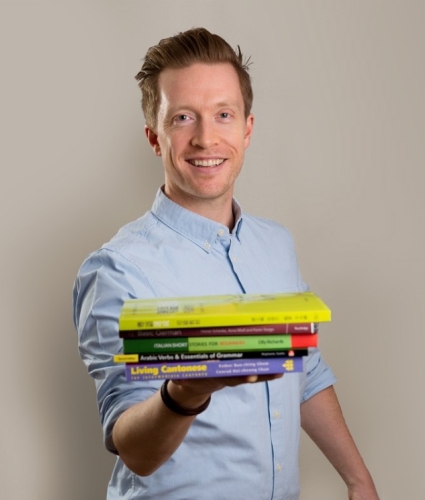
Olly Richards
Creator of the StoryLearning® Method


Olly Richards is a renowned polyglot and language learning expert with over 15 years of experience teaching millions through his innovative StoryLearning® method. He is the creator of StoryLearning, one of the world's largest language learning blogs with 500,000+ monthly readers.
Olly has authored 30+ language learning books and courses, including the bestselling "Short Stories" series published by Teach Yourself.
When not developing new teaching methods, Richards practices what he preaches—he speaks 8 languages fluently and continues learning new ones through his own methodology.