
I get messages about this exact moment.
Readers tell me they've kept a long daily streak alive on Duolingo, without missing a day. Then a real person speaks to them in Spanish or French, and the words sit in there somewhere, completely still.
None of them come out.
That failure isn't a discipline problem. Keeping a daily habit going is the hard part of learning a language, and Duolingo is genuinely good at building that habit.
In my view, the streak itself is a real achievement.
So now you're holding a different question.
Would paying Duolingo more money change what happens when a real person speaks to you?
That's the decision in front of you, and it's a fair one.
Is Duolingo Max worth it? Only if you're learning one of the six languages its calls cover, studying on your phone or tablet, freezing when it's time to speak, and likely to make those calls most days.
Those six languages are English, French, Spanish, Italian, German and Portuguese. One practical check: Max can't be bought on the web. It's available only on the iOS and Android versions of the app.
For everyone else, no. Max adds just two things to Super Duolingo: spoken calls with an AI character and guided role-play chats. That's it.
One fact dates most of the reviews you'll have found. Explain My Answer used to sit behind the Max paywall. Since 1 January 2026, it's been free to all Duolingo learners.
I should be straight with you. I haven't paid for Duolingo Max or Super Duolingo, so this isn't a hands-on test. It's a careful read of what Duolingo publishes, set against what I know about how adults learn languages.
Everything I state as fact was read on Duolingo's own pages and its app-store listings as of September 2026. Where something couldn't be confirmed, I say so.
Table of Contents
What Duolingo Max Adds To Super Duolingo
As of January 2026, a feature Duolingo Max used to charge for is now free for every learner. That single change makes a lot of the advice still circulating about Max out of date. Any write-up from before January 2026 is describing a different Max.
The change is easy to miss, but it matters.
That feature is Explain My Answer. Inside a lesson, it explains the grammar and vocabulary behind your answer. It started as a Max extra, but since 1 January 2026 it has been free for all learners in most courses teaching Spanish, French, German, Japanese, Portuguese, Italian and Korean.
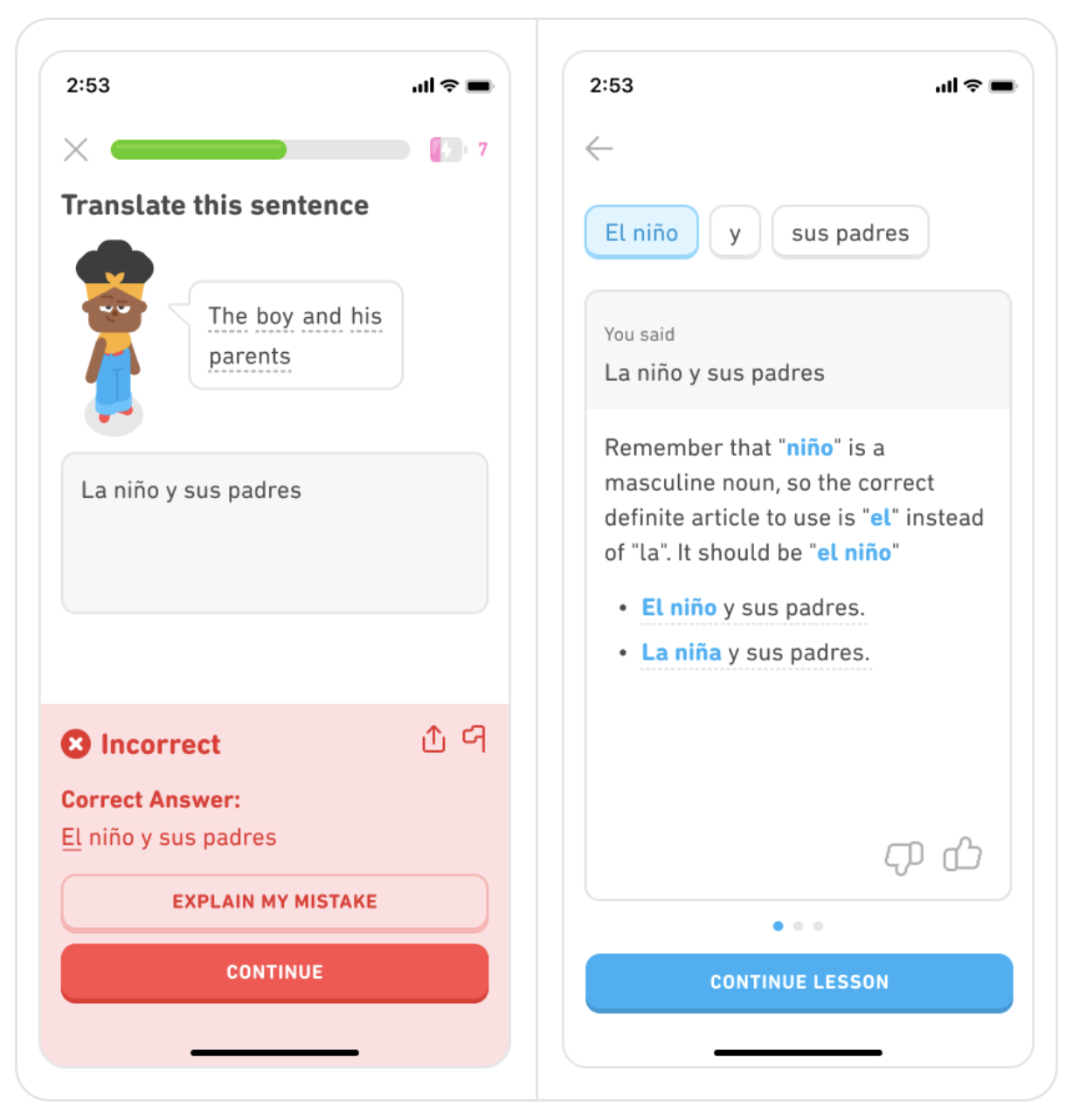
It's a genuinely useful tool. It's just not part of the Max calculation anymore.
Max includes everything in Super, so every Super benefit is already covered. On top of that, it adds Roleplay and Video Call with Lily. Max isn't a separate path; it's Super with extra layers.
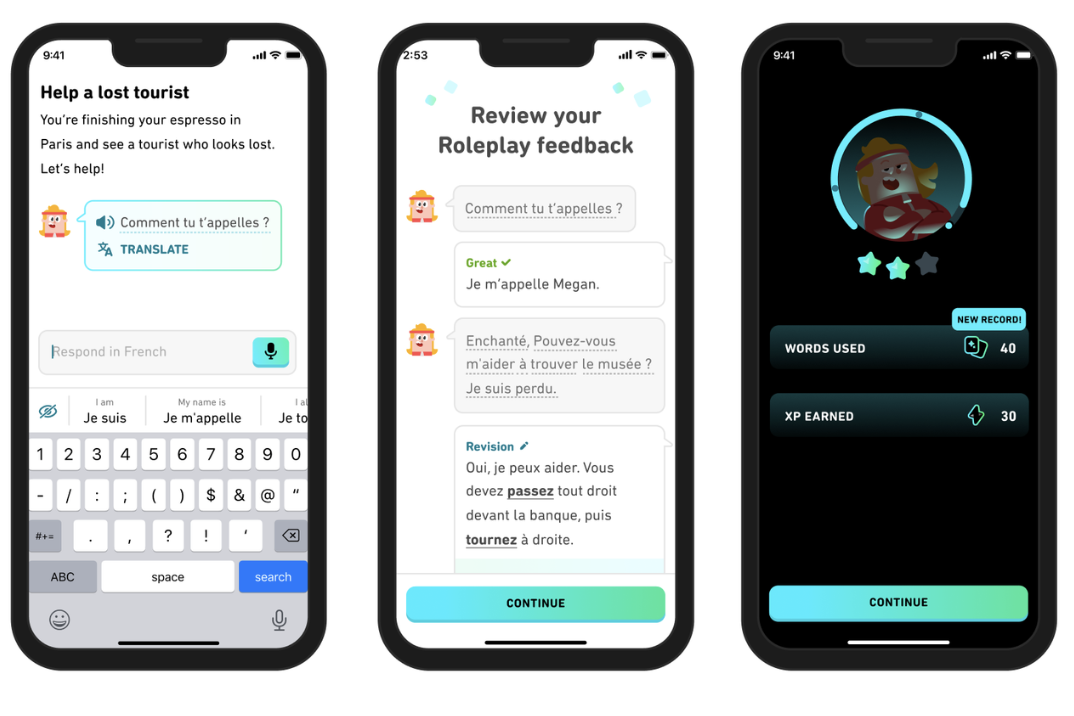
In Roleplay, you work through a set everyday scenario with one of Duolingo's characters, ordering a coffee or shopping for furniture, and afterwards you get feedback on the accuracy and complexity of what you said.
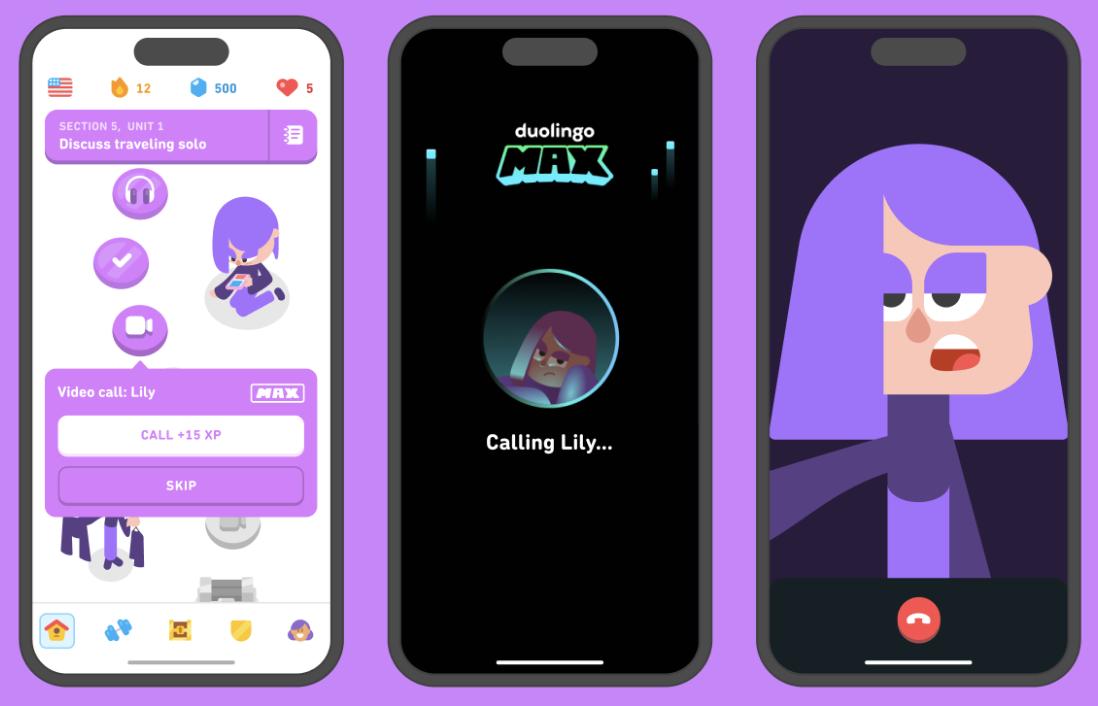
In Video Call, you speak out loud to an AI character called Lily, on demand, and she answers back in real time.
There's also a coached version of the call with a character called Falstaff, announced in January 2026 for Max subscribers on iOS, still rolling out across levels, with no mention of Android. Those are the only genuine additions beyond Super.
Super itself is where the friction disappears. You get no ads, Unlimited Hearts, Personalized Practice built from your mistakes, unlimited attempts at Legendary challenges, and Monthly Streak Repair.
If your course doesn't support the AI features yet, you still get every Super benefit.
Put simply: Super removes friction. Max adds speaking.
Neither adds a single new lesson, because Duolingo gives the same lesson content to every learner.
So the real question isn't which tier has more. It's what's cutting your practice short.
Free learners meet a limit called Hearts, or Energy, depending on which their app shows, and Duolingo's own pages use both names. Its help centre says a missing Unlimited Hearts may be part of a test it is running.
If ads or running out of Hearts are what cut your practice short, that's a Super question. You know the feeling: mid-lesson, the app stops you. Max can wait.
That's the whole decision.
| Free | Super | Max | |
|---|---|---|---|
| Lesson content | The same for everyone | The same for everyone | The same for everyone |
| Ads | Yes | No | No |
| Hearts or Energy limit | Yes | Unlimited | Unlimited |
| Practice built from your mistakes | No | Yes | Yes |
| Unlimited Legendary attempts | No | Yes | Yes |
| Monthly Streak Repair | No | Yes | Yes |
| Explain My Answer | Yes, in most courses | Yes, in most courses | Yes, in most courses |
| Roleplay | No | No | Yes |
| Video Call with Lily (unguided) | No | No | Yes |
| Video Call with Falstaff (the coached version) | No | No | Yes, on iOS |
| Source | Duolingo's own pages and its app-store listings, checked 19 September 2026 |
What Duolingo Max And Super Duolingo Cost
The hardest fact on this page to pin down is the price. Duolingo publishes no price for Super Duolingo or Duolingo Max on its own website.
Not on the Super page, not on the Family Plan page, not in the help centre, not in its blog posts. There is no public page for Max at all: the page address for Max lands on the Duolingo home page, and the help centre has no pricing article.
The app stores are the only public place a number appears in Duolingo's own listings, so those listings are where the figures that follow come from.
On 19 September 2026, Apple's United States listing showed ten in-app purchases, six of them named Super Duolingo, at $9.99, $12.99, $79.99, $83.99, $95.99 and $119.99. Apple does not say which is monthly, annual or family.
Apple's United Kingdom listing that same day showed Super Duolingo at £8.99, £12.49, £59.99, £68.99 and £86.99, also unlabelled. Google Play's United States listing stated in-app purchases from $0.99 to $239.99 per item, without listing the items.
No item named Duolingo Max appeared in the Apple listings for the United States, the United Kingdom, Canada, Australia or Ireland.
Those six unlabelled numbers are, as of September 2026, the entire public Super Duolingo price list in the US App Store.
The lower figures look like monthly plans, the middle figures look like annual plans, and the top figure in each store might be the family plan, which covers six accounts. That is a reading, not a fact, because Apple attaches no label to any of them.
For Duolingo Max, the picture is simpler and less helpful. No public page Duolingo publishes shows a price for one person.
The Max price appears only inside the app once a learner is signed in. Figures quoted on review sites could not be confirmed on anything Duolingo publishes, so this page does not repeat them. If you want that number, open your own app.
Your price may also differ from a friend's. Duolingo's help centre says: “We sometimes run small tests on our subscriptions and features, to explore ways to provide learners with the ideal subscription options that meet their budget and learning goals.”
One country's listing carried six different Super prices, so that testing is not abstract.
The free trial is also inconsistent depending on where you look. Duolingo's own website and its Family Plan page give seven days, while both app-store listings say 14 days, and Duolingo's pages say nothing at all about a trial of Max.
So the only place your real price exists is inside your own app. Check there before you pay.
Duolingo Max: What It Does Well, And Where It Stops
Duolingo's own Video Call pitch starts with a freeze. It asks what you do when it's time to speak and you don't have a language partner to practise with every day. That's the exact moment Max exists for.
What you're actually paying for is speaking practice, not extra course content.
Video Call is the on-demand option. You talk with Lily, an AI character, not a live human, and Duolingo says she'll kick things off, usually about a topic you just studied. She adjusts to your skill level, you can ask her to repeat herself or slow down, and mistakes aren't penalised.
Duolingo says Lily remembers what you discussed the next time you call and leaves a transcript afterwards. You can call as many times as you want.
Roleplay is the guided scenario. People write the scenes, so you might order a coffee with Lin or go furniture shopping with Eddy. Afterwards you get feedback on the accuracy and complexity of your responses, plus tips for future conversations.
Video Call with Falstaff is the coached version. He asks questions pitched at your language level, suggests phrases and translations when you're stuck, and gives real-time feedback in your own language while you talk.
None of it is a live human, and Duolingo gives you a way to report mistakes in an AI-generated response.
I'll give Duolingo real credit here. This is a sensible attack on a real problem, and it sits inside a habit you already keep.
Now the honest limits, straight from Duolingo's own small print.
Calls are short. Duolingo says conversations with Lily last about a minute early in a course and up to 3 minutes as you advance. Lily doesn't correct your grammar while you talk.
Max adds no lessons. The lesson content is the same for everyone. It works only in the iOS and Android apps, not on the web, and a web subscription can't be upgraded to Max.
Coverage is narrow. As of September 2026, Video Call covers English, French, Spanish, Italian, German and Portuguese. Roleplay for English speakers covers French, Spanish, German, Portuguese and Italian, while Duolingo's app-store listings say it teaches 40+ languages.
Most courses get no Max features. A learner on an unsupported course isn't getting the speaking add-ons, just the Super benefits.
Here's my honest view, not a test of the product. Speaking is a skill, like tennis: you get better at it by doing it, not by reading about it. So a short daily conversation with something that won't judge you is worth a lot to someone who freezes.
But that advice has a boundary. If what stops you is understanding what comes back at you, more speaking practice is the wrong medicine. That's an input problem, and it's solved by listening to and reading a lot of material you can follow, at your level, over months.
Best for: the Duolingo learner who can follow a little and wants a low-stakes daily conversation partner. You don't need Super first: Duolingo lets eligible free learners subscribe to Max directly from the Practice hub in the Android or iOS app.
Not for: anyone whose real blocker is understanding spoken replies rather than producing them. Short calls with no grammar correction won't fix that, and most languages won't get the features at all.
Should You Pay For It? A Quick Way To Decide
There are four situations here, and you're in one of them.
If you're on the free tier and the ads or the Hearts and Energy limit keep cutting your practice short, that's a Super question. Max isn't the decision in front of you yet.
If you're learning one of the six languages the calls cover on a phone or tablet, and you freeze when it's time to speak, you don't need to buy Super first. Duolingo lets eligible free learners subscribe to Max directly from the Practice hub.
It's worth trying, but check inside your own app that your course actually has the calls before you pay. Duolingo's own pages disagree about which languages beyond those six are covered.
If your app offers a plan by the month, that's the sensible way to find out. Count the calls you made at the end of the month and decide from that.
Situation three splits in two. If you study on the website, don't pay. Duolingo says a learner on an unsupported course still gets only the Super Duolingo benefits, so Max gives you nothing extra there.
But if your language simply isn't among the six the help centre names, don't write it off yet. Check inside your own app first, because Duolingo's own blog posts add Japanese, Korean and Chinese for the calls while its help centre doesn't.
That last step is my reading, not theirs.
If you have a long streak and still can't follow a real conversation, neither tier fixes that on its own. Duolingo offers the same lesson content to all users, so Max and Super don't add new material to listen to and read.
Keep the streak if you enjoy it, and add listening and reading at your level alongside it, over months rather than weeks.
A Reading Habit To Go With Duolingo Max
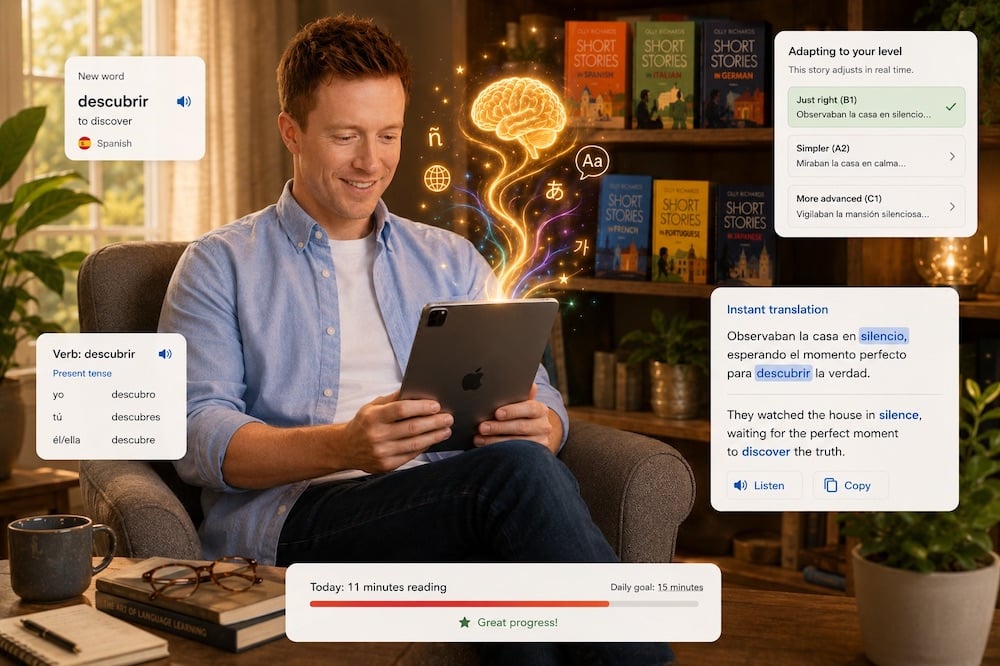
The StoryLearning App is my own product, a reading app, and it won't replace Duolingo Max. Because the StoryLearning App is mine, I'm going to lean harder on its weaknesses than I did on Duolingo Max's.
Duolingo Max gives you something the StoryLearning App can't: spoken conversation practice on demand, out loud to an AI character who answers back, as many times as you want, with mistakes not penalised.
It also gives a guided everyday scenario with feedback on the accuracy and complexity of what you said.
What that leaves uncovered is the written language. A word you learn on Monday and can't find on Friday hasn't gone anywhere. It just hasn't turned up since.
Reading is where the language keeps turning up, in sentences and stories you can mostly understand, and 15 minutes a day is enough to keep that happening.
If you're not going to base your study on reading, tell me what you're going to do instead.
Inside the StoryLearning App, each story is written by AI for you, at your level, in the genres you choose from a list of eight. You save words as you read, and those words come back in later stories, days and weeks apart. That's spaced repetition, and it happens inside the stories, not on flashcards.
The approach is comprehensible input, which just means reading stories you can mostly understand. You can trial the audio narration with a free audio each month, and full narration for every story is available on a separate plan.
The StoryLearning App costs $15 a month, or $135 a year, as of September 2026. That buys up to 20 new stories a month across all your languages together. There is no free trial.
The weaknesses are real. The StoryLearning App has no speaking practice of any kind, and it's not for complete beginners.
Duolingo Max is built for people starting from nothing, so if you're at the very start you can't use the StoryLearning App yet and need an elementary foundation first.
It runs in a web browser on a phone, tablet or computer with nothing to install. It's not in the App Store or Google Play, and you can't read offline. It launched in 2026.
It covers ten languages, all European. This page names Japanese, Korean and Chinese as languages Duolingo Max's spoken features cover, and the StoryLearning App covers none of them. If you're learning one of those three, you can't use the app at all.
Best for: the learner who wants a daily reading habit and is happy with stories written for their level.
Not for: someone at the very start, learning Japanese, Korean or Chinese, or wanting any speaking practice.
The StoryLearning App
Price: $15 a month, or $135 a year (US dollars), as of September 2026
Free trial: none
New stories: up to 20 a month, across all your languages (re-reads not counted)
Audio: a free audio each month to trial the narration; full narration for every story on a separate plan
Languages: Danish, Dutch, English, French, German, Italian, Norwegian, Portuguese, Spanish and Swedish, with separate Spain and Latin American Spanish, and European and Brazilian Portuguese
Level: from about A2 (elementary) to advanced; not for complete beginners
Where it runs: web browser on a phone, tablet or computer; not in the App Store or Google Play
Is Duolingo Max Worth It? The Bottom Line
Duolingo Max is a fair product aimed at a real problem, and it's worth paying for if you're one particular reader. You're that reader if you're learning one of the six languages Video Call covers, on a phone or tablet, freezing when it's time to speak, and actually making the calls.
It's not worth it if your language isn't one of those six, as of September 2026: English, French, Spanish, Italian, German or Portuguese. It's not worth it if you study on the web, because Max works only in the phone and tablet apps. And it won't help if you were hoping for extra lessons or a fix for understanding speech at normal speed.
What Max adds is two conversation features to the course you already have. It doesn't add new lessons.
So if speaking is your bottleneck and your setup matches, the calls are a reasonable bet. If not, keep your money. That's the honest split, and it's narrow.
One thing survives all of that. Speaking practice works best next to a lot of reading and listening you can follow.
And before you pay, check the price inside your own app. Duolingo tests its subscriptions, and no price for Duolingo Max is published anywhere Duolingo controls. Yours may not match anybody else's, including any figure quoted on this page.
Duolingo Max And Super Duolingo: Your Questions Answered
How Much Does Duolingo Max Cost?
Duolingo doesn't publish a price for Duolingo Max on any public web page.
As of September 2026, no item named Duolingo Max appeared in the Apple App Store listings checked on 19 September 2026 for the United States, the United Kingdom, Canada, Australia or Ireland.
The price appears only inside the app, once you're signed in.
Any figure you see elsewhere isn't confirmed by Duolingo. Check the app itself.
How Much Soes Super Duolingo Cost?
As of September 2026, Duolingo doesn't publish a price for Super Duolingo on its own website.
On 19 September 2026, Apple's United States App Store listed six in-app purchases named Super Duolingo: $9.99, $12.99, $79.99, $83.99, $95.99 and $119.99, with no label for monthly, annual or family.
Prices vary by country, platform and test group, so check your own store before you pay.
What Is The Difference Between Super Duolingo And Duolingo Max?
Max is Super Duolingo plus two AI conversation features: Roleplay scenarios, and spoken Video Calls with Lily or with the coached character Falstaff (as of September 2026).
Super itself removes ads, gives you Unlimited Hearts or Energy, adds Personalized Practice built from your mistakes, and gives unlimited attempts at Legendary challenges.
Neither tier adds new lesson content, because Duolingo offers the same lessons to all users. So if it's more material you're after, Max won't give you it; it's about conversation and practice.
Is Explain My Answer Still Part Of Duolingo Max?
No, it isn't. Duolingo says Explain My Answer has been free for all learners since 1 January 2026, in most courses teaching Spanish, French, German, Japanese, Portuguese, Italian and Korean.
Plenty of third-party reviews still list it as a Max feature, which is where the confusion comes from. Go by Duolingo's own current pages, not the older write-ups.
Which Languages Have Duolingo Max Features?
Duolingo Max's Video Call works in English, French, Spanish, Italian, German and Portuguese. Roleplay covers French, Spanish, German, Portuguese and Italian for English speakers.
As of September 2026, those are the languages in Duolingo's own help page and Video Call post. Duolingo's blog posts also mention Japanese, Korean and Chinese for calls, but the help centre doesn't.
So check inside your own app. That's the one to trust.
Does Duolingo Max Work On Android, iPhone And The Website?
Duolingo Max works on the iOS and Android apps only, not on the website. Duolingo says you can't purchase it on the web, its features are only available in the mobile app, and a web subscription can't be upgraded to Max.
On iPhone, you'll need iOS 17.0 or later, as of September 2026. So if you're using the website, switch to the app first.
Is There A Free Trial Of Super Duolingo Or Duolingo Max?
There's one for Super Duolingo, but Duolingo's pages say nothing about a free trial of Max.
Duolingo's website offers one week free, its Family Plan page says seven days, and both app-store listings say 14 days. So the length depends where you look, as of September 2026.
Whatever you choose, it renews automatically unless you cancel.
Is There A Duolingo Max Family Plan?
Yes, Duolingo Max can be bought as a family plan, says Duolingo.
The Family Plan page sits under Super Duolingo, but it covers the same setup: six accounts in total, the manager plus five others, in any location and any language, everyone keeping their own account (as of September 2026).
One catch: if a member is on the web or learning a course that doesn't support Max features, they get Super Duolingo benefits only.
You can't invite someone with an active paid Duolingo subscription until theirs has expired.
Can I Cancel Duolingo Max And Get A Refund?
Yes, you can cancel Duolingo Max, but don't expect a refund.
As of September 2026, Duolingo's cancellation and refund help articles are written about Super Duolingo subscriptions.
They say you can cancel at any time in the place you subscribed, deleting the app cancels nothing, and you keep features until the paid period ends.
Duolingo also says in-app purchase charges are generally nonrefundable, with no refunds or credits for partially used periods.
So cancel where you signed up, not by uninstalling.
Is Super Duolingo Worth It?
It's worth it only if the ads and the Hearts or Energy limit are what stop you practising. Super Duolingo removes both and adds Personalized Practice built from your mistakes.
What it doesn't add is new lessons. Duolingo gives every learner the same content, free or paid, as of September 2026. So pay for comfort, not for more language.

Olly Richards
Creator of the StoryLearning® Method


Olly Richards is a renowned polyglot and language learning expert with over 15 years of experience teaching millions through his innovative StoryLearning® method. He is the creator of StoryLearning, one of the world's largest language learning blogs with 500,000+ monthly readers.
Olly has authored 30+ language learning books and courses, including the bestselling "Short Stories" series published by Teach Yourself.
When not developing new teaching methods, Richards practices what he preaches—he speaks 8 languages fluently and continues learning new ones through his own methodology.