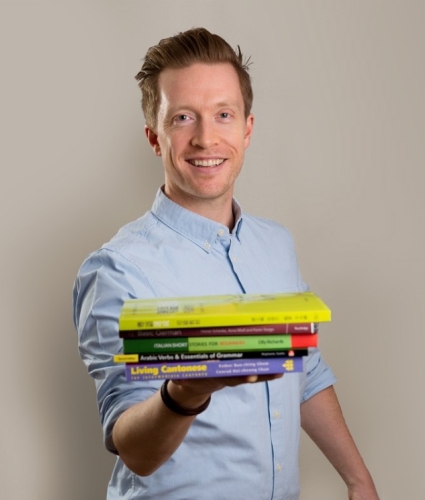
Gareth Popkins and I first met at one of the early polyglot gatherings in Berlin, more than a decade ago now.
He's a Yorkshireman who learnt Welsh as an adult, lectured in Russian history through the medium of Welsh, spent years as an international finance lawyer, and now teaches German full time as Dr Popkins.
I wanted to know how languages have run through all of that and, more usefully for you, what he actually does now that he no longer has endless free time.
His answers were refreshingly unglamorous.
Pro Tip
By the way, if you’re serious about improving your language skills, online language courses for fluency can make a huge difference.
I'm offering top-rated online language courses for beginners to advanced learners, covering Mandarin, Spanish, French, Italian, German, Japanese and more.
If you’ve been looking for a story-based online course to learn languages, this is your chance! Get a free 7-day trial of the course of your choice.
If you prefer watching videos to reading, hit play on the YouTube version of this post at the top of the page. Or listen to the podcast version below. Otherwise, here's what you'll discover in this post:
Table of Contents
Who Is Gareth Popkins?
Gareth grew up in York, in a corner of rural Yorkshire where nobody around him spoke another language, and he had little success with languages at school.
The bug bit in his early twenties. Family holidays to France and Scandinavia had left him fascinated by the sound of other languages, and there was Welsh in the background too.
His first name is Welsh, his father's family are Welsh and his grandfather, who died before Gareth was born, was a first-language Welsh speaker.
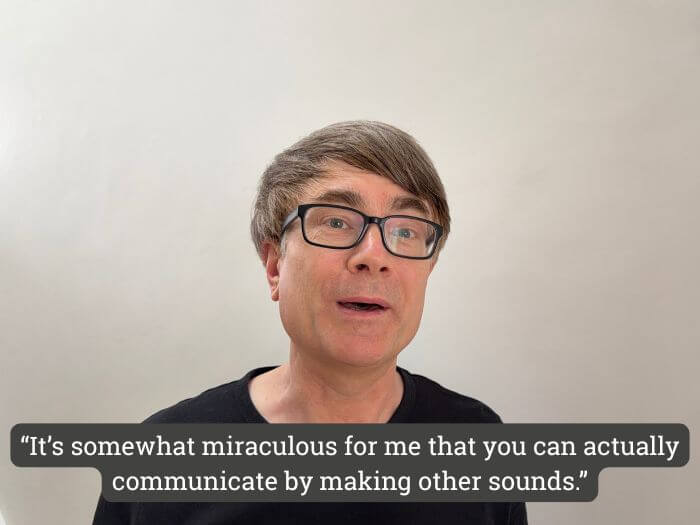
On visits to South Wales he had heard distant cousins talking to each other in Welsh, and found it miraculous that you could communicate by making an entirely different set of sounds.
It still strikes him as a magical thing, and that excitement is what has driven him on ever since.
The languages he has worked on seriously:
- Welsh — learnt to fluency in around a year, and later used professionally
- Russian — including doctoral research in the archives in St Petersburg
- German — the language he now teaches
- French — his first proper project, begun as an undergraduate
- Basque and Japanese — his current learning projects
- He has also been slowly but surely learning Hungarian, Finnish, Italian and Portuguese.
Along the way he has been a historian, a university lecturer and an international finance lawyer. These days he teaches intermediate German learners full time.
Can Languages Be The Thread That Runs Through A Career?
Look at Gareth's CV and you would be forgiven for seeing a series of unrelated careers. Historian of Russia. University lecturer. Finance lawyer. Language teacher.
I asked him whether there was a pattern to be found there, or whether he had simply married up everything he liked in life and made it work somehow.
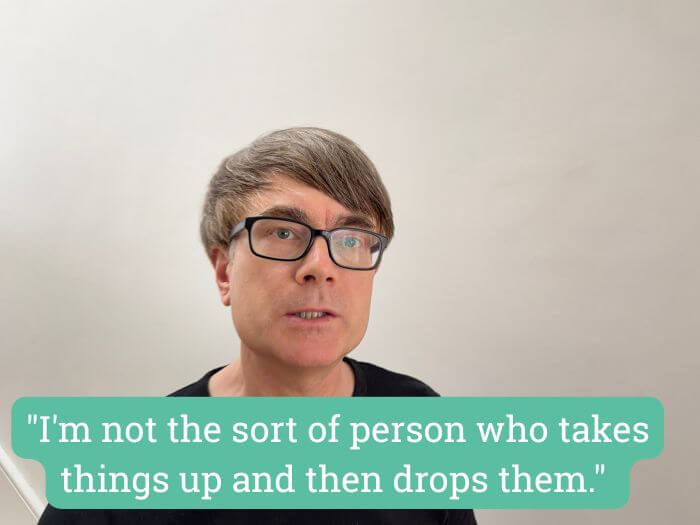
Languages, he said, are certainly one of the threads. “I'm not the sort of person who takes things up and then drops them.” Where some people work through their passions one at a time, he prefers to weave them together.
So he chose a doctoral topic in Russian history rather than British history partly because he wanted to learn Russian. His supervisor pointed out that German was an important language for the scholarship on 19th-century Russia, so that came too.
The doctorate then took him on an exchange to Freiburg in southwest Germany, gave him a year in the archives at the Academy of Sciences in St Petersburg and a further year researching in Helsinki, where there is a superb Slavonic library.
It ended with a lectureship in Wales, teaching Russian history in Welsh, which combined two of his passions in a single job.
Later, coming out of law school, he deliberately joined a firm with an international network that included a Moscow office. The legal work in Russia in the early 2000s was interesting in itself, but it also meant he could take his Russian further.
There was never a master plan. But as he pointed out, in a way you make your own luck.
The Rocket Launch Theory Of Language Learning
The Welsh story is the one I wanted to dig into, because going from beginner to lecturing at a university in Welsh is not nothing.
Gareth's own metaphor for it is “a rocket taking off into space”. If you have the energy and the time to go at a language very intensively at the beginning, you can escape the earth's atmosphere, which is to say reach a working knowledge.
After that you can float forward, firing the boosters as and when, over years and decades. I like to talk about “focus”. We're ultimately describing the same thing.
Here is what the launch actually consisted of:
- An intensive taught summer school in Lampeter, in rural Wales
- Systematic vocabulary building from a book organised by topic — the farm, describing people, jobs — all of it pre-internet
- Nine months lodging with a Welsh-speaking family in Aberystwyth
Notice that the taught course was only one part of it. He was doing his own systematic work alongside it, and then he engineered a living situation that made him use the language every day.
By his own admission he was doing a lot of things right more by accident than design at that stage.
The escape velocity idea is worth holding onto, because it reframes what intensity is actually for. You are not trying to finish the language in three months. You are trying to get far enough off the ground that the language can stay with you for the rest of your life.
Why You Have To Fight For Your Own Immersion
One thing Gareth raised applies far more widely than people realise: what happens when you go abroad to learn a language and everybody there also speaks yours.
In Aberystwyth, by his estimate, around half the population speaks Welsh. Everybody speaks English. So immersion was not automatic.
He had to make the extra effort, make sure he was plugged into the right networks and be quite firm about which language he was using. The accommodation helped enormously, and so did the other things he was involved in.
On reflection, he told me, that may not be so different from being a native English speaker in Berlin, where he had relocated to temporarily at the time of our chat. Berlin is full of English. If you want German, you have to organise your life so that German is what you get.
This is the bit that catches people out. Moving to the country is not a method. Living somewhere the language is spoken gives you the opportunity for immersion; it does not hand it to you.
You still have to build the networks, choose the situations and hold the line on which language you speak. Those lessons from the Welsh experience, Gareth said, carried forward into every language he has learnt since.
What Happens When The Intensive Phase Is Over?
I was talking about this with Dave Pinto not long ago, and we landed on the idea that most of us get one particular phase in life where we have the opportunity to go very deep on a language.
In his case it was Spanish. For me it was my twenties, when I should have been doing something more productive and was instead bumming around learning languages. I asked Gareth whether he had ever managed to recreate that window.
He had it too, and it covered French, Russian and German as well as Welsh, all inside roughly a ten-year stretch. But once you are holding down a job or you have family commitments, that rocket booster effect becomes much harder to come by, because it depends on intensity.
What replaced it was building the language into the gaps: slots and opportunities to study, to get input, to use the language. It is a slower process and he is entirely at peace with that. For many of us, as he put it, “it's not a race anyway”.
A lot of the frustration people feel in the middle of a language comes from measuring a busy adult life against the standards of a year when they had nothing else to do. Different circumstances, different pace. What matters is the direction of travel.
What Does Gareth Popkins Do In A Typical Week?
So what does the gaps approach look like for someone who already knows what works? I asked him to walk me through a normal week.
It is all about routines and habits. He works in blocks — three months focused on intermediate Basque, say — and he protects a regular slot, ideally first thing in the morning. Fifteen minutes to half an hour a day, five days a week, is enough to build on.
The shape of it:
- A daily study slot, first thing, working actively with a course, whether online, video or a traditional coursebook
- Input in the dead time: course audio or podcasts while washing the dishes or jogging, and the radio in one of his stronger languages while shaving
- Two half-hour sessions a week with a one-to-one teacher, whenever speaking is the current focus
- Reading, with books by the bed — a page or two if that is all there is time for
The detail I would draw your attention to is the deliberate use of a course. Gareth likes structure, and he likes to understand how the system works under the bonnet. “You don't need to reinvent the wheel,” as he put it.
Structure is not the enemy of enjoyment. For a lot of people it is the thing that makes daily study possible at all.
How Do You Keep Going When Life Gets In The Way?
Because life does get in the way, and Gareth is refreshingly honest about that.
His answer is to keep a few bedrock activities running no matter what: listening to Japanese podcasts while jogging, for instance, of which he says there are a great many good ones for lower intermediate learners.
The point is not progress. The point is that he feels a continuous connection with the language even during phases when he is not focused on it. There is a difference between studying a language and staying in contact with one, and the second costs almost nothing while making the next intensive phase far easier to start.
Beyond that, his ordinary life is stacked in favour of his languages. When he was commuting to the law firm in London, the earbuds went in for radio or a podcast on the way there and the way back. Domestic chores, the same.
Half an hour of television before bed would usually be in German or Russian, and YouTube with his morning coffee in one language or another.
There is no puritanical no-English rule behind any of it. He is simply so keen to consume material in his new languages, because he loves the sound of them, that his English reading and film-watching sometimes suffers.
There are series everybody else has seen that he has missed. When you are working on several languages, as he says, it is a trade-off, like the whole of life.
That is what I would most want a reader to take from this. He is not disciplined so much as genuinely, almost childishly, interested. When the fascination is real, the activities more or less make themselves.
Why Is The Intermediate Plateau Such A Watershed?
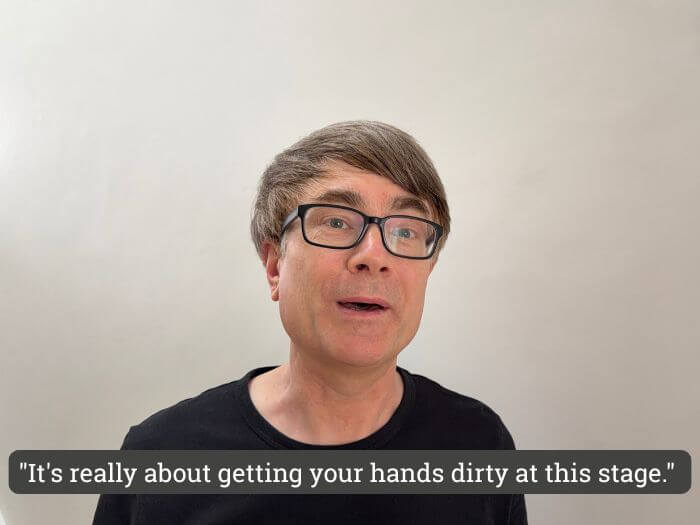
Gareth teaches intermediate German learners, so I asked him why he had chosen to plant his flag at that particular stage.
The intermediate plateau is a real watershed, he said, because a great many people never get beyond the dabbler and the beginner, and because the challenges change shape entirely.
You have theoretically learnt quite a lot and can cope in basic situations, but language coming at you at native speed is still too fast.
There are structures you have not met yet and vocabulary you do not have. Meanwhile a good chunk of what you have learnt is sitting there unactivated.
So much of the work at this stage is not linguistic at all. It is about:
- Accepting that this is a longer haul than you thought when you started
- Being clear about why you are doing it in the first place
- Building weekly and daily patterns until they harden into habit
- Getting comfortable with ambiguity, and with understanding just enough to get the gist
- Getting comfortable with making mistakes
And then pushing yourself to use the active skills, in speaking and in writing. “It's really about getting your hands dirty at this stage,” he said.
Does Structure Beat Motivation At The Intermediate Stage?
I put it to Gareth that the reason the intermediate plateau is so punishing is that you lose focus and direction, because nothing you are doing appears to be working.
It takes discipline, and a bit of wisdom, to say: I am doing all this work, I cannot feel any improvement, and I am going to carry on anyway because the results will come eventually.
His answer was framework and structure, with an important caveat. People differ. Some are spontaneous with a low boredom threshold; others are methodical by nature. You have to take your own personality into account rather than copying someone else's system.
Whoever you are, though, you need daily opportunities to use the language. With his own students he releases materials on a drip basis so that nobody feels overwhelmed, because overwhelm is its own way of stalling, and he works to a weekly routine.
His practical suggestion is to set aside around half an hour a day, at the same time every day. Your lunch break, before the family gets up, whatever fits. And if you live with other people, tell them.
If the household knows that this half hour is yours and is not to be interrupted short of a real emergency, you are far more likely to protect it.
The other half of his answer is a shift in attention. Of course we all want the outcome. But if you can move your focus onto enjoying the process, ambiguity and mistakes included, carrying on becomes much easier. Process, not product.
The Case For Learning From A Non-Native Teacher
Neither Gareth nor I teach our native language, and I know teachers in the same position who feel self-conscious about it. I think it is an enormous advantage.
We have been through the process ourselves. We have struggled at the intermediate stage and come out the other side, and in Gareth's case in several languages, not just the one he teaches.
A native speaker can teach you the language. What they may not be able to help with is the psychology, the mindset and the behaviour, which is where a great deal of the difference is actually made.
Gareth agreed, but was quick to give native teachers their due. He finds them most helpful in his strongest languages, where the work is all about fine nuance.
His image for that stage was lovely: you finally reach the sunlit uplands, only to discover there is even more undergrowth up there than you had realised.
What he tells his own students is that he is an advanced learner of German himself and still makes mistakes, still learning all the time. Far from undermining him, it makes him relatable.
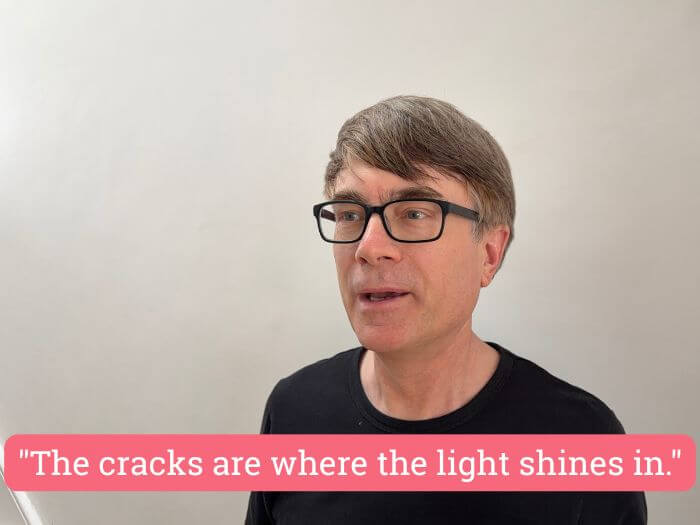
“The cracks are where the light shines in,” he said — that is where your humanity comes through, and students feel considerably less intimidated as a result.
How boring would it be, he asked, if we were all perfect?
Play To Your Strengths, Not Someone Else's
Gareth is candid about what he is not good at. Mimicking accents is something he still finds difficult, and he does not rate his own memory.
What he does have is a love of reading and a serious interest in current affairs and ideas, so that is what he builds his language learning around.
Other people are the sort who can walk into a bar or a shop and fall into conversation with anybody.
Others have a burning passion for sport, or music, or basket weaving, which was Gareth's example and, I have to say, a personal favourite of mine (just kidding!).
The principle is the same in each case: work out what your actual strengths and interests are, then harness them.
This matters most for people learning under obligation. If you need the language for naturalisation, or for your job, or because you have moved abroad as somebody's spouse or partner, there is nothing worse than doing something you do not fundamentally want to do.
So the task is to connect the language to something you already care about, as fast as possible. Follow accounts in the language about your sport or your hobby, even if you barely understand a word at first.
If you are doing childcare, learn the vocabulary you need to talk to other parents at the school gate.
And then, at some point, decide. “If you are constantly resisting, then it's not going to happen.”
Decide what you are aiming for, too. Not everybody wants or needs to get as close to native as possible, and knowing which camp you are in makes everything downstream of it simpler.
Gareth Popkins FAQ
How many languages does Gareth Popkins speak?
Gareth Popkins speaks four languages to a high level: French, Welsh, German and Russian. Most of his learning was done in a single ten-year stretch in his twenties.
He is currently learning Basque and Japanese and has been making slow but sure progress in four more languages over the years: Hungarian, Finnish, Italian and Portuguese.
What is the intermediate plateau?
The intermediate plateau is the stage where you have learnt enough to handle basic situations but still cannot keep up with conversation at native speed.
A lot of learners stop at this stage. The frustrating part is that progress stops being something you can feel: you are putting in the same work and the gains are no longer obvious.
What carries you across the plateau is not linguistic. It is building daily habits, accepting a longer timescale, getting comfortable with ambiguity and mistakes, and actively using what you already know but have not yet activated.
Where can I find Gareth Popkins online?
Gareth teaches intermediate German learners on his YouTube channel, Dr Popkins German, and he is on Instagram under the same name.
He also runs a long-standing general language learning site, How To Get Fluent, where he writes about his own projects and his broader thinking about learning languages, and where you can get in touch with him.
If you are an intermediate German learner, the YouTube channel is the obvious place to start.
If you are learning something else entirely, the site is still worth a look for the mindset material, which applies whatever your target language happens to be.
Languages Are A Thread, Not A Project
What stays with me from this conversation with Gareth Popkins is how unhurried the whole thing is.
Here is someone who learnt Welsh well enough to lecture in it, did doctoral research in Russian archives, practised law with Russian in the mix and now teaches German full time — and none of it came from one heroic burst of effort that he has been coasting on ever since.
It came from treating languages as something you weave into a life rather than a project you complete and tick off.
If you can find an intensive phase, take it, because the rocket does need its escape velocity.
But if you can't, then half an hour at the same time every day, some podcasts in the dead time and a book by the bed will keep you moving for decades.
Get comfortable with ambiguity, get comfortable with mistakes and stop measuring yourself against a version of you who has all the time in the world.
The thrill of fluency, as Gareth calls it, doesn't arrive all at once. It arrives at every single stage, and it doesn't run out.

Olly Richards
Creator of the StoryLearning® Method


Olly Richards is a renowned polyglot and language learning expert with over 15 years of experience teaching millions through his innovative StoryLearning® method. He is the creator of StoryLearning, one of the world's largest language learning blogs with 500,000+ monthly readers.
Olly has authored 30+ language learning books and courses, including the bestselling "Short Stories" series published by Teach Yourself.
When not developing new teaching methods, Richards practices what he preaches—he speaks 8 languages fluently and continues learning new ones through his own methodology.