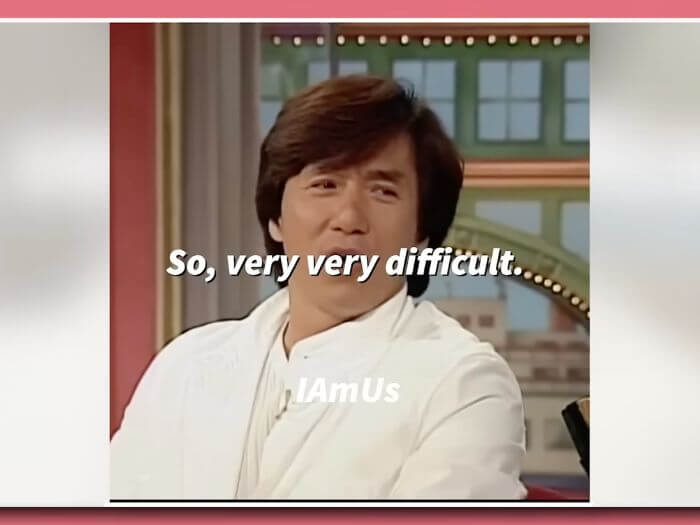
In 25 years of learning and teaching languages, I've come across some remarkable stories. But Jackie Chan's might be the strangest of all.
Here's a man who grew up in poverty, received almost no formal education, couldn't read or write in any language — and yet somehow became a global movie star who communicates fluently across more than eight languages.
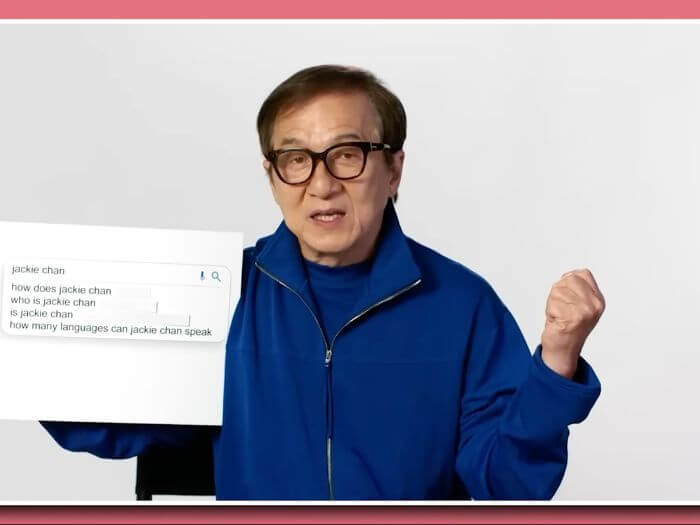
So, how many languages does Jackie Chan speak, and how on earth did he learn them? The answer, it turns out, says something genuinely interesting about how language acquisition actually works.
Pro Tip
By the way, if you’re serious about improving your language skills, online language courses for fluency can make a huge difference.
I'm offering top-rated online language courses for beginners to advanced learners, covering Spanish, French, Italian, German, Japanese and more.
If you prefer watching videos to reading, check out the video version of this post at the top of the page. Otherwise, here's what you'll learn in this post:
Table of Contents
Where It All Started
Most people assume Jackie Chan's first language is Mandarin Chinese. In fact, it's Cantonese — the language of Hong Kong, where he was born.
Cantonese and Mandarin are completely different languages. They share the same written roots, but the spoken forms are so distinct, in terms of tones and pronunciation, that two native speakers from the same country genuinely struggle to understand each other.
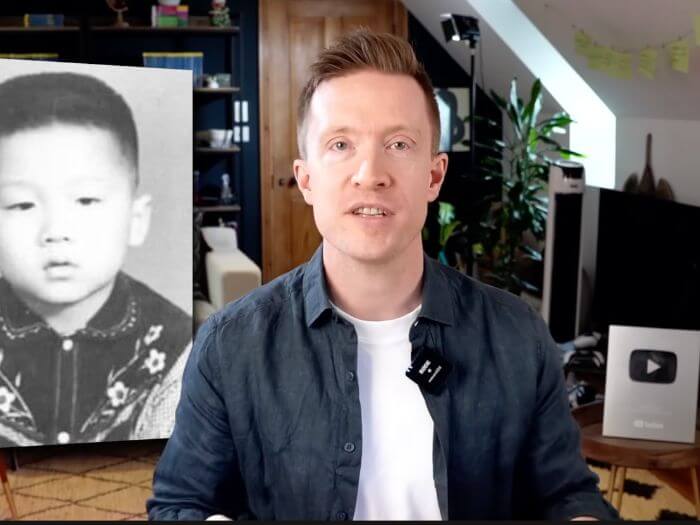
As a child, Jackie was restless, unruly and failing at school. His parents, who were extremely poor and had nearly sold him as a baby, decided to do something drastic.
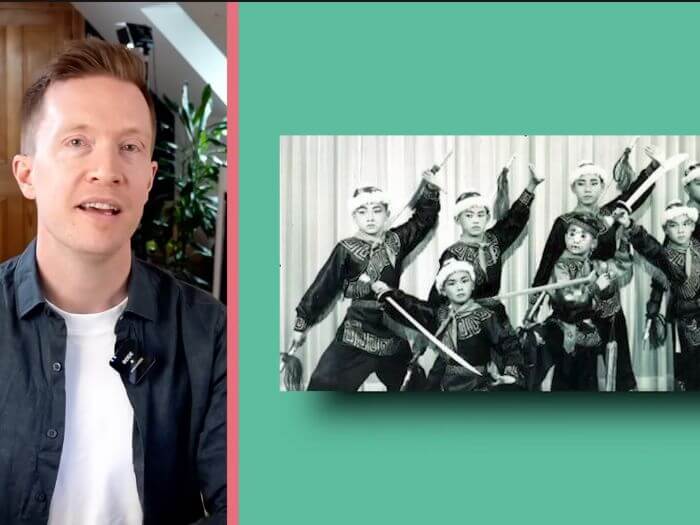
When he was seven, they sent him to the China Drama Academy — a brutally strict Peking opera school — and left him there for ten years.
The children were up at five in the morning and training until eleven at night, seven days a week, learning opera singing, acrobatics, stick fighting and knife fighting.
Instructors could punish them physically, and the older children were allowed to discipline the younger ones. It was, to put it mildly, an extreme environment.
How Did Jackie Chan Learn Mandarin?
Here's where things get interesting from a language-learning perspective. Peking opera is performed entirely in Mandarin — formal, classical, stylised Mandarin — and Jackie arrived at the school speaking only Cantonese.
So before he could even hold a basic conversation in Mandarin, he was performing entire operas in front of live audiences. Mispronouncing a word or missing a tone wasn't just embarrassing: it was failure, and failure had consequences.
What he was doing, without any formal language instruction, was learning Mandarin through singing — imitating sounds with total precision until they were locked into his muscle memory.
There's a good reason this works. Music forces you to internalise pronunciation in a way that speaking alone rarely manages.
The tones, the rhythm, the exact placement of each sound: all of it gets embedded through repetition long before your brain has consciously studied the grammar. It's exactly how I learned Brazilian Portuguese back in the day.
There was one small catch. They'd forgotten to teach him to read or write. He walked out of that school a decade later speaking fluent Mandarin and completely illiterate.
Korean, English And The Pattern Behind It All
After leaving opera school at seventeen, Jackie followed stunt work to South Korea — and, of course, didn't speak a word of Korean.
Korean is what linguists call a language isolate: it has no proven relatives anywhere in the world, not related to Chinese, Japanese or anything else. And yet Jackie picked it up, largely, it seems, because he met a woman at a Seoul nightclub and fell in love.
He'd call her from a phone booth and deliver lines he'd memorised phonetically. When you have a reason that genuinely matters to you, motivation is rarely the problem.
English was a different challenge entirely. Going from Cantonese to English is about as steep a linguistic jump as you can make — completely different language family, completely different logic, barely a shared sound.
His studio, Golden Harvest, flew him to California with one suitcase and essentially expected him to figure it out. He famously spent an entire night practising how to order breakfast, only to be derailed the next morning when the waitress asked how he'd like his eggs.
He tried tutors, American films, news programmes and TV shows. Nothing quite clicked until he discovered country music — specifically artists like Kenny Rogers and Willie Nelson. Country music is slow, clear and emotionally direct: you can follow every single word.
And crucially, the slow-music method had already been wired into him since he was seven. He applied the same instinct he'd used for Peking opera and let the language seep in through song.
Then came Rush Hour, and a co-star, Chris Tucker, who was improvising lines throughout filming. Jackie couldn't understand much of what was being said, and reading the script wasn't exactly his strong suit.
So he did what he'd always done: he memorised everything he needed to say, parrot-fashion, and committed to the immersive environment — full days of speaking English on set, taking direction in English, living in English. It went in, as it always did.
What Languages Does Jackie Chan Speak?
When asked directly, Jackie Chan has listed the following: Cantonese, Mandarin, English, Korean, Japanese, Taiwanese, Shanghainese and Shandong dialect. That's eight languages — and each one has a story behind it.
Japanese came through his film career. When Drunken Master became a sensation in Japan, he was suddenly expected to do months of press tours, TV appearances and interviews in a language he didn't speak.
His initial response was familiar: memorised phrases, a bit of guesswork, enough to get through the moment.
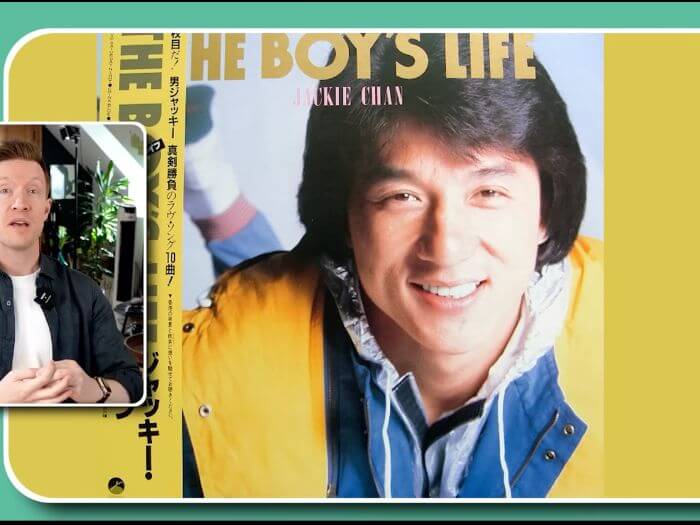
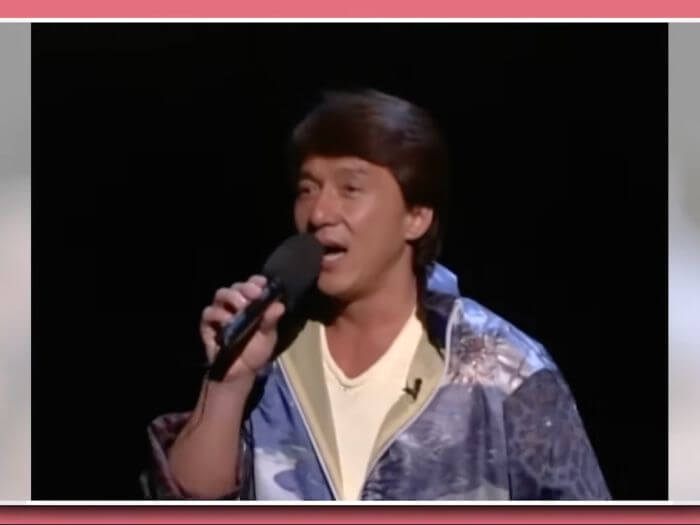
But then he went further. He recorded a full Japanese music album — ten complete songs, not just a chorus — and later a duet with one of Japan's biggest pop stars. In 1984, Japan gave him the Best Foreign Singer award. Not actor. Singer.
Taiwanese came through his work in Taiwanese cinema and, as tends to be the case with Jackie Chan, through a personal connection — he met a Taiwanese actress, married her and, before long, was recording songs in Taiwanese.
The last two languages — Shanghainese and Shandong dialect — arrived in the most extraordinary circumstances.
When Jackie was 47, his father sat him down and confessed that the family had been living under an alias his entire life. His father had been a spy; his mother had been an opium smuggler.
Their real surname wasn't Chan but Fang, and they weren't even Cantonese. Jackie's response, characteristically, was to go and learn their actual languages.
And then there's sign language. Jackie has performed Chinese sign language publicly, including at the Deaf Olympics in Taipei, and has incorporated it into his film work.
Sign languages are independent linguistic systems — not a signed version of a spoken language — so this is no small addition to the list.
The Method Behind Jackie Chan's Languages
What strikes me most about Jackie Chan's story isn't the number of languages — impressive as that is. It's the consistency of the method across completely different circumstances.
He never followed a course or worked through a textbook. There was no clear plan. And yet the same pattern keeps appearing.
First: find a reason that actually matters. A job, a relationship, a stage with a live audience.
Second: get as close to the language as possible — not study-close, but use-it-even-when-you're-getting-it-spectacularly-wrong close.
Third: use music and performance as a route in, because both force you to internalise sounds and rhythms at a level that passive study rarely reaches.
And fourth: never stop, even when the circumstances are absurd.
The illiteracy is worth dwelling on, too. Jackie Chan learned all of these languages without being able to read them properly. That's a useful reminder that reading and writing, as valuable as they are, are not prerequisites for speaking.
Fluency is built through output, through real encounters with real people, through making mistakes in public and carrying on anyway.
What Can We Take From This?
I'm not suggesting you need to sign a contract allowing your teacher to beat you — that particular element of Jackie's story I'd leave firmly in the past.
But there are lessons here that apply regardless of the language you're learning or the level you're at.
The most important is that motivation rooted in something real — a person, a place, a professional necessity — is the most powerful driver there is. Jackie Chan didn't learn Korean from a textbook. He learned it because he was in love.
He didn't persist with English out of abstract ambition. He needed it to eat, to work and to build the Hollywood career he'd been sent halfway around the world to pursue. When the stakes are real, the language tends to follow.
The music angle is also worth taking seriously. If you're struggling with the sounds or rhythms of a new language, try finding songs you enjoy in that language and learning them properly — not just singing along vaguely, but really nailing the pronunciation.
It's one of the most enjoyable ways to internalise a language, and as Jackie Chan's story shows, it can take you surprisingly far.
How Many Languages Does Jackie Chan Speak? FAQ
How Many Languages Does Jackie Chan Speak Fluently?
Jackie Chan is fluent in Cantonese, Mandarin, and English. He also has some ability in other languages, but these are his main working languages.
Does Jackie Chan Speak Japanese In Rush Hour 3?
In Rush Hour 3, Jackie Chan’s character primarily speaks English and some Mandarin/Chinese. Any Japanese heard in the film is minimal and usually part of scripted dialogue rather than a reflection of his fluency.
Can Jackie Chan Speak Korean?
Jackie Chan is not known to speak Korean fluently. He may know a few phrases, but he does not use Korean as a working language.
The Unlikely Language Teacher
So, how many languages does Jackie Chan speak? Eight, by his own count — and possibly more, depending on how you measure sign language.
Cantonese, Mandarin, English, Korean, Japanese, Taiwanese, Shanghainese and Shandong dialect, acquired across a lifetime of extraordinary circumstances through a method that had nothing to do with studying and everything to do with showing up and using the language, however imperfectly, in situations where it mattered.
What his story really illustrates is something I've believed for a long time: fluency is not primarily about talent, and it's not primarily about method.
It's about engagement — sustained, genuine, often uncomfortable engagement with the language in real-world conditions.
Jackie Chan stumbled into that engagement again and again, driven by necessity and curiosity, and came out the other side speaking eight languages.
You probably don't need to fight anyone with a bamboo cane to get there. But the willingness to be imperfect in public? That part, I'd borrow without hesitation.
Olly Richards
Creator of the StoryLearning® Method
Olly Richards is a renowned polyglot and language learning expert with over 15 years of experience teaching millions through his innovative StoryLearning® method. He is the creator of StoryLearning, one of the world's largest language learning blogs with 500,000+ monthly readers.
Olly has authored 30+ language learning books and courses, including the bestselling "Short Stories" series published by Teach Yourself.
When not developing new teaching methods, Richards practices what he preaches—he speaks 8 languages fluently and continues learning new ones through his own methodology.
FREE
Get Your Free Guide:Best Binge-Worthy Resources for Fluency
All the best movies, TV shows, and podcasts hand-picked so you can learn your language just by watching what you already love.
Which language are you learning?
What is your current level in [language]?
Which language are you learning?
What is your current level in [language]?
Which language are you learning?
What is your current level in [language]?
Which language are you learning?
What is your current level in [language]?
Which language are you learning?
What is your current level in [language]?
Which language are you learning?
What is your current level in [language]?
Which language are you learning?
What is your current level in [language]?
Which language are you learning?
What is your current level in [language]?
Which language are you learning?
What is your current level in [language]?
Which language are you learning?
What is your current level in [language]?
Which language are you learning?
What is your current level in [language]?
Download this article as a FREE PDF?
What is your current level in Latin?
Download this article as a FREE PDF?
What is your current level in Norwegian?
Download this article as a FREE PDF?
What is your current level in Swedish?
Download this article as a FREE PDF?
What is your current level in Danish?
Which language are you learning?
What is your current level in [language]?
Download this article as a FREE PDF?
Download this article as a FREE PDF?
What is your current level in Arabic?
Download a FREE Story in Japanese!
Enter your email address below to get a FREE short story in Japanese and start learning Japanese quickly and naturally with my StoryLearning® method!
What is your current level in Japanese?
Download Your FREENatural Japanese Grammar Pack
Enter your email address below to get free access to my Natural Japanese Grammar Pack and learn to internalise Japanese grammar quickly and naturally through stories.
What is your current level in Japanese?
What is your current level in Portuguese?
What is your current level in German?
Train as an Online Language Teacher and Earn from Home
The next cohort of my Certificate of Online Language Teaching will open soon. Join the waiting list, and we’ll notify you as soon as enrolment is open!
Train as an Online Language Teacher and Earn from Home
The next cohort of my Certificate of Online Language Teaching will open soon. Join the waiting list, and we’ll notify you as soon as enrolment is open!
Download this article as a FREE PDF?
What is your current level in Portuguese?
Download this article as a FREE PDF?
What is your current level in Portuguese?
Download this article as a FREE PDF?
What is your current level in Turkish?
What is your current level in French?
What is your current level in Italian?
What is your current level in German?
What is your current level in Japanese?
Download Your FREEJapanese Vocab Power Pack
Enter your email address below to get free access to my Japanese Vocab Power Pack and learn essential Japanese words and phrases quickly and naturally. (ALL levels!)
What is your current level in Japanese?
Download Your FREE German Vocab Power Pack
Enter your email address below to get free access to my German Vocab Power Pack and learn essential German words and phrases quickly and naturally. (ALL levels!)
What is your current level in German?
Download Your FREE Italian Vocab Power Pack
Enter your email address below to get free access to my Italian Vocab Power Pack and learn essential Italian words and phrases quickly and naturally. (ALL levels!)
What is your current level in Italian?
Download Your FREEFrench Vocab Power Pack
Enter your email address below to get free access to my French Vocab Power Pack and learn essential French words and phrases quickly and naturally. (ALL levels!)
What is your current level in French?
What is your current level in Portuguese?
What is your current level in Russian?
What is your current level in Russian?
What is your current level in Italian?
What is your current level in Italian?
What is your current level in French?
What is your current level in French?
What is your current level in Spanish?
What is your current level in Spanish?
What is your current level in Spanish?
What is your current level in Arabic?
What is your current level in Portuguese?
What is your current level in Turkish?
What is your current level in Korean?
What is your current level in Russian?
What is your current level in Japanese?
What is your current level in Chinese?
What is your current level in Spanish?
What is your current level in Italian?
What is your current level in French?
What is your current level in German?
Download Your FREENatural Portuguese Grammar Pack
Enter your email address below to get free access to my Natural Portuguese Grammar Pack and learn to internalise Portuguese grammar quickly and naturally through stories.
What is your current level in Portuguese?
Download Your FREENatural Russian Grammar Pack
Enter your email address below to get free access to my Natural Russian Grammar Pack and learn to internalise Russian grammar quickly and naturally through stories.
What is your current level in Russian?
Download Your FREENatural German Grammar Pack
Enter your email address below to get free access to my Natural German Grammar Pack and learn to internalise German grammar quickly and naturally through stories.
What is your current level in German?
Download Your FREENatural French Grammar Pack
Enter your email address below to get free access to my Natural French Grammar Pack and learn to internalise French grammar quickly and naturally through stories.
What is your current level in French?
Download Your FREENatural Italian Grammar Pack
Enter your email address below to get free access to my Natural Italian Grammar Pack and learn to internalise Italian grammar quickly and naturally through stories.
What is your current level in Italian?
Download a FREE Story in Portuguese!
Enter your email address below to get a FREE short story in Brazilian Portuguese and start learning Portuguese quickly and naturally with my StoryLearning® method!
What is your current level in Portuguese?
Download a FREE Story in Russian!
Enter your email address below to get a FREE short story in Russian and start learning Russian quickly and naturally with my StoryLearning® method!
What is your current level in Russian?
Download a FREE Story in German!
Enter your email address below to get a FREE short story in German and start learning German quickly and naturally with my StoryLearning® method!
What is your current level in German?
Download a FREE Story in Italian!
Enter your email address below to get a FREE short story in Italian and start learning Italian quickly and naturally with my StoryLearning® method!
What is your current level in Italian?
Download a FREE Story in French!
Enter your email address below to get a FREE short story in French and start learning French quickly and naturally with my StoryLearning® method!
What is your current level in French?
Download a FREE Story in Spanish!
Enter your email address below to get a FREE short story in Spanish and start learning Spanish quickly and naturally with my StoryLearning® method!
What is your current level in Spanish?
FREE Download:
The Rules of Language Learning
Enter your email address below to get free access to my Rules of Language Learning and discover 25 “rules” to learn a new language quickly and naturally through stories.
Which language are you learning?
What is your current level in [language]?
Download Your FREESpanish Vocab Power Pack
Enter your email address below to get free access to my Spanish Vocab Power Pack and learn essential Spanish words and phrases quickly and naturally. (ALL levels!)
What is your current level in Spanish?
Download Your FREENatural Spanish Grammar Pack
Enter your email address below to get free access to my Natural Spanish Grammar Pack and learn to internalise Spanish grammar quickly and naturally through stories.
What is your current level in Spanish?
Free Step-By-Step Guide:
How to generate a full-time income from home with your English… even with ZERO previous teaching experience.
Download this article as a FREE PDF?
What is your current level in Thai?
Download this article as a FREE PDF?
What is your current level in Spanish?
Download this article as a FREE PDF?
What is your current level in Cantonese?
Download this article as a FREE PDF?
What is your current level in Russian?
Download this article as a FREE PDF?
What is your current level in Korean?
Download this article as a FREE PDF?
What is your current level in Japanese?
Download this article as a FREE PDF?
What is your current level in Italian?
Download this article as a FREE PDF?
What is your current level in German?
Download this article as a FREE PDF?
What is your current level in French?
Steal My Method?
I’ve written some simple emails explaining the techniques I’ve used to learn 8 languages…
Which language are you learning?
What is your current level in [language]?
Which language are you learning?
What is your current level in [language]?
I want to be skipped!
Join 84,574 other language learners getting StoryLearning tips by email…
“After I started to use your ideas, I learn better, for longer, with more passion. Thanks for the life-change!” – Dallas Nesbit
Which language are you learning?
What is your current level in [language]?
Download this article as a FREE PDF?
What is your current level in Chinese?
Which language are you learning?
What is your current level in [language]?
Find The Perfect Language Course For You!
Looking for a breakthrough in your language learning?
Complete this short survey to find the perfect course for you!