If you're learning a new language, I want to show you how to get fluent faster with one simple habit: reading.
Most people assume they have a speaking problem, a memory problem, or that they just need to know more words.
But in my 25 years working as a linguist and teacher, I've seen again and again that learning how to read in a foreign language is one of the most powerful things you can do — and it can fix problems you didn't even know you had.
Before I show you exactly how, let me tell you why I'm so convinced of it.
Reading, after all, is the foundation of my StoryLearning method, where I teach languages through stories (you can try it here)… so this article is important!
Let's go!
If you prefer watching videos to reading, hit play on the YouTube version of this post at the top of the page. Otherwise, here's what you'll discover in this post:
Table of Contents
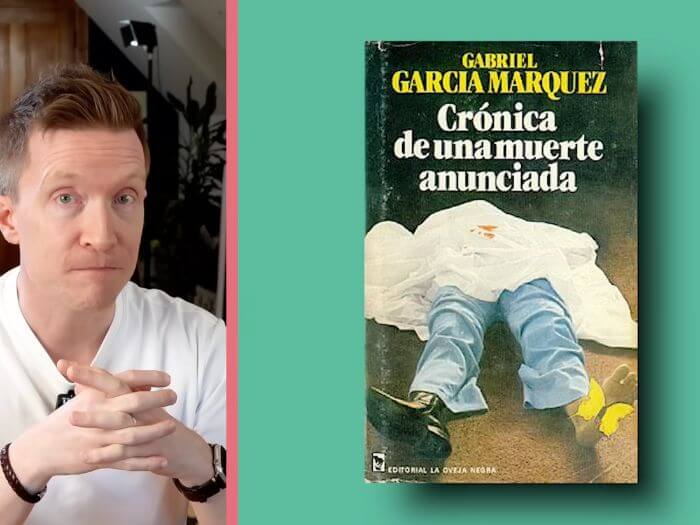
The Night Reading Saved My Spanish

I'd been struggling with Spanish for over a year. I was obsessing over grammar — the usual study overkill — and my Spanish was still a complete mess.
It all came to a head on holiday in Madrid. I was out with a friend I knew from London and some of her friends, and I realised I couldn't understand a word anyone was saying.
Before long, my friend started translating into English for me. It was mortifying. I wanted to disappear on the spot, and I couldn't understand why Spanish wasn't getting any easier despite all my studying.
Fast forward about six months and I was in Argentina, up in the mountains. In the middle of the night I got severe altitude sickness, couldn't breathe, and was too scared to go back to sleep.
So I grabbed the nearest distraction I could find — a Spanish novel — and started reading. The strangest thing happened. Even though it was a real struggle, I could still get the gist.
I was guessing words from context, and because I didn't want to go back to sleep, I just kept going. It turned out I understood far more than I thought. For the first time, Spanish felt like a real language to me, not just an object of study.
Over the next few weeks I read constantly. I finished that book, and my Spanish transformed almost in front of my eyes — from a language I could barely operate in to one I felt genuinely confident in. And it turns out there's a very good reason for that.
Why Does Reading Work So Well?
When you get hooked on a story, your brain releases oxytocin — the same chemical linked to trust, connection and bonding with another person.
A good story triggers those same responses: excitement, curiosity and the tension of not knowing what happens next.
That tension releases dopamine, which is closely linked to focus and memory. All of that from words on a page.
Because your brain starts treating the story like a real experience, you're not simply following it — you're simulating it.
Every word you meet arrives loaded with emotion, tension and meaning, and your brain flags it as worth keeping.
Now compare that to memorising a list of vocabulary: no tension, no emotional pull, no context. Your brain knows perfectly well that it's just a list, and it treats it like one. That's why stories are where the magic happens.
This is the principle behind what's called extensive reading — reading a lot, and reading for enjoyment. It's the kind of reading where you get lost in a story and suddenly an hour has gone by. Build that habit and the language starts to take care of itself.
Well, once you're aware of this, you can adopt a few simple strategies (such as the 10 Rules of StoryLearning) that will help you turn frustration into opportunity, and use reading to quickly boost your language skills!
How To Read In A Foreign Language: My Six-Step Method
So how do you actually do it? Knowing that reading works is one thing; know how to read in a foreign language is another.
When you're sitting there with a book in front of you, it's easy to forget what to do next — do you stop here, keep going, look up that word now or later? Do I read out loud or in my head?
That hesitation is what kills the habit before it even starts. So here are the six simple steps I follow, and the order to follow them in.
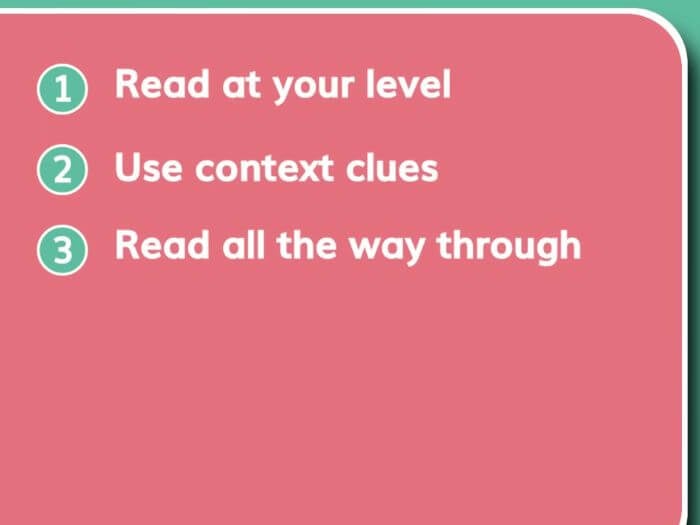
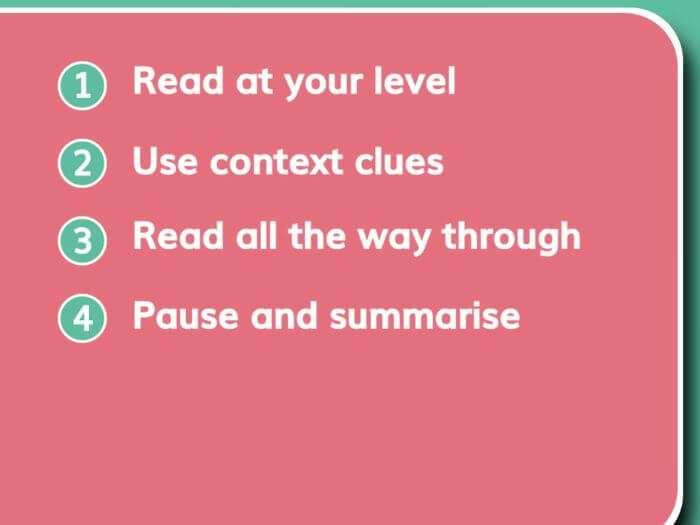
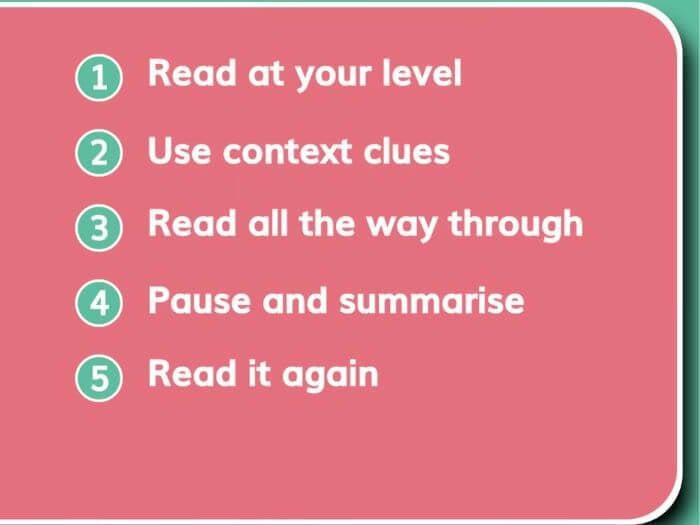
Step 1: Read At Your Level
This is the most important step of all. When people struggle to read a book in a foreign language, it's almost never about their ability — it's because they've picked something far too hard.
Pick up a novel written for native speakers too early and every sentence becomes a new problem. You work out one word, then the next, and by the time you've untangled the sentence you've lost the thread entirely.
You're not reading; you're drowning. It's demoralising, and it's completely avoidable.
The rule is simple: you should understand at least 80% of the words on the page. If you can follow the plot, even loosely, you're at the right level.
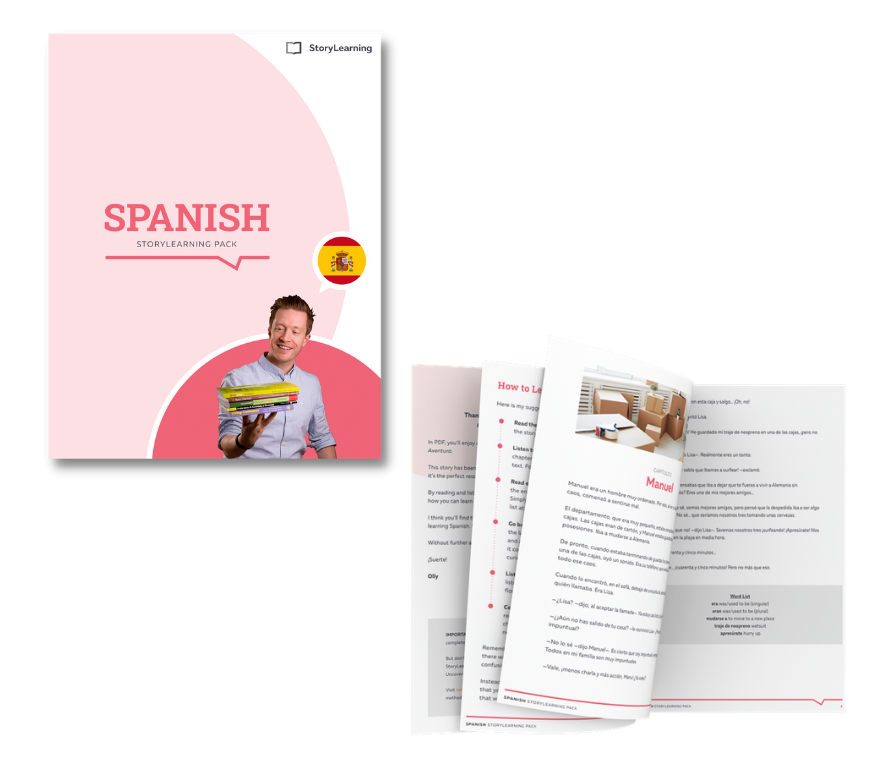
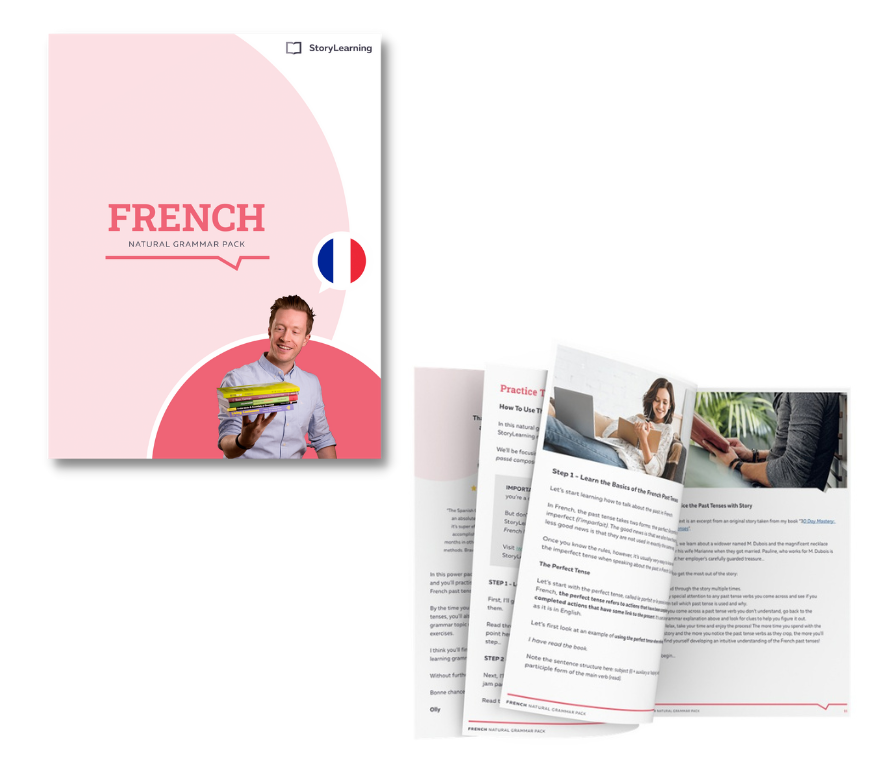
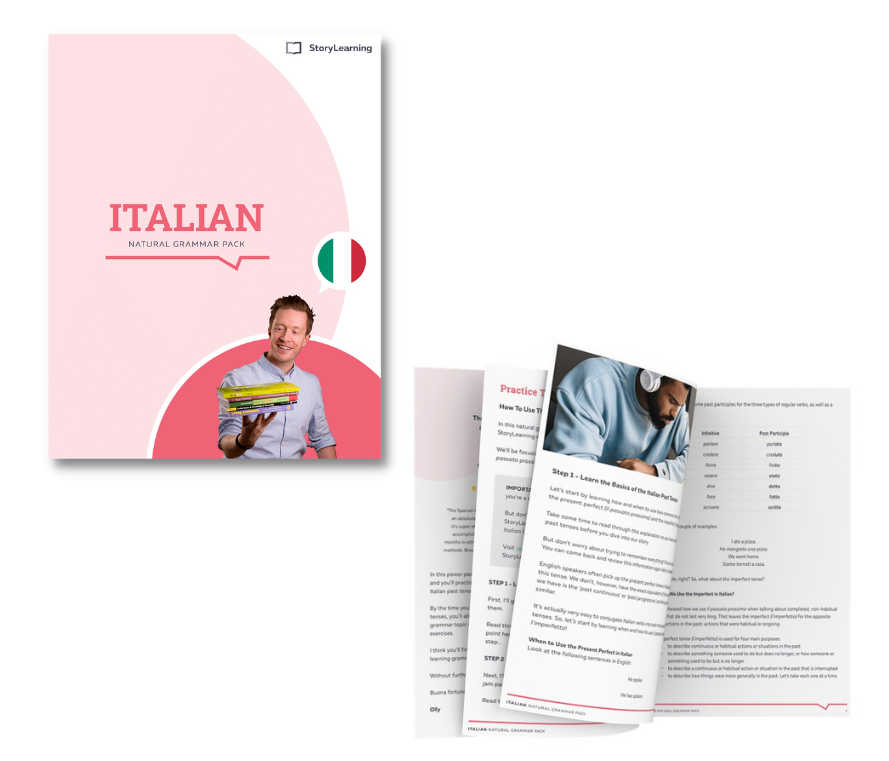
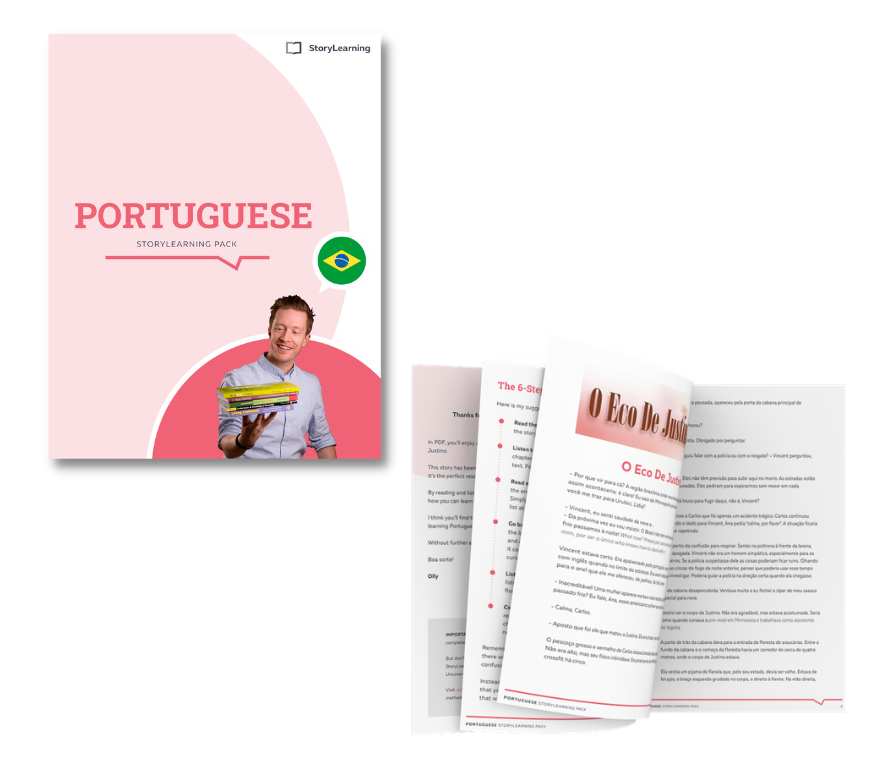
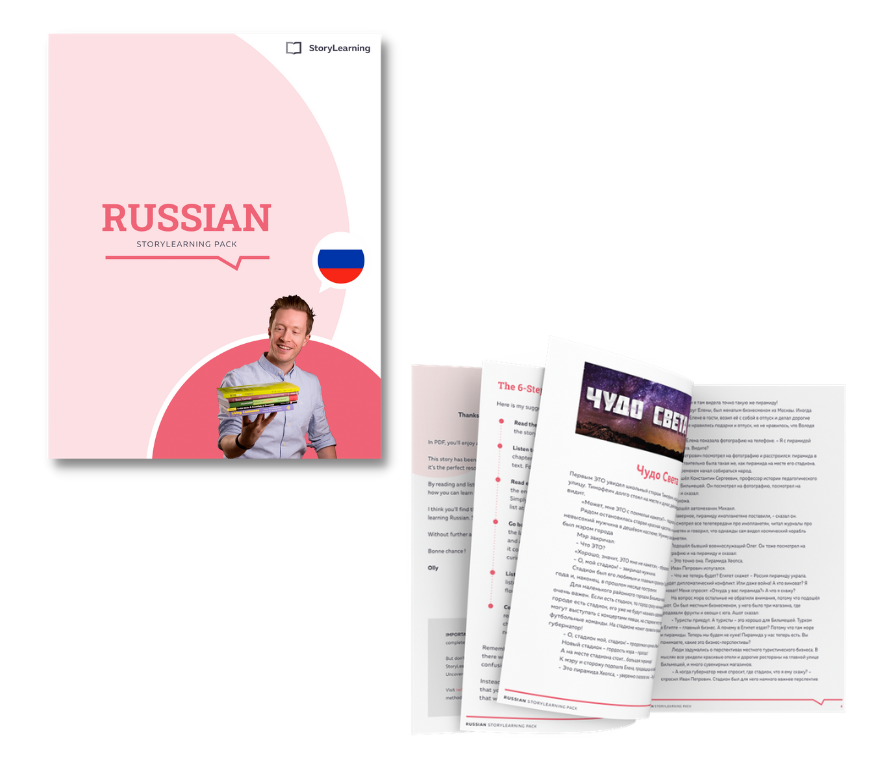
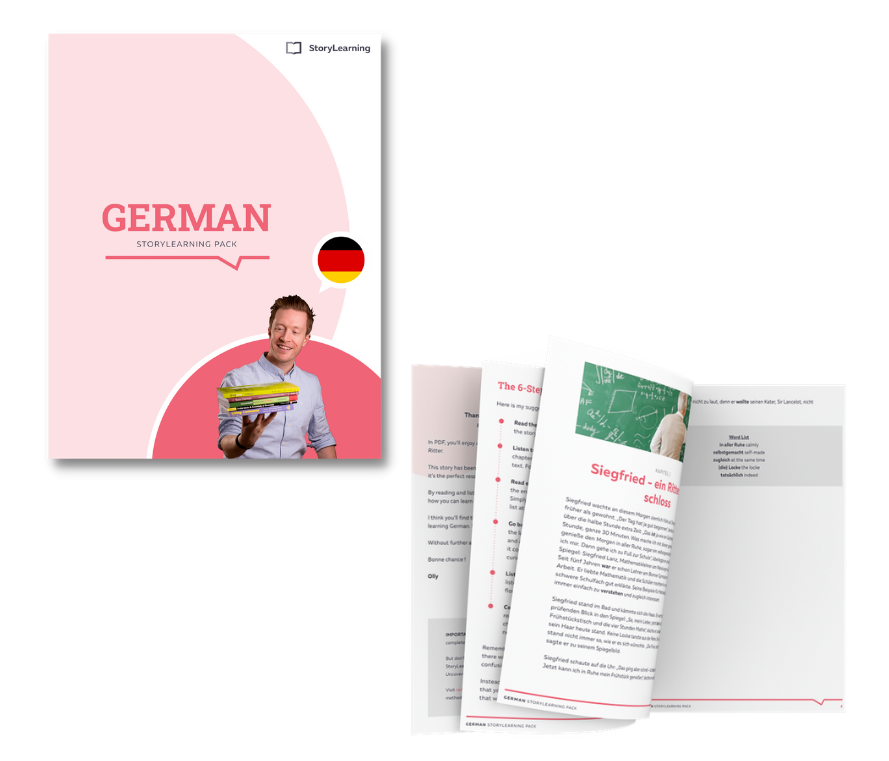
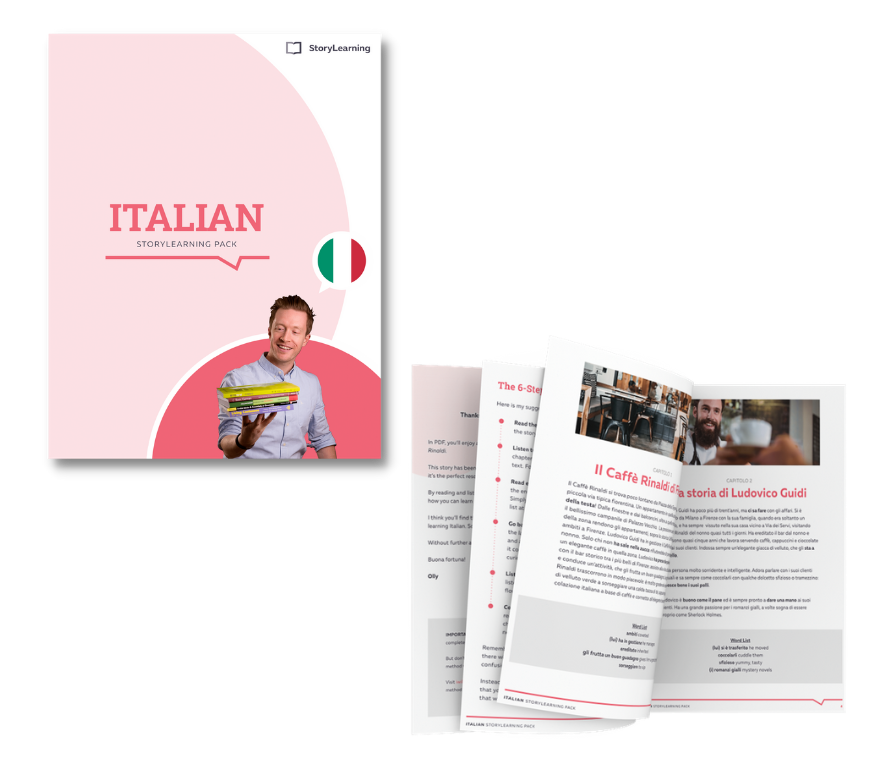
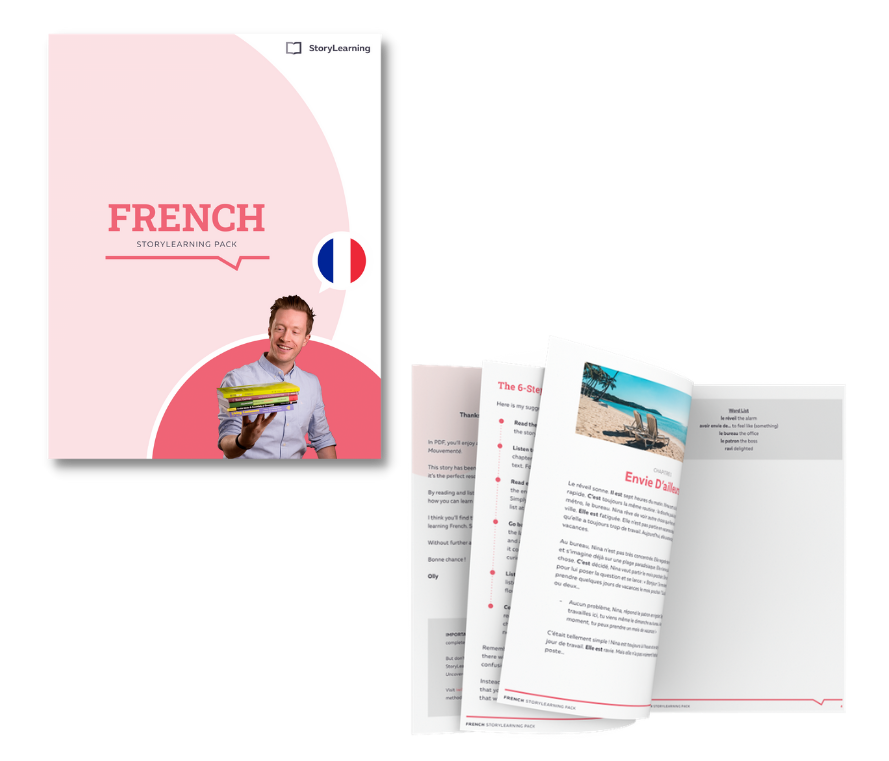
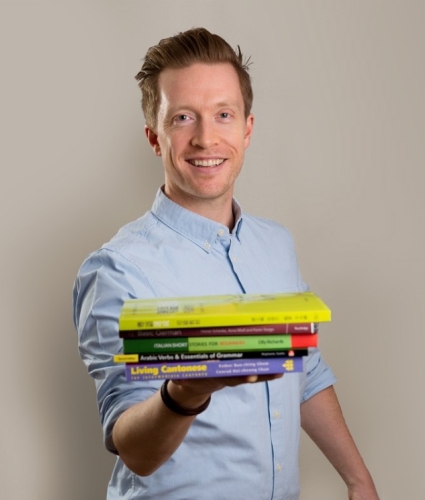
For most beginners that means graded readers — short stories written for language learners, like my own books, with real plots, real characters and vocabulary that won't completely overwhelm you.
This is the easiest way to start reading books in a foreign language without giving up in the first chapter. Get this step right and everything else falls into place. Get it wrong and nothing else will work, however hard you try.
For more ideas on what to read in a foreign language, check out my post on the best books for language learners. If you're a fan of the world's most famous boy wizard then you'll probably love this post about how to learn languages with Harry Potter.
Step 2: Use Context Clues Before You Begin
Before you read a single word, just look at the page. It takes a few seconds and makes a real difference to how easily you follow what comes next.
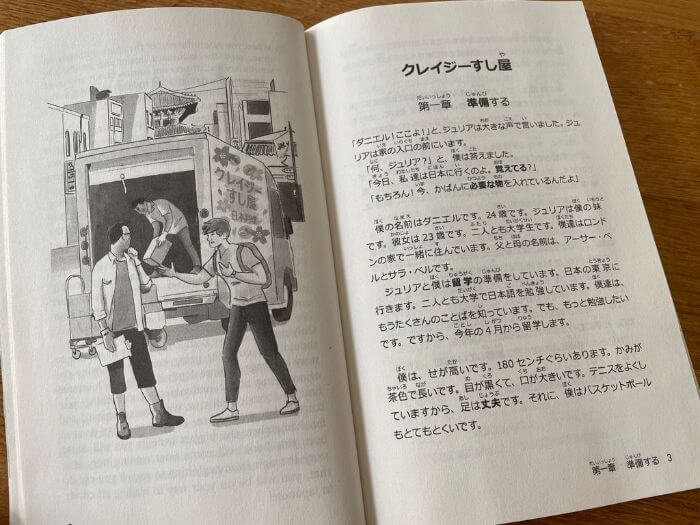
The story you're about to read isn't only the words on the page — it's everything around them. The cover, the chapter title, any illustrations: these aren't decorations, they're clues.
Think about a newspaper. The photo on the front page tells you half the story before you've read a word — and that's exactly why it's there.
Take my own books, for example: the cover already tells you something about the characters and the setting, and inside you've got illustrations and chapter titles giving you even more.
Most learners skip all of this and start reading with no context at all. But if your brain already has a rough picture of what it's looking at, it isn't starting from zero. It's filling in the gaps, and everything becomes far easier to follow.
Step 3: Read All The Way To The End
As soon as you start reading, there's a temptation that will slow you down instantly: from the very first paragraph, you'll want to stop and reach for the dictionary. Don't. This is the step that makes every other step work.
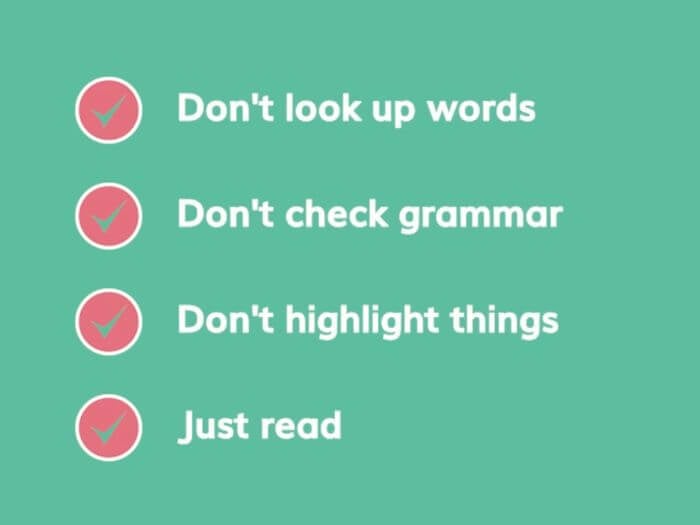
When you start a chapter, your one job is to reach the end of it. You don't stop, you don't look up words, you don't check grammar or highlight anything. You just read.
This is also how you learn to read faster in a foreign language — by keeping your eyes moving and your attention on the story rather than stalling on every unfamiliar word.
Obviously this doesn't mean reading a whole book in one sitting, but it does mean reading one chapter in one go, so choose books with short, manageable chapters. If the chapter ahead of you is fifty pages long, you've probably got the wrong book.
Follow the story, ignore what you don't understand, and just get to the end. That's exactly what worked for me in Argentina: I needed to know what happened next.
Step 4: Pause And Summarise What You Just Read
When you reach the end of a chapter, the worst thing you can do is barrel straight on to the next one. Stop for a moment and think about what just happened.
- Who were the characters?
- Where did it take place?
- Was there a cliffhanger?
- What might happen next?
You only need a minute to gather your thoughts.
Here's why this matters. When we read in a foreign language, we leave our native reading skills at the door. It's counterintuitive, but you can be a highly proficient reader in English and still fall straight into the word-by-word trap the moment you read in another language.
I did this constantly when I first learned French. I remember sitting in a café in Paris with a novel I'd just bought from one of the booksellers by the river, looking up every word I didn't know — and there were plenty. An hour later I'd managed a single page.
My French wasn't the problem; I was so focused on individual words that I'd forgotten to follow the story at all. Pausing to summarise trains you out of that habit.
Step 5: Read The Same Chapter Twice
Why read the chapter again? Because the second time feels completely different — and this is my favourite step, because it feels like discovery.
Having read the chapter once, you already know the gist, so your brain isn't working as hard to follow the story. Suddenly the details that slipped past you the first time start to stand out: words, patterns, word order, sentence construction, little bits of grammar.
That act of noticing is one of the real keys to learning a language. You're not studying any harder; you're simply giving your brain another pass and watching how much more it picks up.
This is also the point where a dictionary is allowed — but only in a very specific way. Some words really are essential to the plot: if you're reading a story about a candle and you don't know the word for “candle”, you're in trouble.
Or imagine you're reading a Japanese story and you keep seeing the word daigaku — you've no idea what it means, and suddenly the whole scene stops making sense. Look it up once and everything clears up: ah, they're talking about university. That was worth the interruption.
So here's the rule: only look up a word once you've seen it five times. Not twice, not three times — five. If a word keeps appearing, it almost certainly matters to the story, and looking it up will be worth it. Everything else, just let it go.
This stops you disappearing down the dictionary rabbit hole and keeps you focused on what actually matters.
By the way, if you do want to learn more words thanks to reading, here's the right way to learn vocabulary from stories.
Step 6: Keep Going To The Next Chapter
The final step is the simplest of all: read the next chapter. Same process, every time. Find out what happens next, and don't stop to study grammar, break sentences apart or build long vocabulary lists.
Just keep reading.
The ultimate goal — the thing that matters far more than any single word or rule — is to build a reading habit in your new language that feels exactly like reading in your first.
You want to reach the point where you pick up a book because you genuinely want to know what happens next, not because it's “reading practice time”. That's the moment the language fades into the background and the story takes over.
It's my favourite part of learning a language, because it opens up a whole new world of wonder and understanding. And it's also how you learn a language by reading.
Becoming An Independent Reader
These steps are designed to do something very important: to train you to handle reading independently and without help.
The more you can develop this skill, the better you'll be able to read.
And, of course, the more you can read, the more you'll learn.
Remember that the purpose of extensive reading is not to understand every word, as you might be expected to in a textbook.
The purpose of reading is to enjoy the book for what it is.
So, when you're reading, if you don't understand a word, and you can't guess what the word means from the context, the first thing you should do is simply try to keep reading.
It's not easy.
And you'll be tempted to reach for the dictionary at every turn.
But if you can learn to be content with not understanding everything whilst reading a foreign language, you'll be developing a powerful skill, because you become an independent and resilient learner, who suddenly has a world of language at their fingertips.
Short Stories For Beginners
If you have read up to this point, you might be thinking: That's all very well, but how can I find books that are at the right level for me?
It can be a challenge.
So-called graded readers exist in most languages, but I've found that they're not always so helpful.
They're either too hard, too boring, or contain parallel texts which remove all the challenge of reading and make it too easy for you as the reader.
So I decided to make something different.
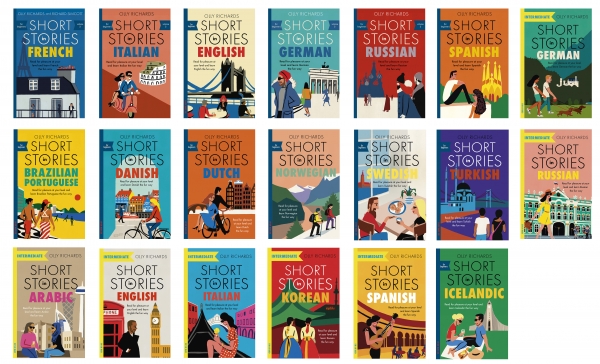
I've created collections of short stories, written especially for students from beginner to intermediate level (A1-B1 on the CEFR).
The books are published with Teach Yourself (a name you might be familiar with!)
Each collection is designed to give you a sense of achievement and a feeling of progress when reading.
Stories feature:
- A variety of compelling genres, from science fiction and crime to history and thriller
- Stories broken down into manageable chapters, so you always make progress with the story and feel a sense of achievement
- Realistic amounts of new vocabulary so that you’re not overwhelmed by complex words
- Plenty of natural dialogues in each story, so you can learn conversational language
- Regular plot summaries, comprehension questions and word reference lists, so you don't have to fumble around with dictionaries and struggle through dense text
The books come in beginner and intermediate series:
CLICK HERE FOR MORE INFORMATION ON THE BOOKS
How To Read In A Foreign Language FAQ
How to read effectively in a foreign language?
To read effectively in a foreign language, choose material that is challenging but still understandable, ideally where you know about 90–95% of the words.
Focus on understanding the overall meaning rather than translating every sentence, and use context to guess unfamiliar vocabulary before reaching for a dictionary.
Reading regularly is more important than reading perfectly. Short daily sessions with books, articles, graded readers, or news stories help build vocabulary and comprehension over time.
It also helps to reread texts, as repeated exposure reinforces words and grammar naturally.
When you encounter new vocabulary, note down useful words and phrases rather than every unknown term. Otherwise, reading can turn into an endless dictionary expedition where the only thing you finish is your patience.
Reading As The Best Part Of Your Day
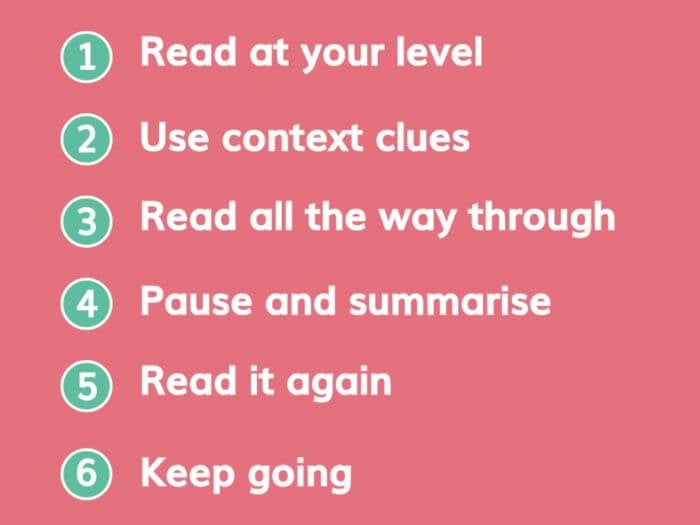
So that's how to read in a foreign language: read at your level, use the clues around the page before you start, read all the way through without stopping, pause to summarise in your head, go back and read the chapter again, then move on and keep going.
Do those six things consistently and reading stops feeling like hard work and starts feeling like the best part of your day.
Knowing how to read in a foreign language — and how to read effectively rather than word by word — is one of the most reliable ways I know to turn slow, frustrating study into real, lasting progress.
Start with these six steps. Read a little every day, stay curious about the story rather than the grammar, and before long you won't be studying the language at all — you'll simply be reading it.

Olly Richards
Creator of the StoryLearning® Method


Olly Richards is a renowned polyglot and language learning expert with over 15 years of experience teaching millions through his innovative StoryLearning® method. He is the creator of StoryLearning, one of the world's largest language learning blogs with 500,000+ monthly readers.
Olly has authored 30+ language learning books and courses, including the bestselling "Short Stories" series published by Teach Yourself.
When not developing new teaching methods, Richards practices what he preaches—he speaks 8 languages fluently and continues learning new ones through his own methodology.