
You've wanted to learn Italian for years. You've started more than once: an app that lasted a month, a phrasebook with the first ten pages dog-eared, a class that fizzled out by February.
Now you're searching again for the best online Italian course. The tabs are open, the prices blur together, and every option promises the same thing.
You don't know which one is actually different.
The honest answer depends on what you need next. This page scores every option against the same eight criteria.
If you're in a hurry, here's the short version first.
Which Italian course is best depends on what you need next. If you want a free start, Coffee Break Italian starts every level with a free podcast, with teachers who explain how the language works.
If you'd rather work through a structured course with feedback from fluent speakers, Busuu runs from A1 to B2.
For a recognised certificate, the Dante Alighieri Society runs the courses and the PLIDA exam. For live speaking, book one-to-one tutors on italki.
Then there are Babbel, StoryLearning's Italian Uncovered, Lingoda, Langua and Pimsleur, plus Rocket Italian in a short note. All nine are scored on the same eight criteria below.
In my view, it's simpler than the lists suggest: one course you'll actually finish, plus regular speaking with a real person. That's the pairing I'd put my money on.
When you choose the best online Italian course, start from the skill you need next and work backwards from there.
There are no affiliate links on this page and no commission on anything here. One thing to declare: I've invested in Langua, so weigh what I say about it with that in mind.
Table of Contents
Why A Good Italian Course Is Only Half The Job

In the summer of 2018 I set myself a project: learn Italian in London, starting off by reading and listening. I gave myself three months and then went to Venice to test my skills.
I split the time into three stages. The first month was pure input. I listened and read material at my level, and I didn't speak a word.
The second month was the opposite. Lots of speaking, as much as I could arrange, with input still going on in the background. The third month was for grammar lessons, once I had something to build on.
I aimed for two to three hours a day. If you're serious about a language, I'd put the floor at about 10 hours a week, not the casual ten minutes here and there.
It sounds like a lot, but it's the honest number. You can fit it around a job, but you do have to plan for it.
And I didn't set a level target. That's deliberate. You control the hours you put in, but you don't control the level you reach, so there's no point promising yourself a finish line you can't keep.
Now look at what that plan really is. It's two separate jobs.
The course does the first job. It gives you the Italian to take in.
Speaking is the second job, and it doesn't happen by itself. You have to plan for it the way I planned that second month.
You've probably felt the gap already. You recognise more Italian than you can get out. It's the most frustrating place to be.
That's the step people skip. They pick a course, work through it, and wait for the speaking to arrive on its own.
But no course can open your mouth for you. That part is on you.
Most courses below do one job well.
Every option on this page is built around one part of that work. Some are strong on input, some get you talking. The page tells you which is which, so you can plan the other half yourself.
Best Online Italian Course: The Comparison Table
| Provider | Best-for CEFR | Primary skill | Speaking support | Structure | Study load | Method | Price (as of October 2026) | Track record |
|---|---|---|---|---|---|---|---|---|
| Coffee Break Italian | A1 to B2, across three levels | Listening (with explained grammar) | Guided (repeat along; no feedback) | Fully sequenced | Light to medium | Teacher-led podcast lessons | Free podcast for every level; online courses one-time (Level 3: $269); video library from $24.99 a month | Long-running podcast brand |
| Busuu | A1 to B2 | Mixed | Feedback (community, not live); Premium Plus adds AI conversation | Fully sequenced, CEFR-mapped | Light to medium | Structured course plus community feedback | Free tier; Premium about $69.99 a year (about $5.83 a month); Premium Plus costs more | Established |
| Babbel | A1 to B2, some C1 content | Mixed (grammar and dialogue) | Scripted, plus Babbel Speak AI (live classes closed to individuals in 2025) | Fully sequenced | Light to medium, 10 to 20 min | Dialogue lessons with explained grammar | About $8.95 a month on the 12-month plan ($107.40); lifetime $299.99, often discounted; all 14 languages | Long established |
| StoryLearning (Italian Uncovered) | Beginner towards C1, across separate levels (Intermediate: B1 to B2) | Reading and listening | Guided (each course has a speaking section, built for use with a tutor you find and pay for separately) | Fully sequenced | Medium to deep | Comprehensible-input reading (one continuous story) | $297 per course, one-time (from $397); 7-day free trial; 365-day guarantee | Established indie brand; no independent outcome research |
| Dante Alighieri Society | All levels | Mixed | Live human (taught courses) | Fully sequenced, set timetables | Medium to deep | Taught courses; PLIDA certificate | Varies by local committee and format | Founded 1889; about 400 committees in 80+ countries |
| Lingoda | A1 to A2 only, in Italian | Speaking and listening | Live human (small group of 3 to 5, or private) | Fully sequenced, fixed class times | Medium to deep, 60-minute classes | Live online classes with a teacher | Group classes from €9.99 to €15.99 per class by plan size; private classes cost more (Lingoda prices in euros) | Established online language school |
| italki | Any level | Speaking | Live human | Freeform | Deep, lesson length you choose | Live one-to-one tutoring | $5 to $50+ an hour, pay per lesson | Large, established marketplace |
| Langua | A2 to C1 (practice tool) | Speaking | AI conversation | Loose | Flexible | AI conversation with real-time correction | Free account to try; Standard $19.99 a month or $149.99 a year; Unlimited $29.99 a month or $199.99 a year | Newer (2024 onwards). Olly has invested in Langua |
| Pimsleur | A0 to about B1 | Listening and speaking | Scripted, plus AI pronunciation feedback | Fully sequenced | Medium, 30 min | Audio-immersion | $150 per level; $575 for all five levels; often discounted | Long established |
| Rocket Italian (short note) | Beginner to advanced, three levels | Mixed | Scripted, with pronunciation practice | Fully sequenced | Medium | Self-study course with audio | One-time, lifetime: about $150 for Level 1 to about $450 for all three (list), usually discounted; 60-day money-back | Long-running course |
Coffee Break Italian: Free Podcasts, Paid Courses, 3 Levels
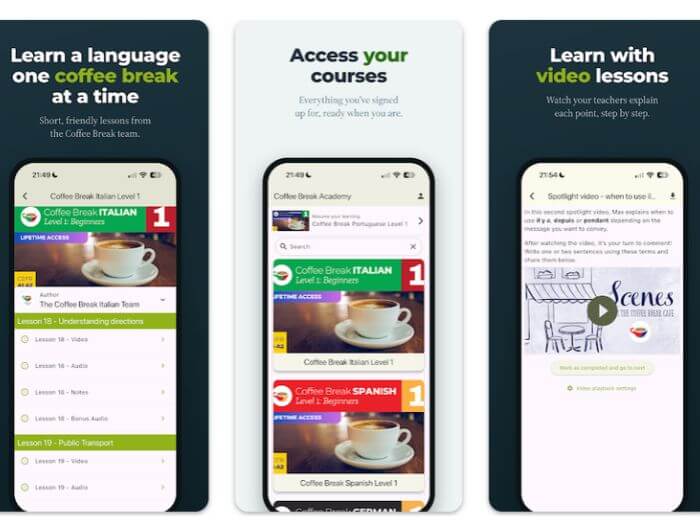
You can follow an Italian course for months, understand every explanation, and still freeze the moment a real person waits for you to answer. Coffee Break Italian is built for the understanding half of that problem.
It's a free podcast at heart, with three levels. Level 1 takes you from A1 to A2, Level 2 from A2 to B1, and Level 3 from B1 to B2. In each lesson a teacher explains how the language works as you go, while a learner works through it alongside you.
If you want more than the audio, each level's online course is a one-time purchase that adds video lessons, notes and exercises. The Level 3 course is $269, one payment, yours for life, as of October 2026, and it ends with a story told in ten episodes.
The missing piece is speaking. There is no live speaking practice or feedback on what you say. You can repeat along with the podcast, but nobody is listening.
Best for: someone who enjoys learning through clear explanations and listening, and wants a structured path from beginner to upper intermediate without a subscription.
Not for: anyone whose real goal is conversation. The lessons won't correct your speech, so you'll need to find that practice elsewhere.
Busuu: A Structured Course With Human Feedback, Up To B2
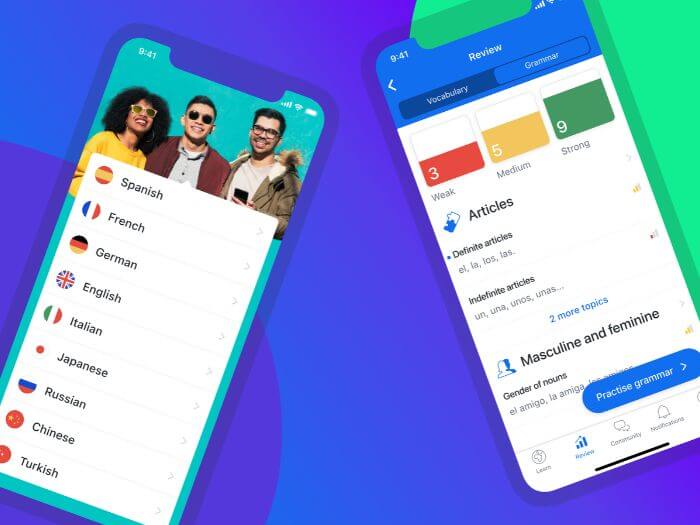
You can finish an Italian lesson, fill in every gap, and still have no way to know if a real Italian would accept the sentence you wrote. Busuu tries to close that gap, and it does it with actual humans.
Busuu's Italian course is structured and CEFR-mapped from A1 to B2. You work through sequenced lessons, then send written and spoken exercises to fluent speakers in the Busuu community. They give you feedback, but they're volunteers, not live tutors.
There's a free tier. Premium costs about $69.99 a year, as of October 2026. Premium Plus costs more and adds AI conversations and Italian pronunciation practice.
What you don't get is a real-time conversation. The feedback is asynchronous, so no one is there in the moment to catch your accent slips or help you recover from a mistake.
Best for: the person who wants a structured Italian course from A1 to B2 and will actually send exercises for human feedback, rather than just tapping through lessons.
Not for: the person who wants live Italian conversation and correction in the moment. Busuu's feedback won't give you that in real time on its own.
Babbel: Explained Grammar From A1 To B2
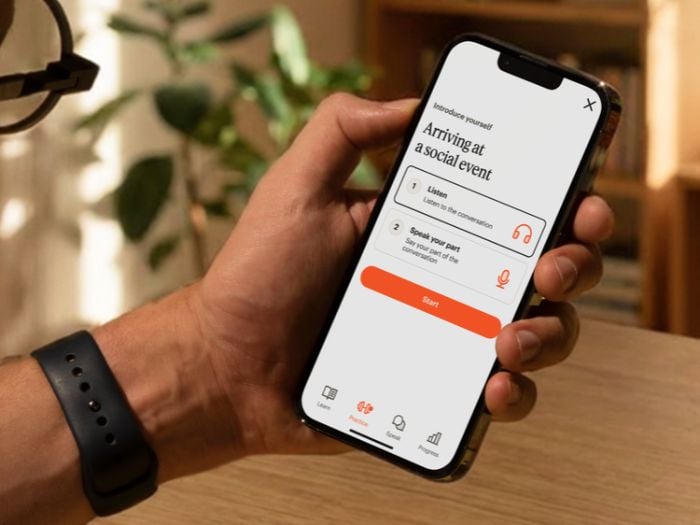
Babbel's Italian course runs from A1 all the way to B2, with some content reaching into C1. For an app whose lessons last 10 to 20 minutes, that's a specific, unusual promise.
The method is short dialogues with Italian grammar explained as you meet it. You won't just tap the right answer and move on; you'll see why the sentence works.
Speaking practice is scripted. Babbel added an AI speaking feature, Babbel Speak, in 2025, but it's not live conversation, and Babbel's live classes for individual learners closed in July 2025.
One subscription covers all 14 of Babbel's languages. It's about $8.95 a month on the 12-month plan, which comes to $107.40, as of October 2026.
There's also a lifetime plan at $299.99. It's often discounted.
What's missing is live conversation. If you need someone to correct you in real time, this course won't do it, and the dialogues are fixed, so you can complete them without ever improvising a sentence with a human.
Best for: a learner who wants Italian grammar explained clearly and a clear path from A1 to B2, and who's happy to do most of the speaking alone.
Not for: the learner whose main problem is freezing in live conversation, because scripted speaking and an AI feature won't replace a real person waiting for you to answer.
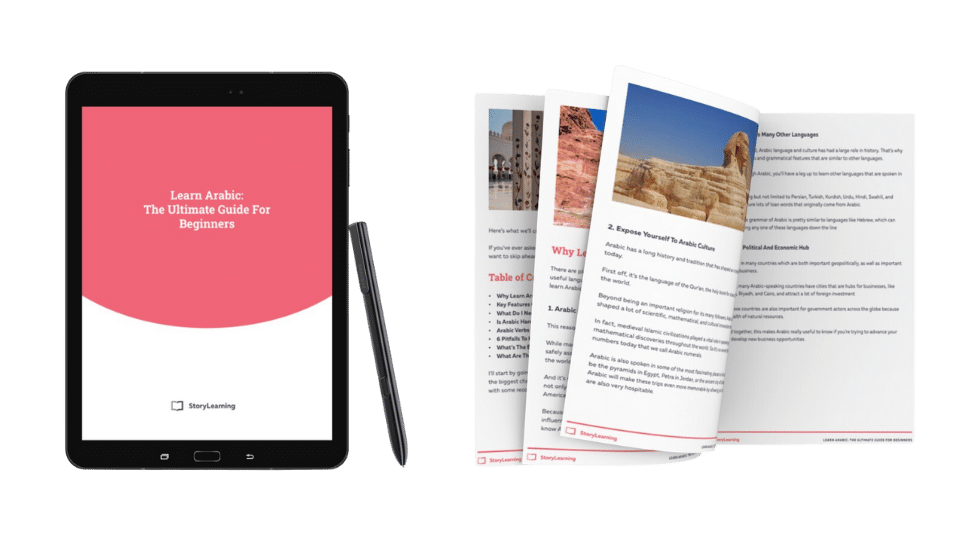
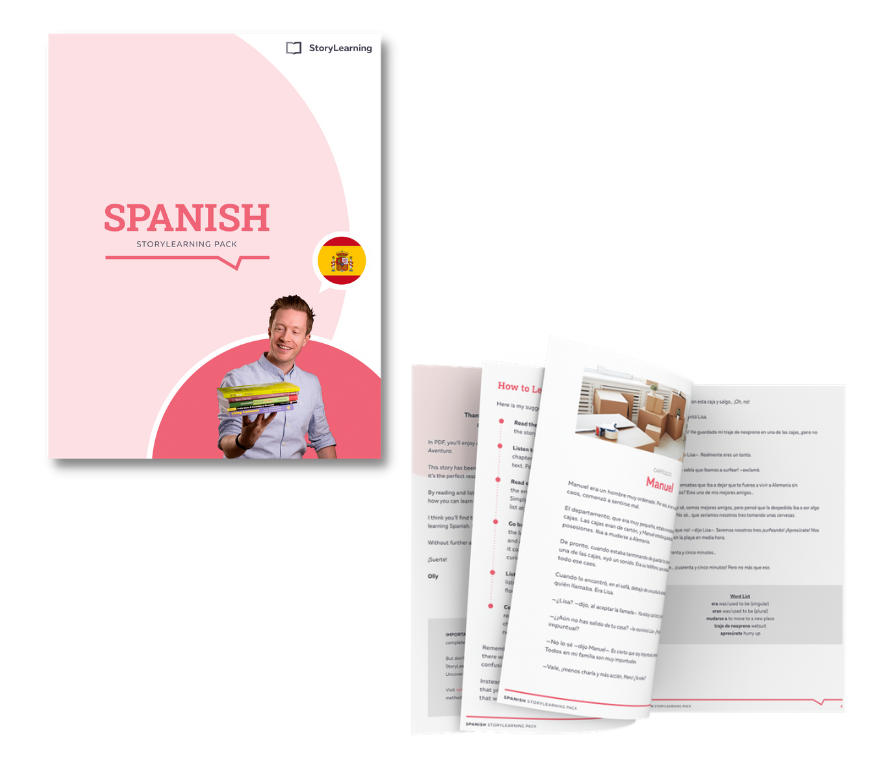
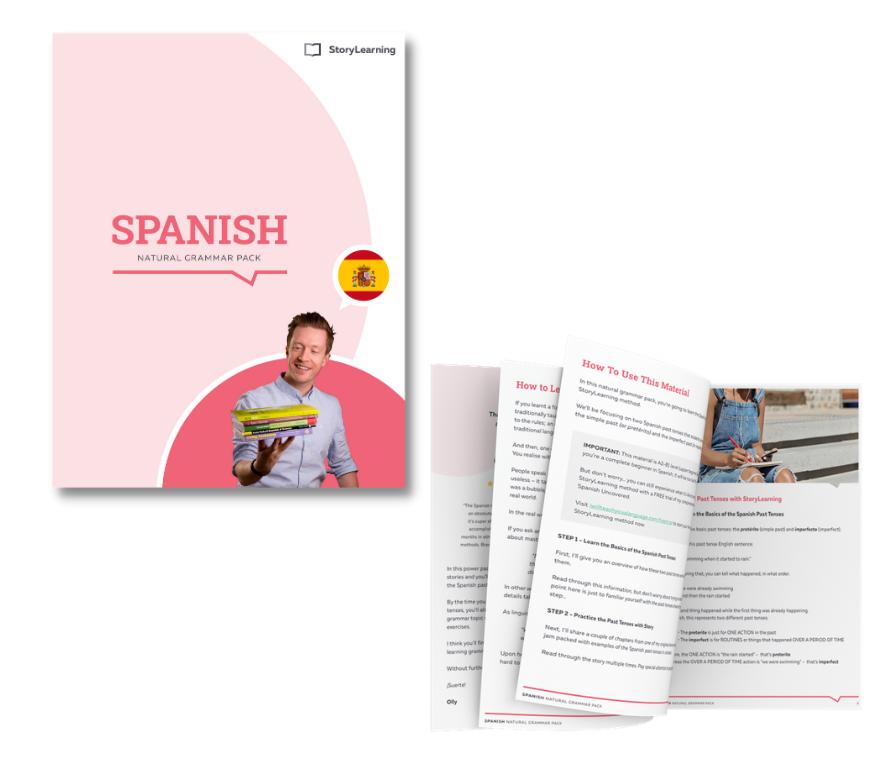
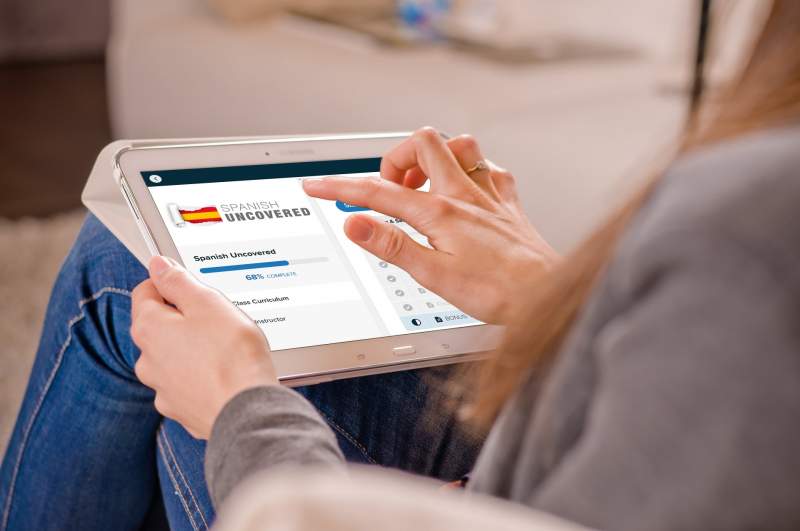
StoryLearning Italian Uncovered: My Own Course

Italian Uncovered courses are my own, so I'm going to lean harder on their weaknesses than I would on anyone else's.
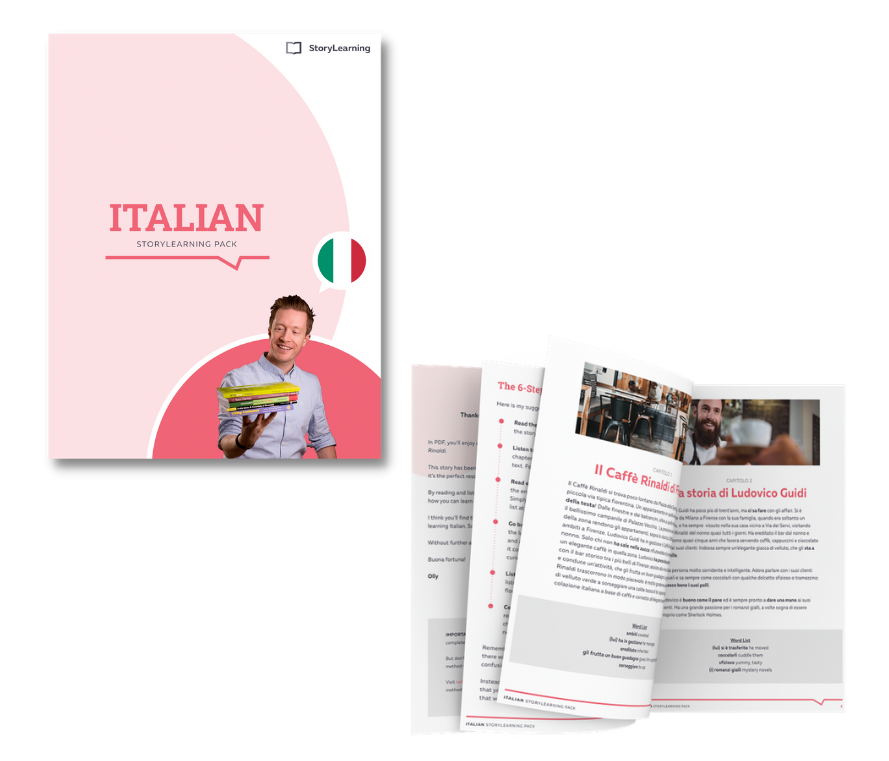
The method is built around one continuous story in Italian. You read it and you listen to it, and the grammar is unpacked from the story rather than drilled at you cold. That's comprehensible input in practice: learning from Italian you can mostly follow.
You follow a single narrative from chapter to chapter, and each new piece of grammar arrives because the story needs it. Each chapter gives you the story first, then the explanations follow.
The beginner level has 60+ video lessons, and Intermediate and Advanced have 40+ each.
The Italian Uncovered line has six levels, but only three are on public sale: Italian Uncovered, Intermediate, and Advanced. Intermediate starts around B1 and aims for B2, and Advanced works from B2 towards C1.
Each course is $297 one-time, reduced from $397, with lifetime access, a 7-day free trial and a 365-day guarantee, as of October 2026. The price is premium and paid up front.
The trial and guarantee take some of the edge off the upfront cost, but they don't change the fact that this is a serious purchase.
The speaking section is built for use with a tutor you find and pay for separately. Nothing in the course listens or responds to what you say.
That means the least comfortable part of language learning is left in your hands, and if you don't organise the tutor, the spoken side simply doesn't happen.
Across the method, you finish understanding far more than you can say. After a chapter, you can follow Italian you couldn't follow before, but the words in your mouth lag behind. If speaking was the reason you started, that gap will find you before long.
You might not feel that gap in a written exercise. You will feel it the first time you try to speak.
There's no independent research on outcomes for Italian Uncovered. I can't point you to a study showing what people achieve with it. You're buying a method, not a measured result.
Best for: the learner who wants to work through one continuous story, can afford to pay once, and is happy to arrange speaking practice themselves.
Not for: anyone whose main need is spoken conversation early on, or who expects proof of results before paying. The speaking weakness is real and the course won't fix it on its own.
The Dante Alighieri Society: Italy's Own Courses And Exam
Italy has its own language and culture society, founded in Rome in 1889, and it's still teaching Italian across the world. That's the Dante Alighieri Society, and it's easy to overlook when you're comparing Italian apps and online courses.
The Dante Alighieri Society runs taught Italian courses face to face, hybrid, and online. It also runs the PLIDA certificate of Italian, which Italian ministries recognise.
The society works in more than 80 countries through about 400 local committees. Prices and timetables vary by local committee and format, so you check your nearest committee or the online platform.
A taught course with a teacher suits people who want structure and a recognised certificate. It suits less well anyone who needs complete flexibility, because the class runs on the committee's schedule, not yours.
Best for: someone choosing an Italian course who wants a real teacher, a clear path, and a PLIDA certificate Italian ministries recognise at the end.
Not for: someone who needs complete flexibility, since dates, times, and cost depend on where and how you enrol.
Lingoda: Live Classes, But Only For Beginners In Italian
Live classes with a real Italian teacher sound like the obvious answer, until you check how far Lingoda's Italian actually goes.
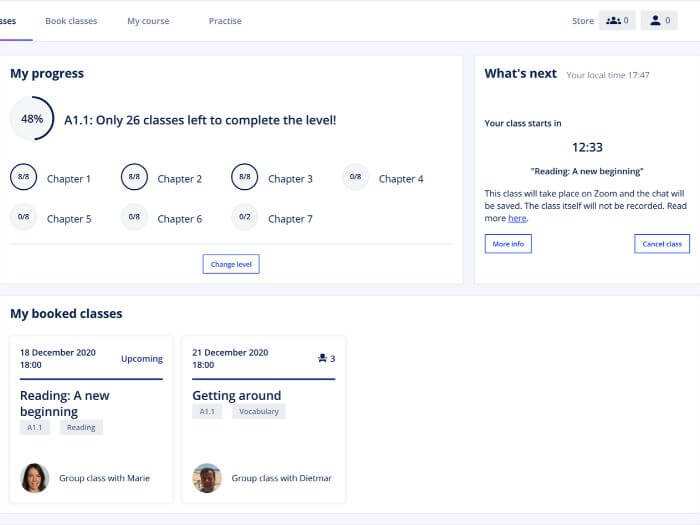
Lingoda is an online language school: live classes over Zoom, taught by certified native-level teachers. You work in small groups of 3 to 5 students, or one-to-one, and every class runs 60 minutes.
In Italian, the catalogue lists only A1 and A2. This is a beginner course, not a path to real comfort in the language.
On price, the numbers are clear. As of October 2026, group classes cost €9.99 to €15.99 per class depending on the plan. Private classes cost more, and there's a 7-day free trial.
The weakness is the ceiling. Lingoda's Spanish runs to B2, but Italian stops at A2. Once you've got the basics, you'll need somewhere else to go.
Best for: the beginner who wants live, teacher-led Italian from the first day and will actually turn up to a 60-minute class.
Not for: someone who already has A2-level Italian and wants a course that keeps going.
italki: Your Own Italian Tutor, By The Lesson
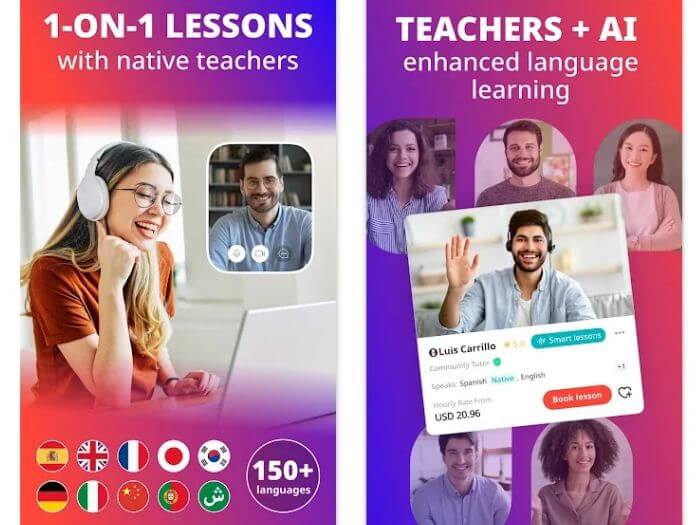
You can study Italian for months and still have no idea whether you could hold a real conversation. italki answers that directly, because the core of italki is a live video call with an Italian tutor.
It's a marketplace, not a school. You choose an independent tutor, book a one-to-one lesson, and pay only for that lesson. There's no subscription.
Teachers set their own prices, from $5 to $50+ an hour, and many offer discounted trial lessons so you can meet them before committing (as of October 2026).
The trade-off is structure. There's no built-in curriculum, so you or your tutor have to build the plan. Quality varies from tutor to tutor, and the wrong match can waste a few lessons before you find your feet.
Best for: someone who can already read a little Italian and needs to turn that passive knowledge into speech with a real person correcting them.
Not for: someone who wants a step-by-step Italian course handed to them. Bring your own plan, or choose a tutor who will build one with you.
Langua: AI Conversation Practice In Italian
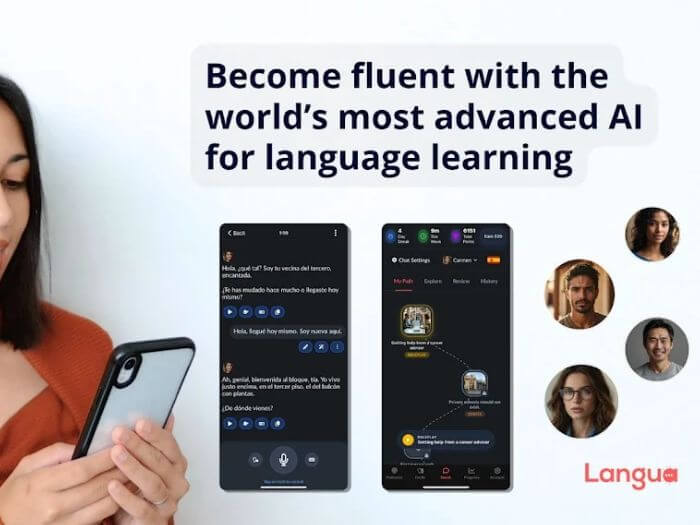
I've invested in Langua, so keep that in mind as you weigh this section.
Langua is an AI conversation partner. You talk or type in Italian, and it corrects you in real time. It suits learners from about A2 to C1, but as a practice tool rather than a course.
On price, Standard is $19.99 a month or $149.99 a year, with calls capped at 30 minutes a day. Unlimited is $29.99 a month or $199.99 a year. A free account lets you try it, and these prices are as of October 2026.
There's no curriculum, and an AI is not a person. The transcription sometimes mishears you, and it has been around only since 2024, so it's the newest product here.
Best for: the learner already around A2 to C1 who wants daily practice without booking a tutor.
Not for: anyone who needs a sequenced course, or who wants the warmth and judgement of a real human teacher.
Pimsleur: Italian You Say Out Loud
There's a strange gap in Italian courses. You'll spend hours repeating full sentences out loud and still never have to build one yourself.
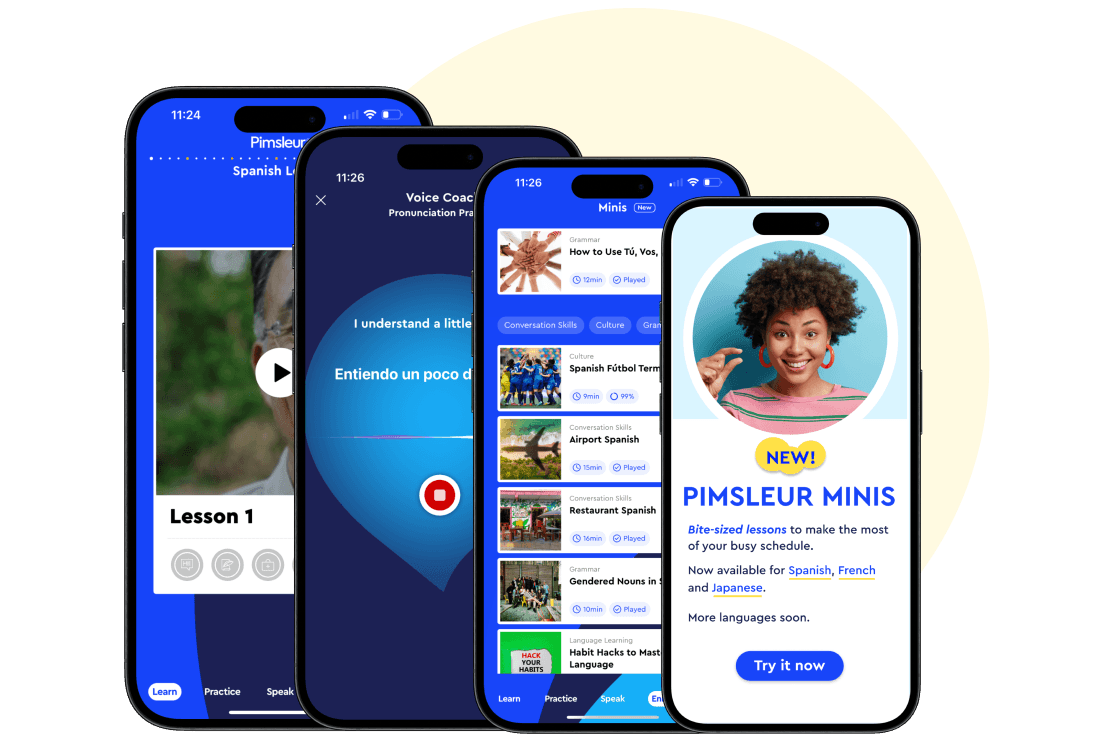
Pimsleur closes part of that gap. Each lesson is about 30 minutes of audio. A voice prompts you to answer out loud, then gives the correct answer, and phrases come back at spaced intervals.
The Italian course runs to five levels of about 16 hours each. Each level lists at $150, and the complete course lists at $575, both often discounted as of October 2026. Voice Coach adds AI feedback on pronunciation.
The trade-off is that the vocabulary is narrow, and the speaking is scripted rather than free conversation. You'll finish a level and still stumble when a real Italian asks something the audio never covered.
Best for: the person who wants a daily, audio-first routine and needs to hear and repeat Italian until the sounds feel less foreign.
Not for: the person whose main goal is free conversation, because scripted answers won't prepare you to build sentences on the spot.
Also Worth Knowing: Rocket Italian
For some people, the subscription is the problem. You don't want another monthly charge, you want to pay once and be done.
Rocket Italian is a paid self-study course in three levels. The third is aimed at people who already have advanced knowledge of Italian, so it isn't just a beginner course stretched thin.
It's a one-time payment for lifetime access, with a 60-day money-back guarantee. List prices run from about $150 for Level 1 to about $450 for all three levels, as of October 2026, and it's usually discounted.
Why am I keeping this short? It covers similar ground to the structured courses above, so a full section would just repeat what you've already read.
If you want to own the course rather than rent it, that's the appeal.
How I Scored This

Every product above is scored on the same eight criteria: best-for CEFR range, primary skill developed, speaking and output support, structure and guidance, time commitment, method, price and value, and evidence and track record. StoryLearning included.
Speaking support, weakest to strongest:
- None. No spoken output at all.
- Guided. Prompts to speak, but nothing listens and nothing comes back.
- Scripted. You repeat set phrases and software scores you.
- AI conversation. Unscripted practice with software that responds in real time, but no person is there.
- Feedback. A person responds to what you produced, but not live.
- Live human. Real conversation, in real time, with a person.
On that scale, StoryLearning sits at Guided: each Uncovered course has a speaking section, built to be used with a tutor you find and pay for separately, and nothing in the course itself listens or responds.
Prices are stated as of October 2026. Lingoda shows its prices in euros, so they are given in euros. Rocket Italian's list prices come from independent price trackers, and the Dante Alighieri Society's prices vary by local committee.
There are no affiliate links on this page and no commission on anything here. One thing to declare: I've invested in Langua, so weigh what I say about it with that in mind.
The Bottom Line: One Course, One Italian Speaker, One Goal

My recommendation keeps to three things: one course you'll finish, one Italian speaker you meet regularly, and one concrete goal you're aiming for.
Pick the course, then book the conversation. It's easy to stall when you split your energy across too many half-finished resources.
For a free start, Coffee Break Italian is the obvious beginning. For structure, Busuu or Babbel will give you a path from A1 to B2. For reading and listening through stories, Italian Uncovered from StoryLearning is my own course and it does exactly that.
For a certificate, the Dante Alighieri Society is the route with a recognised exam at the end. For live classes in the early levels, Lingoda covers A1 to A2, and that's as far as its Italian goes, so check the level before you sign up.
Then add speaking, because that's where the language finally leaves the page. A tutor on italki means you're in front of a real person every week, and a real person will correct you as you go.
Langua is the option for practice on your own, and I've invested in Langua, so weigh that as you read. Pimsleur gives you scripted audio if you're not ready for live sessions with a teacher yet.
On a budget, Coffee Break Italian's free podcasts plus a few italki lessons do the job. The free podcasts cover every level, so you can start without paying. Tutors at italki start at $5 an hour, so you can try a few without spending much.
Beyond any course, my advice is to build a love of Italian through culture. Italian films, art, cooking, whatever keeps you coming back.
Find an Italian speaker to meet once a week, even just for a coffee, and set a concrete goal like a trip to Italy. That goal gives the practice a reason, and the person gives it a face.
If you only do one thing, book a regular conversation with an Italian speaker.
There are no affiliate links on this page.
Best Online Italian Course FAQ
What is the best online Italian course?
There's no single best online Italian course. It depends on what you need next.
Coffee Break Italian is a free start, with a podcast at every level. If you want a structured A1 to B2 course with human feedback, Busuu's the one to look at.
For a certificate, the Dante Alighieri Society runs courses and awards the PLIDA certificate.
And if speaking's the hold-up, italki puts you in front of a live tutor.
How long does it take to learn Italian?
For Italian, I'd estimate about 6 months to a solid conversational level, with an hour a day plus extra exposure through listening, reading or watching TV.
I reached that level in about 3 months, but I was putting in more hours a day. There's no guarantee.
Is there a free way to learn Italian online?
Yes. Coffee Break Italian has a free podcast at every level, and Busuu has a free tier.
What free options rarely include is speaking with a person. So you can build a foundation without paying, but you'll need to find conversation practice separately.
Should I learn Italian with a live teacher?
Yes, if speaking is where you're stuck. A live teacher helps most with speaking and structure.
Lingoda's live classes cover A1 to A2, the Dante Alighieri Society runs taught courses, and italki offers one-to-one tutors. Pick whichever you'll actually attend.
Which certificate proves my level of Italian?
The certificate most often named is PLIDA, run by the Dante Alighieri Society and recognised by Italian ministries.
It's a widely used option, but it isn't the only recognised Italian certificate.
What a job, a university, or a residency application asks for varies, so check what your own purpose requires before you enrol.
Is Italian hard to learn if I already speak Spanish or French?
For me, it wasn't the Italian that was hard. It was keeping it separate from the languages I already spoke.
When I started Italian I already knew Spanish, Portuguese and French.
I expected the hardest part to be keeping Italian apart from them, with prepositions and pronouns in the wrong place. That's the part to watch, not the grammar.

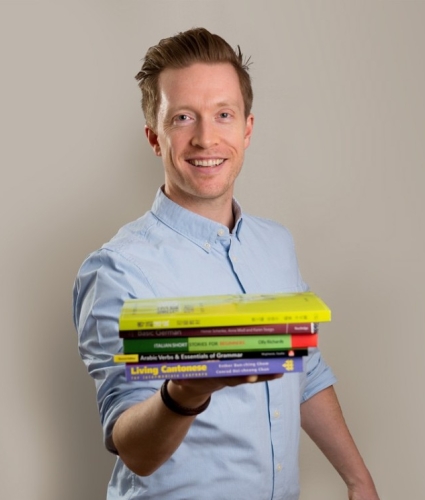
Olly Richards
Creator of the StoryLearning® Method


Olly Richards is a renowned polyglot and language learning expert with over 15 years of experience teaching millions through his innovative StoryLearning® method. He is the creator of StoryLearning, one of the world's largest language learning blogs with 500,000+ monthly readers.
Olly has authored 30+ language learning books and courses, including the bestselling "Short Stories" series published by Teach Yourself.
When not developing new teaching methods, Richards practices what he preaches—he speaks 8 languages fluently and continues learning new ones through his own methodology.