Kató Lomb was an ordinary woman who learned 16 languages in and around World War II while Nazis were actively hunting her.
And she did all of her language learning with no textbooks, no tutors and absolutely no internet – and even ended up making money with all 16 of her languages.
I've spent the last 20 years learning and teaching languages. So I can tell you straight away, this story will challenge everything you've ever thought about age, talent and who's good at languages.
Pro Tip
By the way, if you’re serious about improving your language skills, online language courses for fluency can make a huge difference.
I'm offering top-rated online language courses for beginners to advanced learners, covering Mandarin, Spanish, French, Italian, German, Japanese and more.
If you’ve been looking for a story-based online course to learn languages, this is your chance! Get a free 7-day trial of the course of your choice.
If you prefer watching videos to reading, hit play on the video version of this post at the top of this page. Otherwise, here's what you'll discover in this post:
Table of Contents
Why Kato Lomb Thought She Was Hopeless At Languages
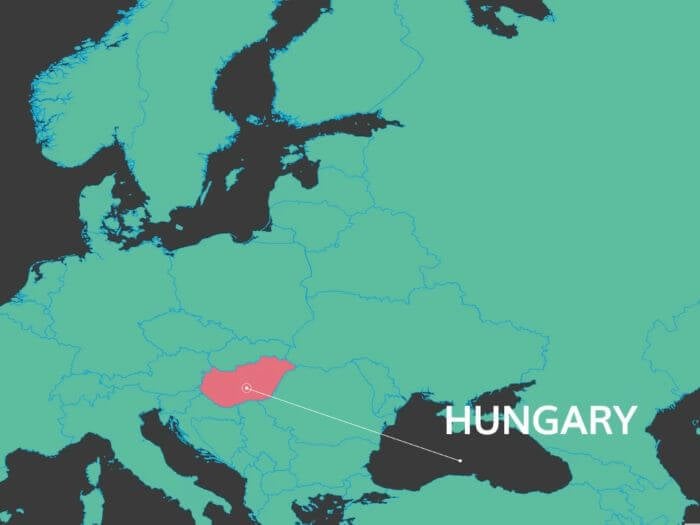
Kató Lomb was born in Hungary in 1909. And from very early on, languages fascinated her – not because they came easily, but because they didn't.
The first time people actually laughed at her for learning languages was when she was four years old. Apparently, what happened was she announced that she spoke German now. And the proof was quite adorable.
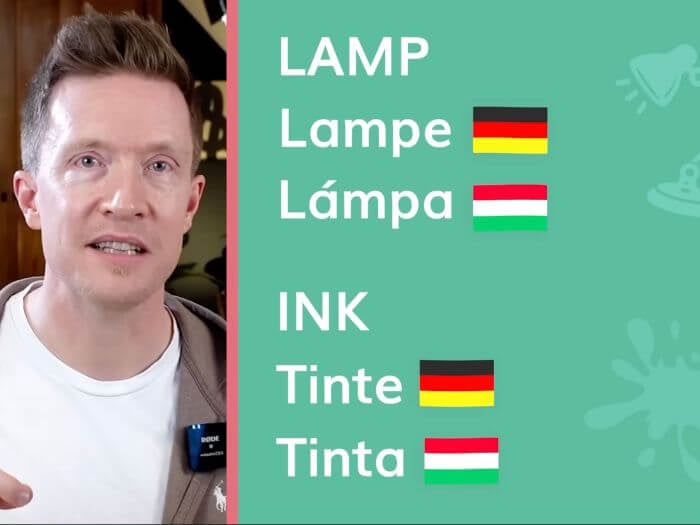
It turns out that somewhere she had seen a few German words and spotted that the German word for “lamp” looked a lot like the Hungarian word for “lamp.” Then she saw another pair of words – the word for “ink.” Same meaning, similar letters.
So she drew the only logical conclusion: German works exactly the same way as Hungarian, just swapping endings.
Turns out it doesn't.
But anyway, she marched up to her parents and declared herself fluent. They smiled, shook their heads and said, “Nice try.”
Well, that sucked. And it didn't help that all of her friends had German nannies – Fräuleins as they called them – floating around the house. German was basically in their ears all day long. But Kató's family wasn't wealthy enough for that. So she was on her own with German.
Her parents did legitimately think that she was hopeless at languages. But something had hooked her, and it got stronger and stronger every single year.
The story goes that she spotted some Latin proverbs in her sister's school book and liked them so much that she decided then and there she was in love with languages. Which is kind of awkward, because she was objectively terrible at them. So what to do about it?
Well, when she turned 10 she started French classes at school. Only problem was the teacher knew so little French that she was always only one lesson ahead of the class. Remember that for later.
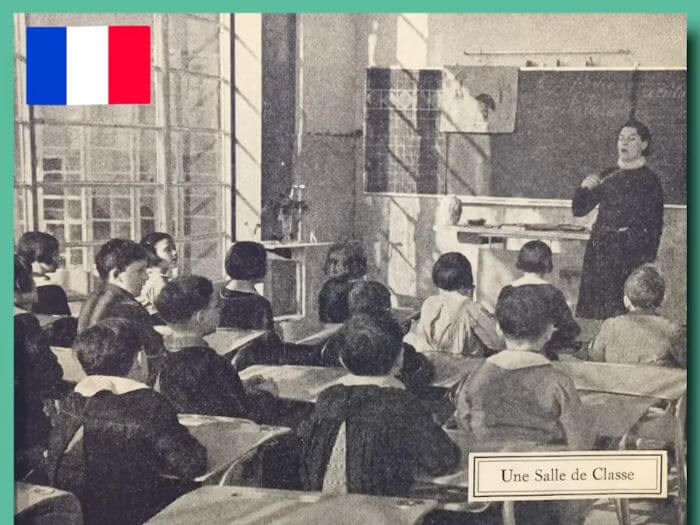
And by the time Kato Lomb finished high school, German still wasn't happening either. Her teachers were unimpressed. Kató was unimpressed.
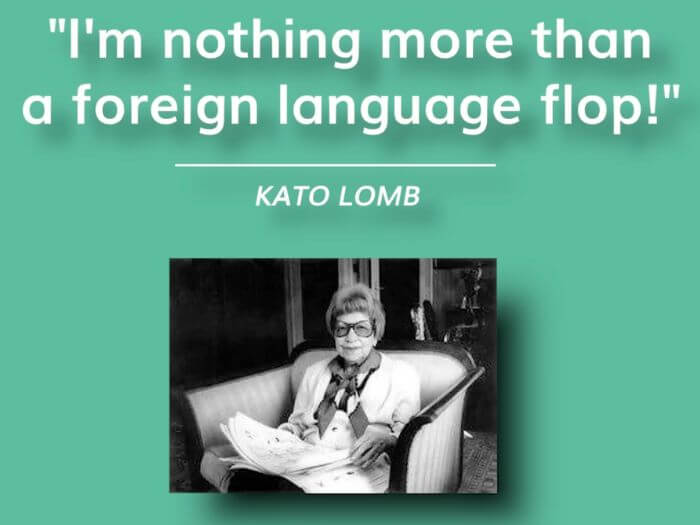
And she took all of this as proof that she just wasn't wired for languages. Her exact words were: “I'm nothing more than a foreign language flop.”
So she gave up, the way that so many people do. She changed to science. She got a science degree. It was sensible and respectable and absolutely wrong for her. She managed to get a bit of Latin in there with the science – that comes with the territory.
And yet, no matter what she studied, the pull of languages just wouldn't go away. All she wanted was to have a job with languages, preferably to teach them.
And that's when she did something that she really shouldn't have been able to do.
How Kato Lomb Taught Herself English From A Novel
Along came the 1930s. Hungary was in a deep economic depression. Jobs were scarce, money was tight and Kató was now 24 with a young baby. She needed a way to earn a living. So she made a decision.
If she couldn't be good at languages, she would at least become useful with them. And one thing that people paid good money for back then was English.
So she thought, “I know. I'll be an English teacher.”
Just one little snag. She didn't speak English. She'd have to go and learn it first.
But Kató didn't allow excuses to get in the way. The real issue was that she found textbooks unbearably boring. She did, however, love stories – detective stories, romance novels, big family sagas – way more fun than textbooks.
So she did something very simple but totally unorthodox. She picked up an English novel and just started reading it. No teacher, no course, just the book, a dictionary and a bit of stubbornness.
She literally used reading to unravel the basics of English and figure out how it all worked. And as it turns out, that book was jam-packed with all the emotions you could ever want – love, jealousy, betrayal, greed, passion, all of it. And that's how she taught herself English.
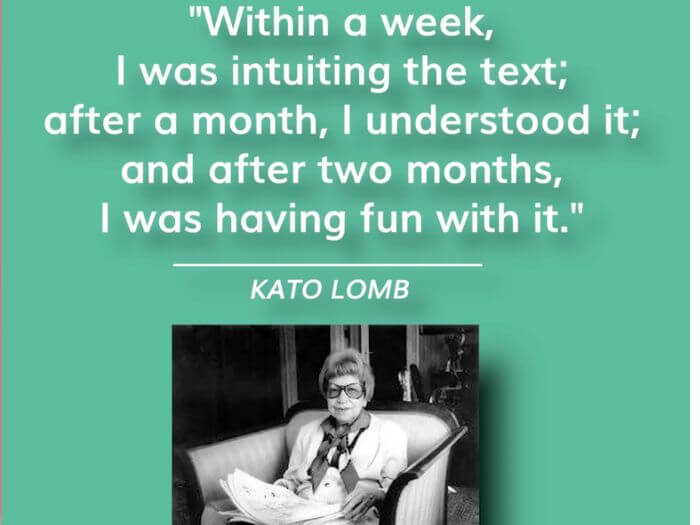
She said: “Within a week I was intuiting the text. After a month I understood it. And after two months I was having fun with it.”
And then, unbelievably, she lands the English teaching job for real. And the job came with a course book. And so, just like her French teacher, Kato Lomb started teaching English by staying exactly one lesson ahead of her students.
How She Learned Russian In A Bomb Shelter
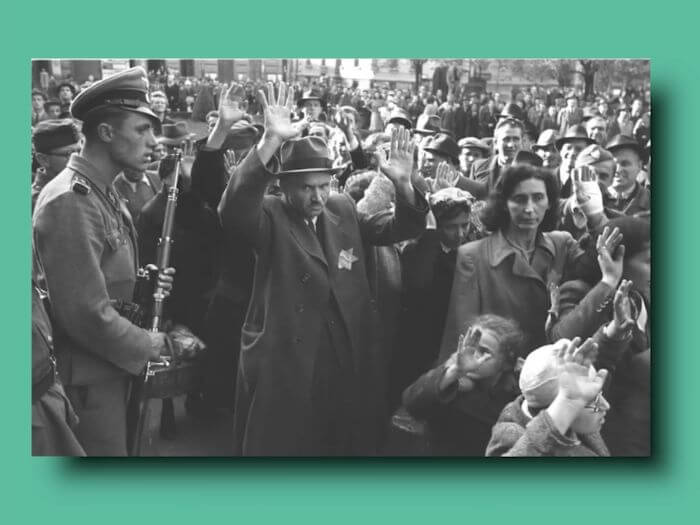
That little method was the only reason she survived what came next, because right after that, World War II broke out.
Of all the languages that Kató could have chosen next, she picked the one that could have got her killed.
It's early World War II now. Kató is living in Budapest, and one day she goes into a secondhand bookshop and spots an old Russian-Hungarian dictionary from the 1800s.
What grabbed her wasn't even the words – it was the alphabet. Russian, of course, uses Cyrillic. And Kató's brain did what it always did. It went, “Ooh, pattern.”
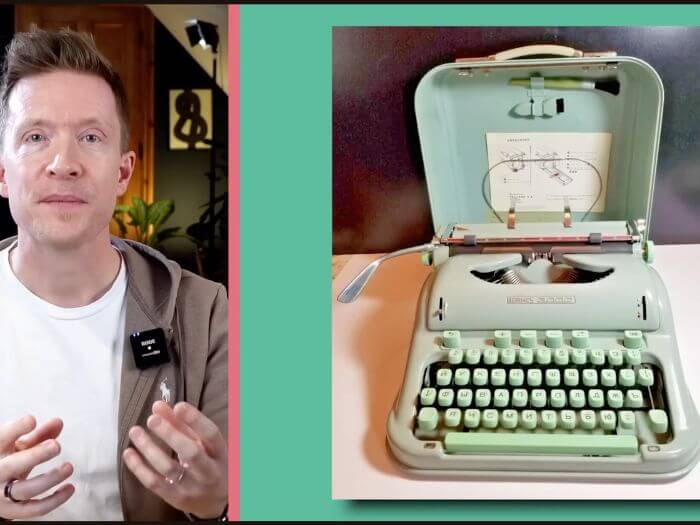
So she bought the dictionary, went home and decided she was going to learn Russian. She found a Russian typewriter somehow, started teaching herself how to build the language, and – because she's Kató – she found a pile of Russian romance novels somewhere and started reading those too.
Now you need to understand the stakes here. Russian was a forbidden language. It was the language of Hungary's arch-enemy. If she was caught learning Russian, that alone could look like treason.
And that was only strike one. Kató, you see, was Jewish. And we all know how that went.
So the books had to be hidden. When I first read about this, I had to take a minute. Because learning a language is one thing. Learning the enemy's language during a war is another thing. But doing all of that while being actively hunted yourself — well, that's something else entirely.
And it was getting worse. Kató was forced into hiding with her two-year-old son. And this next detail is so insane it sounds like it was made up for a spy movie.
She got a bookbinder friend to sew a Russian novel – Gogol's Dead Souls – inside a thick encyclopaedia. So this thing, from the outside, looked harmless. But inside was Russian.
You can imagine the scene. Bombs falling, chaos everywhere, soldiers searching houses, and there she is, sitting at home reading Russian. It was incredibly dangerous, but I suppose it gave her mind a better place to go.
She learned thousands of words from the dictionary, figured out grammar from the novel, and when something didn't make sense, she scribbled it in the margins and came back later. Which is impressive enough.
But hey, Russian ain't no walk in the park. It's really hard, and she had no Russians to practise with. The best she could do was listen in on Russian radio broadcasts any chance she got.
Think about that for a second. If you wanted to hear the language, you had to actively go looking for it in the middle of a war. This isn't immersion. This is something else altogether.
And after about two years of this, she could speak Russian.
From Bomb Shelter To Interpreter
If this story was ever going to fall apart, it would be right here. But instead, it explodes.
When the war ended, Russian suddenly became the most valuable skill in Budapest. The Soviets moved in and overnight the city needed Russian speakers. Also, Kató was pretty much the only person around who could use a Russian typewriter, so she went looking for work.
Budapest was in ruins. But one night she noticed a thin line of light under a door. She knocked, and it turned out to be the mayor's office, of all places.
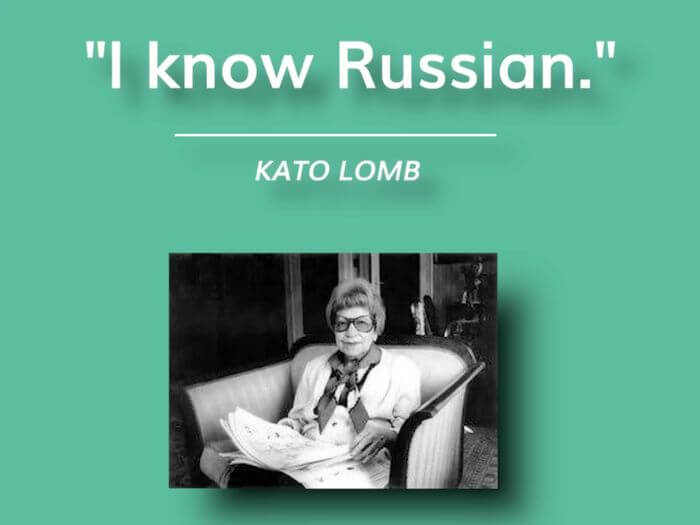
An “unfriendly uncle,” as she called him, opened the door and asked what she wanted. She said, “I know Russian.” And five minutes later she was hired as an interpreter.
Wait — you think the job is the wild part? No, the wild part is that he was the first Russian speaker she'd ever met, and he gave her an assignment immediately.
Basically: stop talking, sit down, call the city commander, tell him who the mayor is. And just like that, her interpreting career began.
From that moment on, she suddenly had endless chances to use Russian for real. Which sounds like the dream scenario, except for one problem. Even though she could speak Russian, she barely understood anything that Russians said back to her.
In case you're new to this – usually when you learn a language, you listen as much as you possibly can to native speakers because that's how you know how it's supposed to sound. I mean, how else will you know how to do it yourself?
But Kato Lomb knew that her pronunciation was awful. Her worst skill of all. “The mother tongue always shines through,” she said. I might steal that one – it's a pretty good line.
But what's so refreshing is that she never saw this as a failure. She just accepted that some skills grow faster or slower than others. And she carried on talking to herself out loud, anywhere, just to get used to speaking. Two years later she was translating for the Russian military.
It's crazy, when you remember how this whole thing began. And yet somehow, she was only getting started.
Where Are The Other 15 Languages?
You might be thinking at this point, “Okay, Russian, great. But where are the other 15? You said she learned 16 languages.”
Well, by now Kato Lomb had stopped learning languages the way normal people do. She wasn't choosing languages any more. She was chasing them. Or were they chasing her?
What came next makes Russian look almost reasonable.
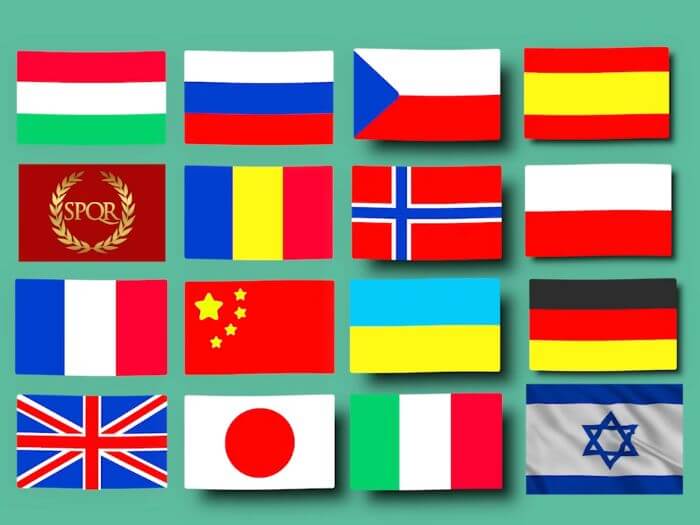
First she got obsessed with Romanian, then Mandarin Chinese. And Chinese is not exactly a “let's see how this goes” kind of language. It's the absolute hardest language in the category. We're talking up to four or five years of intense study.
So she did the unthinkable – she enrolled in an actual course. That's right, a language course. It was a first for her. Two years later, what did she do? She translated a Chinese novel. Of course she did.
Meanwhile, she was getting terrifyingly fast at switching between languages. So fast that she invented simultaneous interpreting in Hungary.
You know that job where you're speaking one sentence while listening to the next sentence in a different language at the same time, while everyone's watching? It's like juggling chainsaws with your brain.
And then came the flood of languages. Japanese, Czech, Norwegian, Ukrainian, Italian – and some of these were actually overlapping. Foreign novels all over the place.
By the time she got to Spanish, she was already in her 60s. Her textbook? Well, it was the famous Gentlemen Prefer Blondes — in Spanish. I mean, hey, why not?
But you know what's really crazy? For all these languages piling on, she had almost no native speakers to practise with, just like Russian. But she created these fake situations.
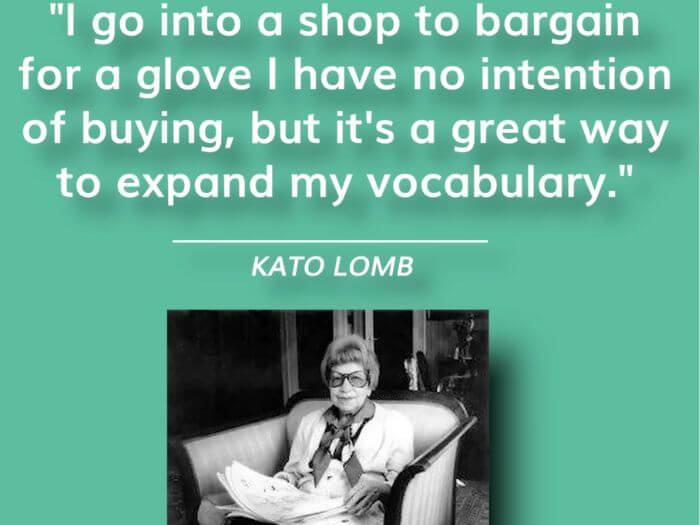
Here's what she said: “I go into a shop to bargain for a glove I have no intention of buying, but it's a great way to expand my vocabulary.”
What Happened When She Enrolled In An Advanced Polish Class?
And then came her most ridiculous stunt yet. Polish.
So she walks into a live Polish class – but not a beginner class. She signs up for advanced Polish. The teacher tries to check her level and she stops him and says, “Don't bother. I don't speak a word of Polish.”
The teacher's completely baffled, like, why on earth are you enrolling in this advanced class? And she says, “Because people who know nothing have to advance vigorously.”
And the best part? The guy lets her in, out of sheer curiosity and confusion, I bet.
How Kato Lomb Finally Conquered German
But there was still one language she hadn't cracked – one that had haunted her since childhood.
One day she gets invited to interpret at a conference, and the conference is in Germany. She thinks, well, it would be good manners to learn the language of my hosts. And so she did. And just like that, she came full circle and finally learned German.
And with that, the number was 15 languages.
Wait – 15? I think there's one missing.
The Language She Was Learning When She Died
By now, Kató was in her 80s. She must be done with languages, right? No more languages?
No.
One day a teenage girl asked her for some advice, and Kató told her to keep a diary and write in all the languages she knew, switching between them freely – English, Spanish, French.
And then she showed the girl her own diary. Page after page, all handwritten, different languages, all mixed together. And then she pointed to one that she was about to start learning next: Hebrew.
And that's exactly what Kato Lomb was doing when she died, aged 94 – learning Hebrew. Still scribbling away, switching languages, still completely obsessed.
Kato Lomb FAQ
What is the Kato Lomb method?
The Kato Lomb method is a self-directed language learning approach that focuses on extensive reading, consistent exposure, and learning through context rather than memorising grammar rules.
It encourages learners to read books in their target language early, even without full understanding, and to build vocabulary naturally through interest and repetition.
What Can We Learn From Kato Lomb?
Kató Lomb's story is, at its heart, a reminder that talent is far less important than obsession.
She started out as someone who was laughed at for thinking she could speak German at four, who was dismissed by her teachers and who wrote herself off as a “foreign language flop.”
And yet she went on to learn 16 languages – not because she had some rare gift, but because she refused to stop.
What made Kato Lomb extraordinary wasn't natural ability. It was her willingness to start before she was ready, to read books she couldn't yet understand, to practise in bomb shelters and bargain for gloves she never intended to buy.
She proved that you don't need perfect conditions, native speakers or even a classroom. You need curiosity, stubbornness and something in the language that genuinely excites you – whether that's a romance novel, a Cyrillic alphabet or an old dictionary found in a secondhand bookshop.
If Kató could learn Russian while hiding from the Nazis with a novel sewn inside an encyclopaedia, the rest of us can probably manage to open a book.

Olly Richards
Creator of the StoryLearning® Method


Olly Richards is a renowned polyglot and language learning expert with over 15 years of experience teaching millions through his innovative StoryLearning® method. He is the creator of StoryLearning, one of the world's largest language learning blogs with 500,000+ monthly readers.
Olly has authored 30+ language learning books and courses, including the bestselling "Short Stories" series published by Teach Yourself.
When not developing new teaching methods, Richards practices what he preaches—he speaks 8 languages fluently and continues learning new ones through his own methodology.