Vaughn Smith speaks 26 languages. Not dabbles in. Speaks. He also went viral after getting his brain scanned at MIT.
From Spanish and Russian to Finnish and Salish, his linguistic journey spans continents, language families and decades of dedicated learning.
What makes someone capable of mastering so many languages? Is it natural talent, relentless practice or something else entirely? I brought Vaughn onto the StoryLearning podcast to answer these questions and much more.
Pro Tip
By the way, if you’re serious about improving your language skills, online language courses for fluency can make a huge difference.
I'm offering top-rated online language courses for beginners to advanced learners, covering Mandarin, Spanish, French, Italian, German, Japanese and more.
If you’ve been looking for a story-based online course to learn languages, this is your chance! Get a free 7-day trial of the course of your choice.
If you prefer listening to reading, hit play on the podcast version of this post below. Otherwise, here's what you'll discover in this article:
Table of Contents
What Does Growing Up Bilingual Really Mean?
For Vaughn, language learning didn't begin with a textbook or an app. It started at birth.
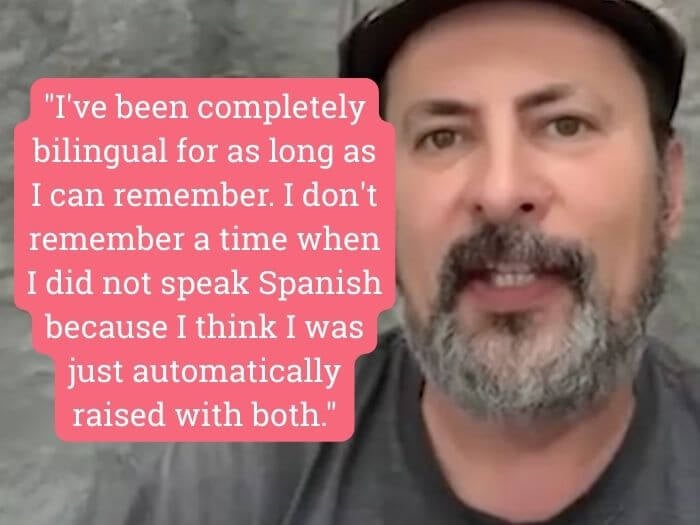
“I've been completely bilingual for as long as I can remember. I don't remember a time when I did not speak Spanish because I think I was just automatically raised with both.”
Vaughn Smith
Living in Mexico as a small child and maintaining close ties with his Mexican family meant Spanish was woven into the fabric of his identity.
Growing up in Silver Spring, Maryland, just outside Washington DC, Vaughn found himself standing out from his monolingual peers.
“I was like the only kid that knew this secret language that was called Spanish. I didn't meet any other bilingual kids. Everyone just knew English.”
Vaughn Smith
This early bilingualism did more than give him a head start. It fundamentally shaped how he understood the world.
Growing up with two languages teaches you something profound: English isn't the whole world. There's more out there than what you already know.
The Anne Frank Connection
Vaughn's journey into German came through an unexpected source: his middle school literature class.
While studying World War II and reading The Diary of Anne Frank, he became the go-to student for pronouncing German phrases that appeared in the text.
“The teacher would say, ‘Okay, Vaughn, can you read this to the class? How do you pronounce this and that?'”
This became his third step into multilingualism. He'd already proven to himself that he could make sounds in both English and Spanish. German pronunciation came naturally, even without formal instruction or native speakers to learn from.
A High School Like No Other
The real explosion in Vaughn's language learning came when he entered junior high and high school in Washington DC proper.
The environment was unlike anything most language learners could dream of: exchange students, children of diplomats, immigrants from across the globe, all gathered in one place.
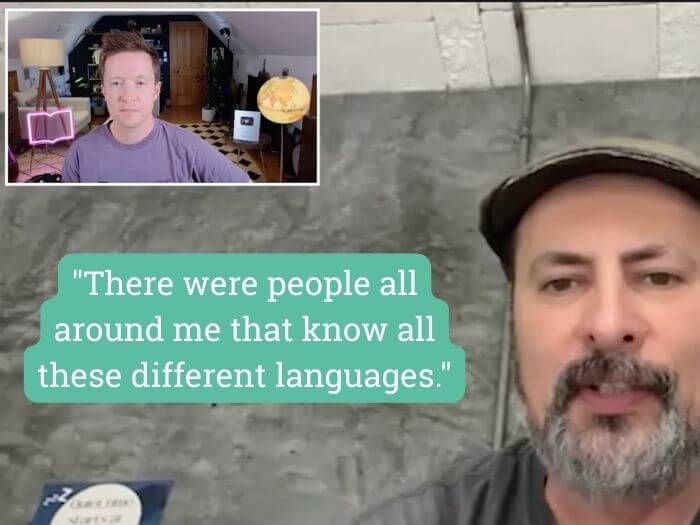
“There were people all around me that know all these different languages.”
Vaughn Smith
His first Hungarian friend lived on the embassy residence and taught him phrases in what seemed like an impossibly bizarre language.
Brazilian classmates introduced him to Portuguese. Students from what was then Zaire, Congo and Cameroon spoke African varieties of French.
During lunch breaks, Vaughn found himself at the centre of a small international community. “Here's our American friend Vaughn, let's have lunch together and talk about things.”
He'd tell them about the city whilst they shared stories from their home countries. There were students from Sri Lanka, Yugoslavia, Romania, and beyond.
“I have this like library of references where I can ask how to say this and that. It was pretty fun.”
Vaughn Smith
By the time he finished high school, Vaughn was familiar with around 17 languages.
What Actually Motivates A Polyglot?
When I asked what drove him to learn so many languages as a teenager, Vaughn's answer reveals something crucial about successful language learning: it's rarely just about the language itself.
“It's a combination of the two,” he admits. For German, he was learning purely for the language's sake since he didn't know any Germans at the time.
The classroom excitement around World War II history gave him motivation to stand out, to be the person who knew what those German words meant.
But Russian marked a turning point. He borrowed a Russian language book from the library and worked through it alone, only to later meet two diplomat children at his high school who brought the language to life. After that, the pattern shifted decisively toward people.
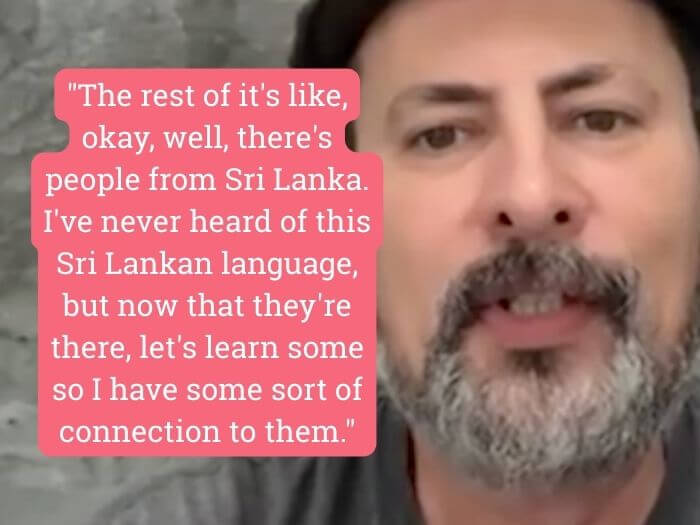
“The rest of it's like, okay, well, there's people from Sri Lanka. I've never heard of this Sri Lankan language, but now that they're there, let's learn some so I have some sort of connection to them.”
Vaughn Smith
These weren't just language exchanges. They were genuine friendships with people who had fascinating stories to tell and interesting perspectives to share.
How Do You Define “Speaking” A Language?
With 26 languages under his belt, Vaughn has developed clear criteria for what counts as speaking a language. His approach combines external validation with personal standards.
First, external validation: if someone he's speaking with turns to a third person and says “he speaks it,” that's a meaningful indicator. But Vaughn doesn't stop there. His personal criteria are more technical.
He needs to know the prepositions, understand the basics of grammar, count to at least 100, and be able to discuss different subjects whilst understanding and producing full paragraphs.
More specifically, he looks for knowledge of inflections, familiarity with the 50 most common verbs, command of all pronouns, and understanding of how prepositions function. It won't necessarily be fluency, but it's legitimate speaking ability.
Here's how I think about fluency: the pub test. Can you go to a pub with someone, have a drink, and enjoy a conversation without the other person accommodating you too much?
If you can do that, regardless of how many mistakes you make or verbs you know, you've succeeded at the fundamental purpose of language: genuine communication.
The Learning Methods That Actually Work
Vaughn's approach to language learning has evolved over the decades, but certain fundamentals remain constant. At the core of everything is vocabulary acquisition through whatever means available.
He still makes lists of words and sentences, carries them in a book, and reviews them throughout the day. Waiting for the bus, getting coffee, any spare moment becomes study time.
Books remain essential. His backpack typically contains materials in multiple languages, including my short story books, ready for whenever opportunity strikes.
What's changed is the addition of digital tools. Duolingo helped him start learning Welsh. News websites offer authentic content with closed captions, allowing him to see how words are written whilst hearing them pronounced. Apps like Pimsleur offer structured audio practice.
The common thread across all these methods? Exposure to new words.
“I don't know how to really expand on it because there's so many different approaches. You need the audio exposure. You need to be able to know how these words are pronounced.”
Vaughn Smith
When reading books in his target languages, he actively searches for unfamiliar vocabulary, using context to guess meanings and noting new words within their sentence structures. It's not about memorising entire books but about filtering for what's new and useful.

Why Immersion Remains Irreplaceable
Despite his impressive toolkit of methods, Vaughn is unequivocal about the best language learning method: immersion.
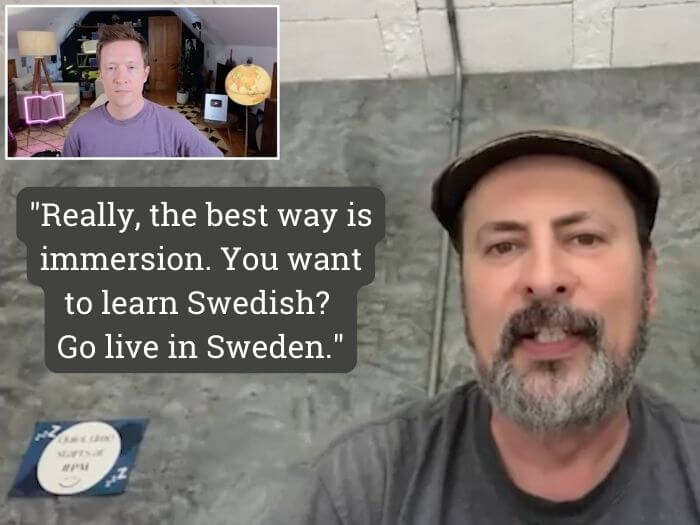
“Really, the best way is immersion. You want to learn Swedish? Go to Sweden. Go live in Sweden.”
Vaughn Smith
The reason is simple. No book or app can replicate the totality of real-world language use. Vaughn illustrates this with a story from Finland. He'd studied Finnish extensively and practised with Finnish speakers in DC.
But nothing prepared him for the moment a server at Hesburgger asked him if he wanted his order to go.
“That doesn't happen when I'm in DC because my friends are not servers at a restaurant.”
True immersion means encountering language in contexts you can't anticipate or prepare for. It means the language surrounding you completely, unfiltered by the limitations of textbooks or the constraints of conversation partners who are themselves away from home.
Finding Native Speakers Wherever You Are
What if you can't travel to the country where your target language is spoken? Vaughn's approach centres on finding communities of native speakers wherever you happen to be.
In Washington DC, he attends language exchange meetings where anywhere from 50 to 100 people gather at Meridian Hill Park or local beer gardens.
These meetings bring together exchange students, workers on temporary permits and permanent residents from around the world.
At one such meeting, he met a woman who spoke Shona and ended up learning about her language and culture simply because she was delighted to have someone interested in listening.
His advice for others struggling to find native speakers is straightforward: just go for it. Look for opportunities, search online, attend meetups.
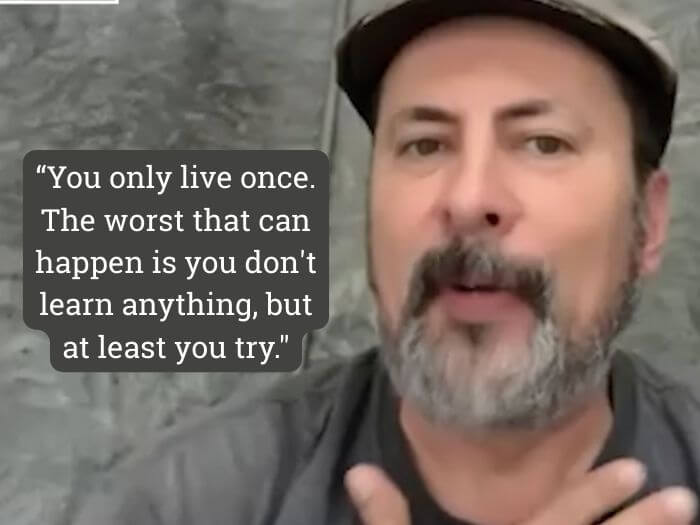
“You only live once. The worst that can happen is you don't learn anything, but at least you try.”
Vaughn Smith
The social barrier, he suggests, is often the biggest obstacle. Whether someone is confident enough to speak is a personal choice, but the opportunities are there for those willing to grab them.
What Brain Scans Reveal About Polyglots
In February 2022, Vaughn underwent a brain scan at MIT, funded by the Washington Post. Lying in an MRI machine for two hours, he was exposed to words flashing on a screen, audio files in various languages and logic questions, all whilst researchers monitored his brain activity.
The findings were striking in their simplicity. The area of Vaughn's brain that processes language was approximately half as reactive as that of non-polyglots. In other words, he was using the language part of his brain more efficiently, with less effort.
The researchers had tested other polyglots and found similar results. This suggests something that might seem discouraging at first: perhaps some people are simply born with brains better suited to language learning.
But Vaughn resists this interpretation, and for good reason. Even if natural efficiency plays a role, there's another factor that varies enormously from person to person: interest.
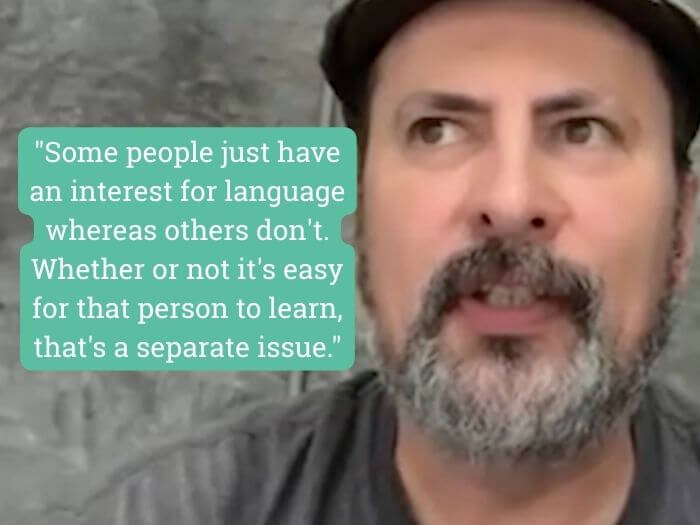
“Some people just have an interest for language whereas others don't. Whether or not it's easy for that person to learn, that's a separate issue.”
Vaughn Smith
The desire to learn, the curiosity about other languages and cultures, that spark of interest may matter more than any neurological predisposition.
The Hardest Languages To Learn
When I asked which languages pose the greatest challenges, Vaughn points to some surprising candidates.
Finnish, Lithuanian and Hungarian all present significant grammatical complexity. Lithuanian, he notes, is considerably more difficult than Latvian despite both being Baltic languages.
But the hardest languages aren't European at all. North American indigenous languages, particularly Navajo and Salish, present challenges that dwarf anything else Vaughn has encountered.
Salish is extraordinarily difficult for pronunciation, whilst Navajo grammar operates on principles entirely foreign to speakers of European languages.
Preserving Endangered Languages
Vaughn's involvement with Salish began with a serendipitous discovery.
Whilst reading the Lewis and Clark journals with his niece, they came across references to the Salish peoples and discovered that the community runs an immersion school dedicated to language preservation.
They found audio files online and began learning together. His niece, delighted by the word for chicken, started using it at home.
This sparked enough family interest that Vaughn reached out to the school's directors, eventually visiting in 2010 and again five years later.
This experience connects to Vaughn's work with Zapotec speakers in Oaxaca, Mexico, where younger generations are rapidly abandoning the language.
He visits his friend Don Pablo in the village of Mitla, exchanging ideas about encouraging younger people to maintain their linguistic heritage.
For endangered languages, the key is often knowing someone involved in the community who believes in the language's continuation.
It's about putting something back, recognising how important native languages are for cultural identity and finding ways to encourage preservation when government support falls short.
Maintaining 26 Languages
With so many languages to keep active, maintenance becomes a significant challenge. Vaughn approaches it through scheduled review, particularly before travelling to regions where specific languages are spoken.
If he knows he'll be meeting Nahuatl speakers in Mexico in a month's time, he'll dedicate time to reviewing his knowledge, ensuring he still remembers what he'd memorised.
Beyond targeted preparation, he regularly picks a random language off his metaphorical shelf and reviews it, using both literature and audio resources like online news.
As for switching between languages, Vaughn reports that any confusion he experienced in his high school years has long since disappeared.
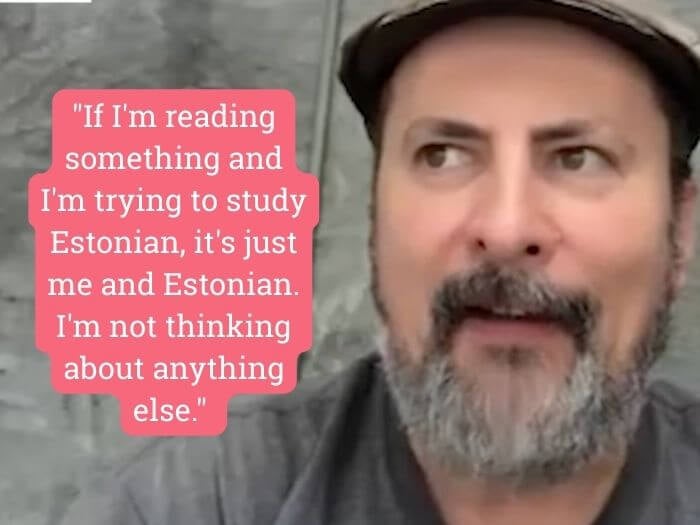
“If I'm reading something and I'm trying to study Estonian, it's just me and Estonian. I'm not thinking about anything else.”
Vaughn Smith
The key ingredient is focus, maintaining discipline as a separate skill that can be mastered alongside the languages themselves.
Vaughn Smith FAQ
What is Vaughan Smith known for?
Vaughn Smith is known as a polyglot who speaks 26 languages. He's known for getting his brain scanned at MIT.
Who is the man who speaks 24 languages?
The man who speaks 24 languages and more is polyglot Vaughn Smith, who is the man behind the viral MIT brain scan.
Lessons From A Polyglot's Journey
Vaughn Smith's story offers both inspiration and practical guidance for language learners at any stage.
His journey demonstrates that whilst natural ability may play some role, the deeper drivers of success are curiosity, genuine interest in people, and willingness to seize opportunities wherever they arise.
His methods combine traditional approaches with modern tools, always centred on vocabulary acquisition and authentic exposure. He recognises immersion as the gold standard whilst developing strategies for when full immersion isn't possible.
Most importantly, he consistently puts people first, allowing relationships to drive his language choices rather than approaching languages as abstract systems to be conquered.
If you're feeling intimidated by the prospect of learning even one new language, Vaughn's advice is simple: just go for it. Grab the bull by the horns.
The worst that can happen is that you don't learn anything, but at least you tried. And in trying, you might just discover a world far richer than the one you knew before.

Olly Richards
Creator of the StoryLearning® Method


Olly Richards is a renowned polyglot and language learning expert with over 15 years of experience teaching millions through his innovative StoryLearning® method. He is the creator of StoryLearning, one of the world's largest language learning blogs with 500,000+ monthly readers.
Olly has authored 30+ language learning books and courses, including the bestselling "Short Stories" series published by Teach Yourself.
When not developing new teaching methods, Richards practices what he preaches—he speaks 8 languages fluently and continues learning new ones through his own methodology.