
You’re in the car. Or out walking. Either way, thirty minutes are doing nothing.
You’ve studied this language before, on and off. You can read a menu, follow a written sentence.
Then somebody speaks to you.
Nothing comes out.
It’s not that you don’t know the words. It’s that you’ve never had to produce them out loud, at speed, with someone waiting.
That isn’t a lack of talent or effort. It’s what happens when everything you’ve done so far has been silent.
Pimsleur is built for exactly that half hour. It’s an audio course of 30-minute lessons, one a day, designed to be done hands-free while you drive or walk. A voice asks you how to say something, pauses, and waits for you to say it out loud.
Whether it’s worth paying for depends on what you want it to do.
Here’s the short answer. You can stop after it.
Yes, Pimsleur is worth it if you’re starting a language from scratch, you want to be saying whole sentences out loud in your first week, and you have half an hour a day you can spend listening.
It’s not worth it if you expect one subscription to carry you to fluency, because it’s almost all audio, it limits how much new language you meet on purpose, and it won’t teach you to read.
What it costs: Premium is $19.95 a month for one language, or All Access at $20.95 a month for all of them, as of September 2026. There’s a 7-day free trial.
This is your Pimsleur review, and I’ll be straight from the start.
I’ve used Pimsleur at the start of four languages: Japanese, Cantonese, Egyptian Arabic and Thai. I reviewed the Egyptian Arabic course on this site years ago, and that review is still there for anyone learning that language.
Every price, plan and feature was checked on Pimsleur’s own pages, its FAQ, its terms and its app-store listings in September 2026.
The rest of this Pimsleur review covers how a lesson works, what Pimsleur does well, where it falls short, what it costs and who it suits.
How A Pimsleur Lesson Works
Strip a Pimsleur lesson back and what’s left is thirty minutes of audio and your own voice. No flashcards, no typing, no grey vocabulary lists. That’s the whole machine.
One lesson is about thirty minutes long, designed to be done once a day. There are thirty lessons in a level, which works out to roughly fifteen hours of audio. A level is simply thirty half-hours, one after another.
Inside that half hour, you hear a short conversation, then it gets pulled apart. You’re asked to produce each piece yourself before you hear it said properly. Pimsleur calls this the Principle of Anticipation.
The pause is not dead air. It’s a small moment of pressure, and it asks you to do the work before the answer arrives. If you don’t speak, the lesson just waits.
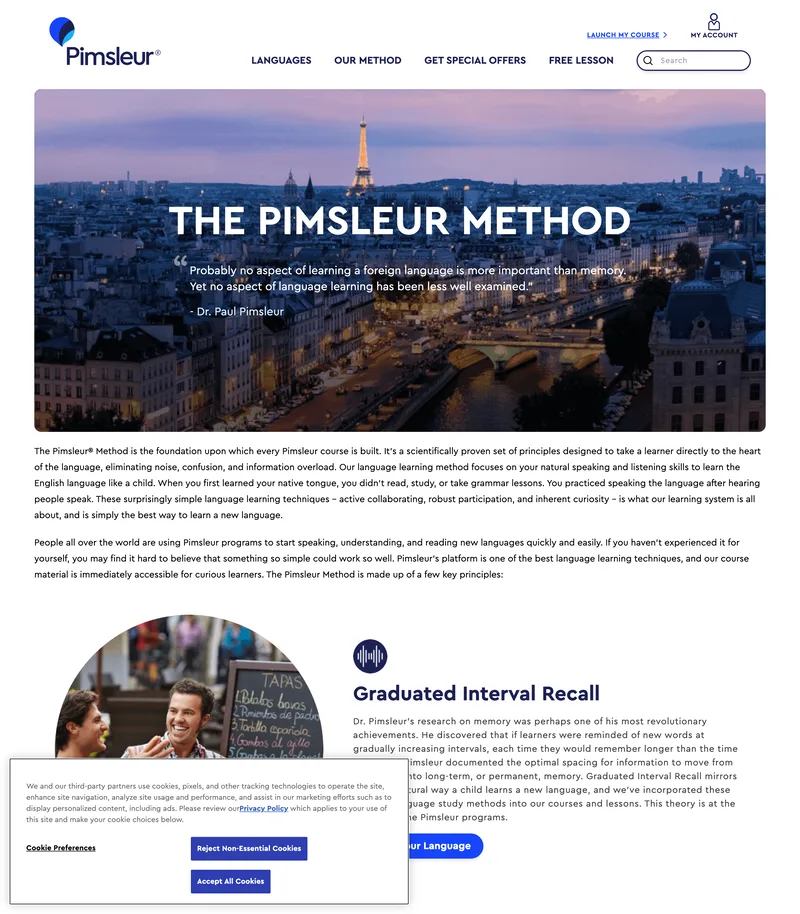
Then the phrases come back at longer and longer gaps. Pimsleur’s name for that is Graduated Interval Recall. It’s spaced repetition applied to spoken phrases rather than flashcards.
The amount of new material each day is small, and deliberately so. Pimsleur says its courses limit how much you learn at any one time. Alongside the first two, the method names Core Vocabulary and Organic Learning, without making a fuss about either.
The method goes back to Dr Paul Pimsleur, who lived from 1927 to 1976, held a doctorate from Columbia and taught at UCLA and Ohio State. By Pimsleur’s own account it’s more than sixty years old, and the company is now an imprint of Simon & Schuster Audio.
Most of what is good about Pimsleur comes straight out of those design choices. So does most of what’s wrong with it.
What Pimsleur Does Well
You can study a language for years and still freeze the moment somebody speaks to you. The words are in there somewhere, but they won’t come out in time. Pimsleur is aimed squarely at that gap.
From lesson one, you’re producing language out loud. The prompt comes, you hear the pause, and you have to answer before the native speaker does. You haven’t had a chance to look anything up.
It feels a bit like being thrown into a conversation before you feel ready. That’s exactly the point.
Then the old phrases keep coming back. Not because you remembered to schedule them, but because the course brings them round again at wider intervals.
There’s no review plan to maintain. I’ve always thought the grand name doesn’t matter here. It works.
The ground it covers isn’t huge. But the phrases it does teach are well chosen and useful. I still hold that view.
It fits into time that was going to be lost anyway. The mobile app has a hands-free driving mode with Apple CarPlay and Android Auto, and you can download lessons to listen offline.
I worked through Pimsleur Cantonese on my commute, half a lesson on the way to work and half on the way home, one lesson a day.
There’s nothing to set up. You press play on lesson one and the course decides what happens for the next half hour.
If you’re the kind of learner who can spend weeks choosing a method and never start, that matters more than any feature.
And the range is unusual. Pimsleur counts 51 languages, and the catalogue runs well beyond the obvious. Ojibwe, Twi, Haitian Creole and Icelandic are all there.
If you’re at zero in a language and you have half an hour of dead time a day, this is an easy thing to recommend.
Where Pimsleur Falls Short
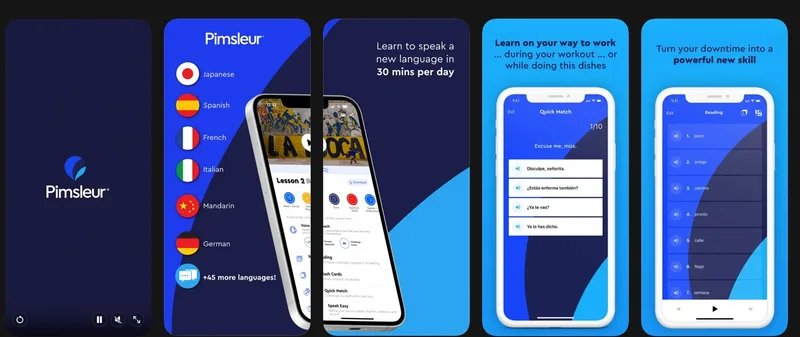
Pimsleur’s own count tells you what kind of product this is: each level teaches 300 to 500 new vocabulary items.
To be fair to them, Pimsleur does include Reading Lessons. A five-level course carries about 100 of them, so this isn’t a token feature.
But by Pimsleur’s own description, those lessons teach you to sound out the script, the sounds of individual letters and how letters combine. They don’t cover the words and phrases you’ve been learning in the audio.
There are no transcripts of the audio lessons themselves. Pimsleur also recommends that you don’t take notes or look things up while you’re doing a course. The written word stays just out of reach.
I work on a simple rule: if I’m going to remember a word, I need to hear it and see it. That’s why, when I used Pimsleur for Arabic, I ended up writing out what I was hearing.
So if you want to read the language, you’ll need to get that somewhere else. What Pimsleur isn’t built to give you is reading you can mostly understand.
You Only Hear What You’re About To Be Taught
There’s a reason Pimsleur lessons are so easy to follow, and it’s a trade-off: nothing unexplained is allowed in.
When I used those older audio courses at the start of Japanese, Cantonese, Egyptian Arabic and Thai, I found you never heard any language you weren’t then taught as a separate item.
That began to frustrate me.
I tried some of the Egyptian Arabic phrases on colleagues, and a few were more formal than what people actually say in Egypt.
A course you can always follow is also a course that never stretches you.
Some Languages Stop After 30 Lessons
Here’s the part the course pages don’t make obvious: how far Pimsleur can take you depends entirely on which language you pick.
The big languages run to five levels, which is 150 lessons in total. Spanish, French, German, Italian, Japanese and Mandarin all sit there, and a few others do too.
Eastern Arabic and Modern Standard Arabic stop at three levels.
Then there are the languages that stop after a single level of 30 lessons. Egyptian Arabic, Cantonese, Thai and Ojibwe end there. After those 30 lessons, you’re on your own.
Check the level count for your language before you pay for anything. A one-level course is a month of work, not a year of it.
It Needs Your Full Attention, And The Marketing Oversells
A half hour of Pimsleur only works if you’re actually there for all of it. I’ve said this before and I still think it: plenty of people buy audio courses because they look like the lazy option, then drift through the lessons half-listening. You can’t do that here and get anything back.
Pimsleur’s own pages promise a near-native accent, and say you’ll have your first conversation after your very first lesson. The home page also tells you there are no textbooks, no grammar lessons and no mindless repetition required.
A near-native accent without ever speaking to a person? I didn’t believe that when I first wrote about Pimsleur, and I don’t believe it now.
But overselling isn’t the same as not working. Underneath the headline, the course does what it says on the speaking side.
Judge it on the first half hour, not on the headline.
Pimsleur Cost: Every Plan And Price
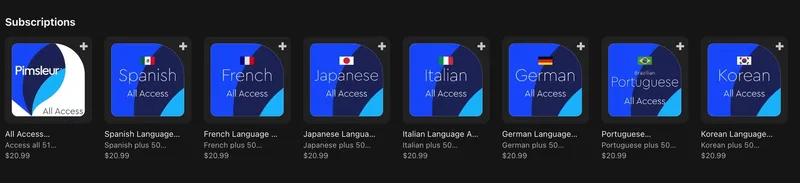
Pimsleur costs $19.95 a month for one language, or $20.95 a month for every language it teaches, as of September 2026.
There’s no single pricing page on Pimsleur’s site. The prices live on each language’s own course page, so you have to pick a language before you can see what anything costs. The figures are the same wherever you click.
On those course pages you’ll see three plans. Premium is $19.95 a month for one language with the interactive extras. All Access is $20.95 a month for every language, and you can switch between them whenever you like.
Paid yearly, All Access is $164.95, which Pimsleur labels as saving 34% against paying monthly.
The gap between one language and all of them is a single dollar a month. If you think you’ll touch even two languages over the course of a year, All Access is the cheaper move.
The plan that’s easy to miss is the audio-only subscription: $14.95 a month for one language, just the core lessons without the on-screen extras. It isn’t on the three price cards. You’ll find it further down the page under other subscription options, and Premium paid yearly sits there too at $149.95.
Every figure on this page is in US dollars. Pimsleur shows prices in your own currency, so if you’re outside the United States you’ll see your local price rather than these.
Buying inside the app costs a few cents more. And anything you purchase through Apple or Google falls outside Pimsleur’s money-back guarantee.
| Subscription | What you get | Price |
|---|---|---|
| Audio-Only, monthly | The core audio lessons, one language, no on-screen extras | $14.95 a month |
| Premium, monthly | One language, with the interactive extras | $19.95 a month |
| Premium, yearly | The same, paid once a year | $149.95 a year |
| All Access, monthly | Every language, switch whenever you like | $20.95 a month |
| All Access, yearly | Every language, paid once a year | $164.95 a year |
Prices checked on Pimsleur’s own site, 19 September 2026. All figures in US dollars. Pimsleur shows prices in your own currency, so outside the United States you will see a local price instead.
| Bought outright | What you get | List price |
|---|---|---|
| One level | 30 lessons, about 15 hours of audio | $150 |
| Complete course | Five levels, 150 lessons | $575 |
| All Access Lifetime | Every language, every level | $798 |
Prices checked on Pimsleur’s own site, 19 September 2026. A sale was running that day: 25% off the courses and 40% off All Access Lifetime.
Should You Subscribe Or Buy The Course Outright?
Before you tap subscribe, know this:
Pimsleur will also sell you the course outright, under the name Lifetime Subscription. The sums are worth doing before you click.
Those list prices, as of September 2026, are $150 for one level of 30 lessons, $575 for a complete five-level course of 150 lessons, and $798 for All Access Lifetime, every language. A sale was running on the day this page was checked: 25% off the courses and 40% off All Access Lifetime.
Now the arithmetic, priced on All Access, which is the plan here: at one lesson a day, a five-level course takes about five months. Five months of All Access is $104.75.
The same course to own is $575 at list price. Subscribing for as long as it takes to finish is far cheaper, even against a sale. A one-level language needs about a month of subscription.
What buying does get you, stated fairly: the lessons are yours to keep, and a purchase carries a 30-day money-back guarantee. Subscribers get new languages, new levels and updates added at no extra charge.
One caveat either way: the lessons only play inside Pimsleur’s own app or web player. Pimsleur no longer sells CDs.
The Small Print: Free Trial, Cancelling And Refunds
Before you start, the line worth knowing is this: deleting the app doesn’t cancel your subscription. Pimsleur says exactly that, in capital letters, in its own FAQ.
The free trial is 7 days. It opens every lesson in your plan, it’s for new customers only, and it renews into a paid subscription unless you cancel before the trial ends.
To cancel, log into your account on Pimsleur’s store site.
Cancel during the trial and access stops at once. Cancel later and you keep access until the end of the period you’ve paid for.
On refunds, the position is plain. Pimsleur doesn’t refund subscription charges, including unused time. If you’re in the UK, you have a 14-day right to withdraw, and you lose it as soon as you log in and start using the paid subscription.
The 30-day money-back guarantee is narrower than it sounds. It doesn’t cover any subscription that came with a free trial of 7 days or longer, and it doesn’t cover anything you bought through Apple or Google inside the app.
To claim it, you contact Pimsleur within 30 days, print and sign a sworn declaration that you’ve kept no copies, and wait four to six weeks. It’s limited to one claim per customer.
And “lifetime” has a specific meaning in the terms. It’s a licence you can’t transfer or pass on, and it lasts as long as your account and the service do.
The practical step is simple. Set a reminder for day six of the trial, and make your decision before it renews.
What The App Adds To The Audio
I should say this plainly: the Pimsleur courses I used were the older audio ones. I haven’t used the current app or subscription myself, so what follows comes from Pimsleur’s own pages and its app-store listings, checked in September 2026.
Pimsleur sells three tiers. Audio-only is the core lessons in one language, with no on-screen extras. Premium adds the interactive material for that language, and All Access is Premium for every language.
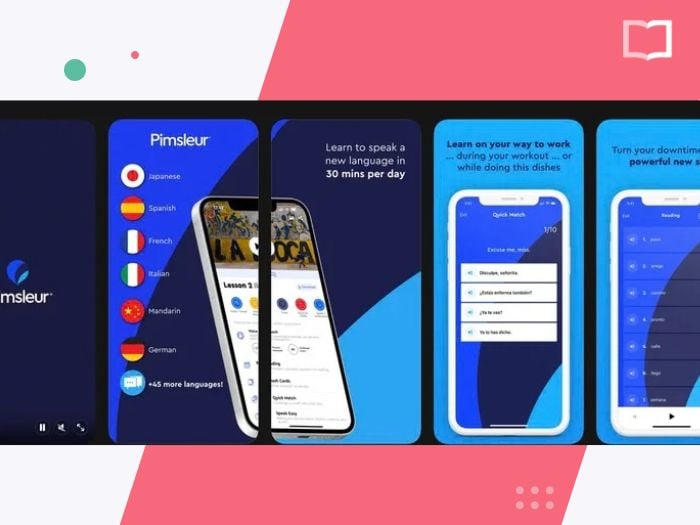
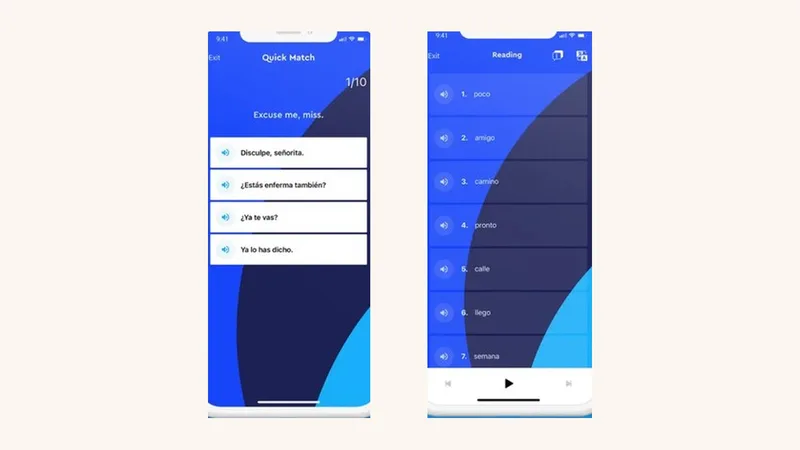
Premium lists five extras per level: 300 digital flashcards, a Quick Match game with 300 questions, a Speed Round, 30 Speak Easy conversations with transcripts, and 30 notes on culture. Pimsleur tells you to leave all of it until after the day’s audio lesson.
There’s also a Voice Coach that scores your pronunciation. An AI Conversation Coach is in beta, and Pimsleur has just added it, but only for All Access learners of Latin American Spanish and French.
Offline downloads work in the mobile app only, so the web version needs a connection. Premium and All Access subscriptions can be shared with up to three household members on the same login, with separate progress, across four devices at most. Audio-only doesn’t include sharing.
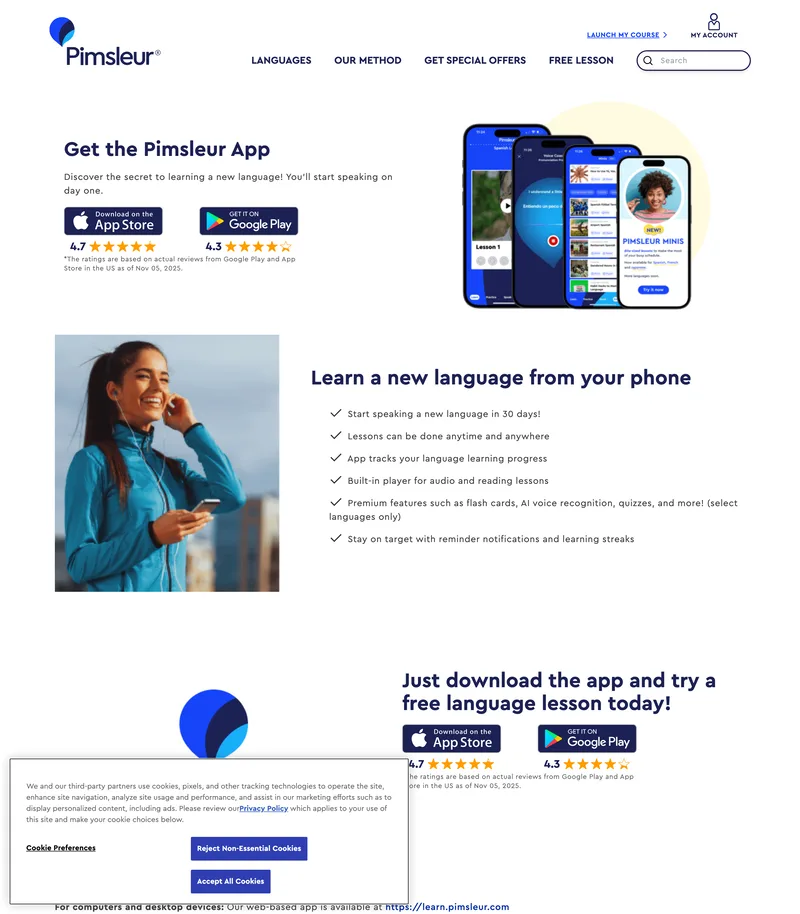
As of September 2026, the US App Store shows 4.7 from 29,789 ratings. Google Play shows 4.1 from 16.6K reviews, read the same month.
Who Pimsleur Is For, And Who Should Skip It
Pimsleur is one of the few courses that gets you talking on day one. It’s also one of the few that won’t get you to the end.
A lesson is 30 minutes of prompted speaking, done daily, with a deliberately small amount of new language each time. Pimsleur itself says there are no grammar lessons, though some languages carry short extras called Minis, which it describes as bite-size lessons on grammar and culture. And its reading lessons teach the sounds of the script, not reading for meaning.
Pimsleur is designed for someone with no experience in the language, and it recommends starting at Level 1, lesson 1.
By Pimsleur’s own count, each 30-lesson level teaches between 300 and 500 new vocabulary items. A full five-level course is 150 lessons, so that’s somewhere between 1,500 and 2,500 words.
That’s enough to get started and to handle the ordinary business of a trip. It’s a long way short of talking about whatever you actually care about.
I spent a few hours on Pimsleur Thai the week before flying to Bangkok. It was a useful introduction, and it got my ear used to the language.
Best for: the learner with no experience who has a daily half hour of hands-free time and wants to be speaking out loud from the first week.
Not for: the learner who wants to read the language, wants grammar explained, or is already past the beginner stage and stuck on understanding people at full speed.
What I’d Read Alongside Pimsleur
The StoryLearning App is my own product, a reading app, and it won’t replace Pimsleur. Because the StoryLearning App is mine, I’ll lean harder on its weaknesses than I did on Pimsleur.
What Pimsleur gives you, and the StoryLearning App cannot, is the speaking itself: thirty minutes of audio that prompts you, pauses for your answer, then gives the correct response. Its Reading Lessons teach you to sound out the script, not to read for meaning at first.
That leaves a gap reading has to fill. A word you meet Monday and can’t find Friday hasn’t gone anywhere. It just hasn’t turned up since.
Reading is where the language keeps turning up, and the StoryLearning App is built around 15 minutes a day of that.
“If you’re not going to base your study on reading, tell me what you’re going to do instead.”
The stories in the StoryLearning App are written for you by AI, at your level, in genres you choose from a list of eight. As you read, you save words, and those saved words come back in later stories, days and weeks apart. That’s spaced repetition, and it happens inside new stories rather than on cards.
The approach is called comprehensible input, which just means learning from stories you can mostly understand. You can trial the narration with a free audio each month, and full narration for every story is available on a separate plan.
The StoryLearning App costs $15 a month, or $135 a year, as of September 2026. That subscription buys up to 20 new stories a month across all your languages together. There is no free trial.
Now the weaknesses. The StoryLearning App has no speaking practice of any kind. There is no conversation with an AI or a tutor.
It is not for complete beginners. Pimsleur is built for people starting from nothing, so if you’re at the very start, you cannot use the StoryLearning App yet. You need an elementary, A2 foundation before the stories work.
It launched in 2026 and covers ten languages, all European. If you’re learning Japanese, Cantonese, Egyptian Arabic, Thai or Ojibwe, the StoryLearning App has nothing for you at all. It runs in a web browser on a phone, tablet or computer with nothing to install, and it’s not in the App Store or Google Play, so you cannot read offline.
Best for: someone past the very beginning who wants a daily reading habit.
Not for: complete beginners, anyone learning Japanese, Cantonese, Egyptian Arabic, Thai or Ojibwe, and anyone who wants speaking practice, because the StoryLearning App has none.
The StoryLearning App
- Price: $15 a month, or $135 a year (US dollars), as of September 2026
- New stories: up to 20 a month, across all your languages (re-reads not counted)
- Full narration available for every story
- Languages: Danish, Dutch, English, French, German, Italian, Norwegian, Portuguese, Spanish and Swedish, with separate Spain and Latin American Spanish, and European and Brazilian Portuguese
- Level: from about A2 (elementary) to advanced; not for complete beginners
- Where it runs: web browser on a phone, tablet or computer; not in the App Store or Google Play
The Bottom Line: Is Pimsleur Worth It?
Pimsleur is one of the best ways to start speaking a language, and a poor way to finish learning one. It has you producing full sentences out loud in your first week, and then it stops well before you can manage the conversations that actually made you sign up.
For the decision in front of you, I’d keep it simple.
Take the monthly plan rather than buying the course outright, because the monthly route costs far less over the months it takes to finish. Do one lesson a day. And from that first week, read and listen in the language on the side rather than waiting until you’ve finished.
Pimsleur has helped me at certain points in time, and that’s about as strong as I’d put it.
It also pairs well with reading, because reading for meaning is the one thing it doesn’t do.
Start with the free first lesson, which needs no subscription, or take the 7-day free trial. If you start the trial, set a reminder for day six.
Pimsleur FAQ
How much does Pimsleur cost?
Pimsleur costs $19.95 a month for Premium, one language, or $20.95 a month for All Access, every language, as of September 2026.
There’s also an audio-only plan for one language at $14.95 a month.
If you pay yearly, you’re looking at $149.95 for Premium or $164.95 for All Access.
Is Pimsleur worth it?
Pimsleur is worth it only for one kind of learner: someone starting from nothing who wants to be speaking out loud in the first week and has a daily half hour of hands-free time.
Pimsleur isn’t worth it if you want to read the language, want grammar explained, or you’re already past the beginner stage and stuck on understanding people at full speed.
Treat Pimsleur as a first few months, not a whole plan.
Is Pimsleur good for beginners?
Yes, Pimsleur is good for beginners. Pimsleur’s courses assume no previous experience, and Pimsleur recommends starting at Level 1, lesson 1.
In a lesson, you listen and say full phrases out loud when prompted, for about thirty minutes. There’s nothing to set up or organise because the course decides the order.
Does Pimsleur have a free trial?
Yes, Pimsleur offers a 7-day free trial for new customers, and every lesson in the course is open during that week.
If you don’t cancel before the 7-day trial ends, it turns into a paid subscription. Deleting the app doesn’t cancel the subscription. You have to log into your Pimsleur account on the store site to cancel.
There’s also a free first lesson with no subscription if you want to dip in first.
Can you buy Pimsleur instead of subscribing?
Yes, you can buy Pimsleur outright instead of subscribing. It sells courses under the name Lifetime Subscription: one level of 30 lessons lists at $150, a complete five-level course of 150 lessons at $575, and All Access Lifetime at $798, as of September 2026.
The two catches are that the lessons still play only through Pimsleur’s app or web app, and that a lifetime licence can’t be transferred and lasts only as long as your account and the service do.
Does Pimsleur teach you to read?
No, Pimsleur doesn’t teach you to read. What Pimsleur does offer is Reading Lessons, and those are a different skill. They teach you the sounds of individual letters and how letters combine, so you’re sounding out the script rather than reading for meaning.
The Reading Lessons don’t use the same words and phrases as the conversational lessons. Pimsleur also provides no transcripts of the audio lessons, so you can’t read along with what you hear.
How long does it take to finish a Pimsleur course?
You’re looking at roughly a month per level, but the language you pick decides how many levels you’ll get. A level is 30 lessons of about 30 minutes each, meant to be done one a day.
Spanish, French, German, Italian, Japanese, Mandarin, Korean, Russian and Brazilian Portuguese have five levels, so about five months. Egyptian Arabic, Cantonese, Thai and Ojibwe have one level only, so the whole course is 30 lessons.
How many languages does Pimsleur offer?
Pimsleur offers 51 languages by its own count. That figure treats related varieties as separate courses, so you’ll see three kinds of Arabic, two of Spanish, two of Portuguese, Mandarin and Cantonese, plus two Armenian and two Persian courses.
Pimsleur also lists 15 versions of English for speakers of other languages alongside its main catalogue.

Olly Richards
Creator of the StoryLearning® Method


Olly Richards is a renowned polyglot and language learning expert with over 15 years of experience teaching millions through his innovative StoryLearning® method. He is the creator of StoryLearning, one of the world's largest language learning blogs with 500,000+ monthly readers.
Olly has authored 30+ language learning books and courses, including the bestselling "Short Stories" series published by Teach Yourself.
When not developing new teaching methods, Richards practices what he preaches—he speaks 8 languages fluently and continues learning new ones through his own methodology.