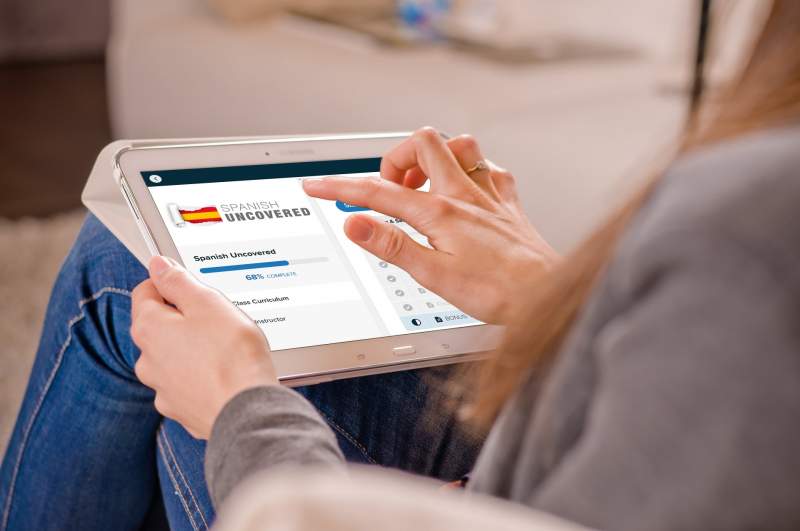

You're in Rome, and you've been learning Italian for months.
You stop an older man and ask him the way. You know the phrase perfectly.
Scusi, dov'è la stazione?
Excuse me, where's the station?
He smiles, points, and answers at full speed.
Sempre dritto, poi la seconda a destra.
Straight on, then the second on the right.
You don't catch any of it.
You nod, say thanks, and walk off in the wrong direction.
Here's the thing. The question came out fine. It was the answer that got away.
That isn't your fault, and you aren't alone.
The short version comes next. If you're in a hurry, you can stop after it.
If you want real speaking practice, italki puts you with a live Italian tutor. If you'd rather have a structured course with feedback from fluent speakers, Busuu runs from A1 to B2.
If it has to be free, Coffee Break Italian has a free podcast at every level from A1 to B2, and if the tapping never suited you, StoryLearning's Italian Uncovered teaches through one long story instead of drills.
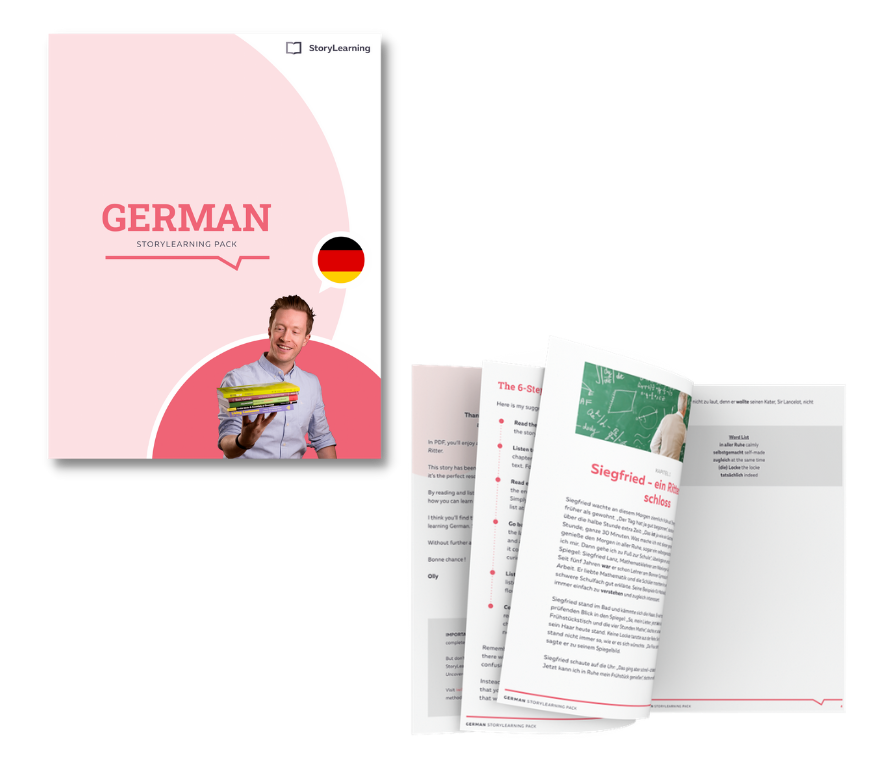
This page scores seven alternatives on the same eight criteria, StoryLearning's own course included. The other three are Babbel, Pimsleur and Langua.
For most people, the best alternative to Duolingo for Italian is a pairing: one deeper course plus one regular speaking habit.
The course leaves you able to read Italian but silent when someone actually asks you a question. The speaking habit gives you plenty of courage but not enough vocabulary to hold the conversation.
The course needs the speaking habit to become speech, and the speaking habit needs the course to have something worth saying.
There are no affiliate links on this page, and apart from my own course, I don't earn from anything here.
Table of Contents
Why Duolingo Italian Doesn't Prepare You For Real Italians

Speaking Italian is a skill, like tennis. You can watch the pros and know every rule, but until you've hit a thousand serves, you don't have it in your body. Tapping the right answer is knowing the rules.
If you've put hours into Duolingo Italian, those hours were real, and so was the discipline. Nobody can take that away from you. The method just gave you the wrong job: recognising Italian, not producing it.
That's not a small distinction. Recognition feels like knowing. Production is knowing under pressure.
On 22 April 2026, Duolingo announced something new. Italian is now one of nine courses where learners can work through B2-level content. Before that, most people could only finish up to A2.
That's a real change on paper. More B2 material is actually useful. That part is good.
But B2 content on a screen is not the same as keeping up when Italians actually talk to you. Useful isn't the same as sufficient.
Real Italian is fast. Words you know from the screen get clipped and run together. If you've only trained on the slow version, the real thing sounds like a different language.
On a screen, a sentence arrives whole and slow. In a conversation, it arrives shortened, overlapped, and already moving on.
A screen gives you the full form and a moment to think. Real speech gives you neither.
Here are two small examples of this.
Spoken Italian has shortcuts that app lessons rarely prepare you for. Va bene (OK, fine) gets squeezed into vabbè. And instead of non lo so (I don't know), people often just say boh, with a shrug.
Those are everyday Italian, not rare slang. They don't wait while you work them out. There's no tile for boh, and no multiple choice for vabbè.
These are not optional extras. They're the difference between understanding a lesson and understanding a person. They're the gap itself.
A shrug doesn't come with a translation.
Now imagine hearing both of them inside a fast sentence, with background noise, while someone expects an answer. That's the real exam.
You can pass every level and still meet that moment with nothing ready to say. The gap is the method, not the level.
So what actually fixes it?
Lots of real Italian you can follow, and regular practice speaking it. That means hearing the language in its messy, fast, everyday form, and then using it yourself until the words come out without a pause.
The two fixes aren't complicated. The hard part is that one of them is uncomfortable. But comfort was never the point.
The rest of this page sorts the alternatives by which of those two things they actually give you.
Best Alternative To Duolingo For Italian: The Comparison Table
| Provider | Best-for CEFR | Primary skill | Speaking support | Structure | Study load | Method | Price (as of November 2026) | Track record |
|---|---|---|---|---|---|---|---|---|
| Duolingo (the starting point) | A0 to B2 content (Duolingo, April 2026) | Vocabulary (recognition) | Scripted; Max adds AI conversation | Fully sequenced | Light, 5 to 15 min | Game-style drills with spaced review | Free (the whole course); Super and Max priced in the app | Market leader |
| Babbel | A1 to B2, extra content towards C1 | Mixed (grammar and dialogue) | Scripted, plus Babbel Speak AI (live classes closed to individuals in July 2025) | Fully sequenced | Light to medium, 10 to 20 min | Dialogue lessons with explained grammar | About $8.95 a month on the 12-month plan ($107.40); lifetime $299.99, often discounted; all 14 languages | Long established |
| Busuu | A1 to B2 | Mixed | Feedback (community, not live); Premium Plus adds AI conversation | Fully sequenced, CEFR-mapped | Light to medium | Structured course plus community feedback | Free tier; Premium about $69.99 a year (about $5.83 a month); Premium Plus costs more | Established |
| StoryLearning (Italian Uncovered) | Beginner up to C2 across six levels | Reading and listening | Guided (each course has a speaking section, built for use with a tutor you find and pay for separately) | Fully sequenced | Medium to deep, 20 to 45 min chapters | Comprehensible-input reading (one continuous story) | $297 per course, one-time (from $397); 7-day free trial; 365-day guarantee | Established indie brand |
| Pimsleur | A0 to about B1 (Level 5 is “intermediate”) | Listening and speaking | Scripted, plus AI pronunciation feedback | Fully sequenced | Medium, 30 min | Audio-immersion | $150 per level; $575 for all five levels; often discounted | Long established |
| italki | Any level | Speaking | Live human | Freeform | Deep, lesson length you choose | Live one-to-one tutoring | $5 to $50+ an hour, pay per lesson | Large, established marketplace |
| Langua | A2 to C1 (practice tool) | Speaking | AI conversation | Loose | Flexible | AI conversation with real-time correction | Free account to try; Standard $19.99 a month or $149.99 a year (calls up to 30 minutes a day); Unlimited $29.99 a month or $199.99 a year | Newer (2024 onwards) |
| Coffee Break Italian | A1 to B2, across three levels | Listening (with explained grammar) | Guided (repeat along; no feedback) | Fully sequenced | Light to medium | Teacher-led podcast lessons | Free podcast at every level; each level's online course is a one-time purchase; Coffee Break Italian TV from $24.99 a month | Long-running podcast brand |
1. Babbel: Italian Grammar Explained, A1 To B2
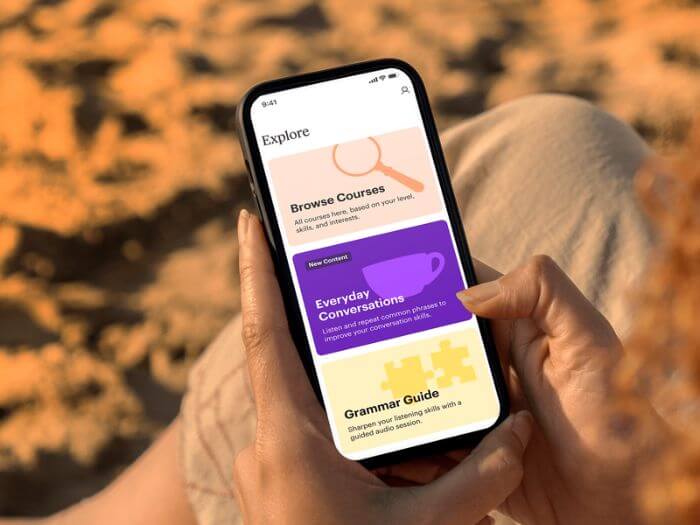
You've probably spent months tapping through Italian sentences and still can't tell me why an ending changes. Babbel is built to fix exactly that.
Its lessons are short dialogues for adults, with the grammar explained as you go rather than hidden behind a cartoon. The Italian course runs from A1 to B2, with material that points towards C1. Each lesson takes about 10 to 20 minutes, so it's easy to fit into a day that's already full.
One subscription covers all 14 of Babbel's languages. The price is straightforward: Babbel costs about $8.95 a month on the 12-month plan, as of November 2026, and there's a lifetime plan at $299.99 that's often discounted.
The weak spot is speaking. The practice you get is scripted: you repeat set phrases into speech recognition. Babbel's live classes for individuals closed in July 2025, and what's there now is Babbel Speak, an AI speaking feature.
If you want to practise unscripted Italian, this isn't the tool for that.
Best for: an Italian learner coming from a streak app who wants the grammar actually explained, in lessons short enough to fit a busy week.
Not for: that same learner if the real problem is producing Italian out loud, since Babbel's scripted speaking still leaves you needing something live.
2. Busuu: Real People Correct Your Italian

This one is different for a very simple reason: a real person reads what you write.
Busuu's Italian course takes you from A1 to B2, and the feedback loop is what separates it from the endless tile-tapping. You record a sentence, or write a few lines of Italian, and a fluent speaker in the community corrects it.
That correction isn't live. It comes later, once a volunteer has picked it up, and how helpful it is depends on who that volunteer happens to be. It's real human feedback on your written and recorded exercises, just not a conversation.
The course itself is structured, so you always know where you are, and the C1 lessons only exist for English, not Italian.
There's a free tier to start. A Busuu Premium subscription costs about $69.99 a year as of November 2026, and the higher tier adds AI conversations.
Best for: the Italian learner who wants a clear path through the basics and real written corrections from fluent speakers.
Not for: anyone who already understands a fair bit and needs to speak. A delayed written note from a volunteer won't build your confidence in a live Italian exchange.
3. StoryLearning: My Course, Judged On The Same Terms

Italian Uncovered is mine, so I'm going to come down harder on it than on any other course on this page.
As I always say: “If you're not going to base your study on reading, tell me what you're going to do instead.” That's the conviction the Italian course is built on.
The method is one continuous story in Italian, read and listened to, with the grammar unpacked from the story rather than drilled at you.
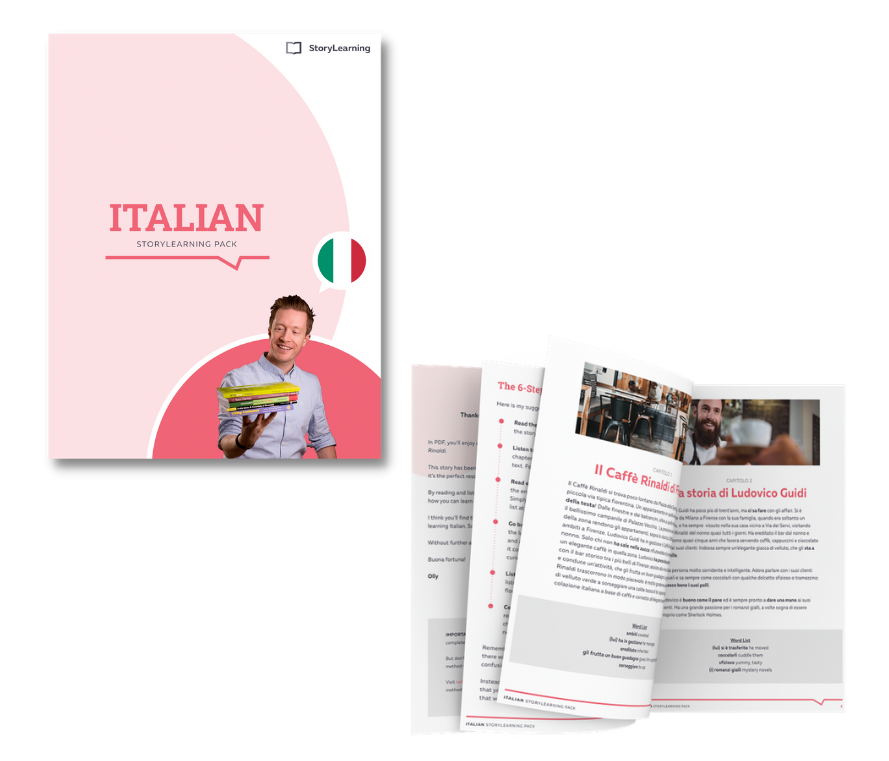
The beginner story is L'Uomo col Cappello, with native Italian audio across 10 chapters. You follow one story instead of hopping between disconnected exercises. That's comprehensible input: learning from Italian you can mostly follow.
When a tense shows up in the story, the course explains it right after. You're not asked to memorise a table out of nowhere.
There are six levels from beginner to mastery, taking you up to C2 in Italian. Three are on public sale: Italian Uncovered, Intermediate and Advanced. Levels 2, 4 and 6 open only once you finish the level before.
Intermediate is built for learners at roughly B1 and takes you to an upper-intermediate B2. Advanced bridges the gap from B2 towards a confident C1. A single course only takes you to roughly its own level, so going further means enrolling in further courses.
Each course is $297, reduced from $397. That's a one-time payment with lifetime access, a 7-day free trial and a 365-day guarantee, as of November 2026. It's a one-time cost per course, not a rolling subscription.
Going from beginner to advanced means several courses, so the total depends on how far you go.
The speaking side is guided, and that's the weakest part. There's a speaking section built for use with a tutor you find and pay for separately, and nothing in the course listens or answers back.
If you want corrections or real back-and-forth, you'll need to arrange that outside the course.
You'll finish each level understanding far more Italian than you can say on the spot. That's the built-in trade-off.
It's premium-priced and paid up front. It also asks for real self-discipline, because nothing nags you back.
No streak, no game, no daily nudge pulls you back in. That's deliberate, but it does mean the course lives or dies on your own consistency.
Best for: the learner who wants to read and listen their way into Italian and will show up without a streak or a game pulling them back.
Not for: anyone who needs live speaking practice built in from day one, or wants a cheap monthly option. The course is premium-priced, and if speaking is your main goal, you'll still need to find and pay for a tutor separately.
4. Pimsleur: Thirty Minutes Of Italian, Hands Free
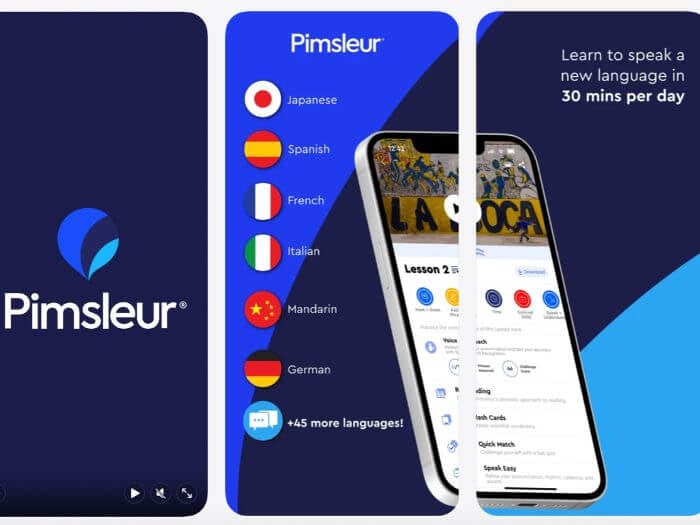
There's no screen to look at. You open the app, and a voice asks you to say the Italian phrase out loud, then gives you the correct response.
Each lesson is about 30 minutes of audio. It prompts you, waits for your answer, and brings earlier phrases back at spaced intervals so you keep producing them.
Pimsleur Italian runs to five Premium levels, and Pimsleur says Level 5 takes you to an intermediate level.
Each level lists at $150 and the complete five-level course at $575, both often discounted, as of November 2026.
The app adds Voice Coach, which gives AI feedback on pronunciation.
The drawback is that the speaking is scripted. The vocabulary is narrow, and there is little reading or grammar depth.
You can get comfortable with the exact Italian the course feeds you, but you won't be able to reach for a word you haven't drilled.
Best for: the Italian learner who has spent months tapping through an app and now wants to hear and speak Italian while cooking or walking into town.
Not for: anyone who wants to read Italian, understand grammar, or build a wide vocabulary. This is an audio routine, not a full course.
5. italki: A Real Italian Speaker, Booked By The Lesson
You can practise asking for directions until the phrase comes out clean. What you can't practise is the reply.
A real Italian doesn't wait for you to recognise the words. The sentence comes back fast, with a word you've never met and a gesture you didn't see coming. An app, for all its feedback, never answers back unpredictably.
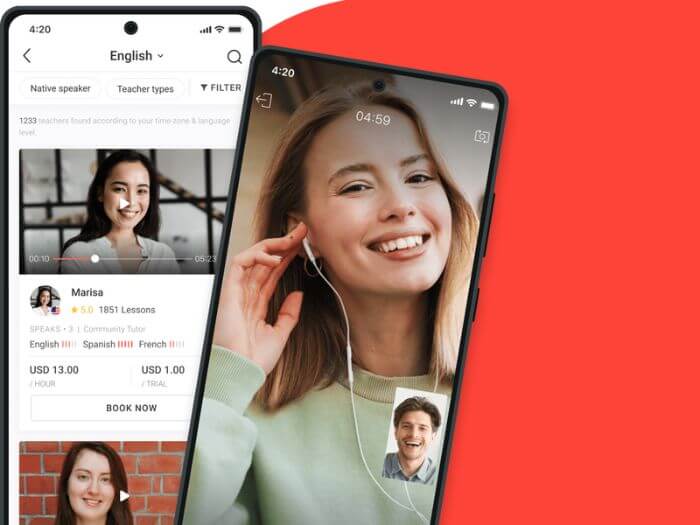
italki is a marketplace of independent tutors who give live one-to-one video lessons. You pay per lesson, and there's no subscription to cancel.
That matters because of what italki is. Of the seven products scored on this page, italki is the only one built around live conversation with a person. You can book a tutor who lives in Italy without leaving home.
Tutors charge $5 to $50+ an hour, as of November 2026, and many offer trial lessons.
The trade-off is real. There's no built-in curriculum, so you and your tutor have to shape the lessons, and the quality varies from tutor to tutor.
Best for: the Italian learner coming from an app who can understand a little and now needs to survive real replies, not just produce scripted lines.
Not for: anyone who wants a set course handed to them, or who hates the idea of choosing and booking a tutor.
6. Langua: Talk Italian To An AI Before You Talk To A Person
Full disclosure: I liked Langua so much that I invested in the company behind it.
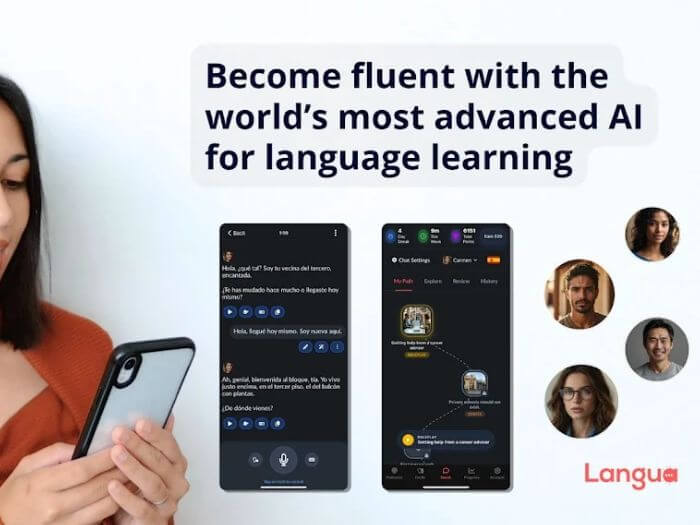
Langua gives you an AI conversation partner you can talk or type to in Italian, and it corrects you in real time. You don't have to book a person or wait for feedback.
It's a practice tool for roughly A2 to C1, not a full course, but you can choose different ways to practise speaking, by role playing a situation or debating a topic.
Prices, as of November 2026: Standard is $19.99 a month or $149.99 a year, with calls capped at 30 minutes a day. The Unlimited plan is $29.99 a month or $199.99 a year. A free account lets you try it first.
It's practice, not a course. It's an AI, not a person, and its transcription sometimes mishears you. It's also the newest product in this comparison, having been around since 2024.
Best for: the Italian learner who can already hold a basic exchange and wants daily conversation without the cost of a private tutor.
Not for: the learner starting from zero who needs a structured path, because you'll be talking to a machine, not following lessons.
7. Coffee Break Italian: Free Podcasts From A1 To B2
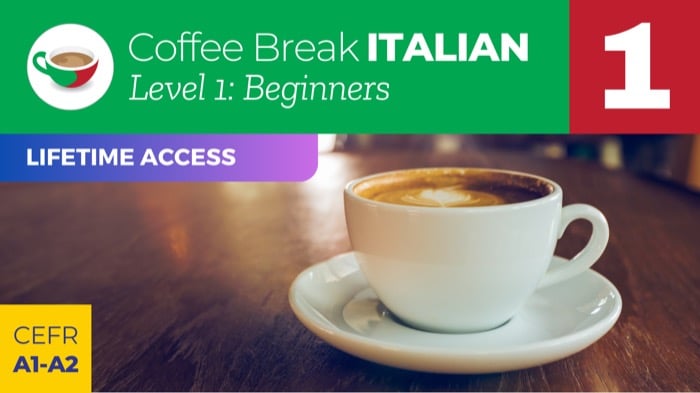
Every level of Coffee Break Italian, from A1 to A2 all the way to B1 to B2, starts with a free podcast. Real teachers talk you through how the language works as you go.
In Level 1, Mark and Francesca teach while Katie takes the role of the learner. You listen in on the lesson, so you're never the only one working it out.
Level 3 moves through grammar from pronouns to the subjunctive and ends with a story told in ten episodes. That's a proper arc, not a scattered list of phrases.
If you want more than audio, each level's online course adds video lessons, notes and exercises as a one-time purchase that's yours for life. There's also Coffee Break Italian TV, a video library from $24.99 a month (as of November 2026).
There's no live speaking practice and nobody gives feedback on your speaking. You can work through every level and still not know if a real Italian would understand you.
Best for: the Italian learner who wants a free start through the grammar and is happy to add speaking practice on their own.
Not for: anyone who needs a real person to correct them as they talk. This course gives you the rules, but it doesn't listen to you speak.
How I Scored This

Every product above is scored on the same eight criteria: best-for CEFR range, primary skill developed, speaking and output support, structure and guidance, time commitment, method, price and value, and evidence and track record. StoryLearning included.
Speaking support, weakest to strongest:
- None. No spoken output at all.
- Guided. Prompts to speak, but nothing listens and nothing comes back.
- Scripted. You repeat set phrases and software scores you.
- AI conversation. Unscripted practice with software that responds in real time, but no person is there.
- Feedback. A person responds to what you produced, but not live.
- Live human. Real conversation, in real time, with a person.
On that scale, StoryLearning sits at Guided: each Uncovered course has a speaking section, built to be used with a tutor you find and pay for separately, and nothing in the course itself listens or responds.
Prices are stated as of November 2026. Duolingo doesn't publish its Super or Max prices, so none are given for them.
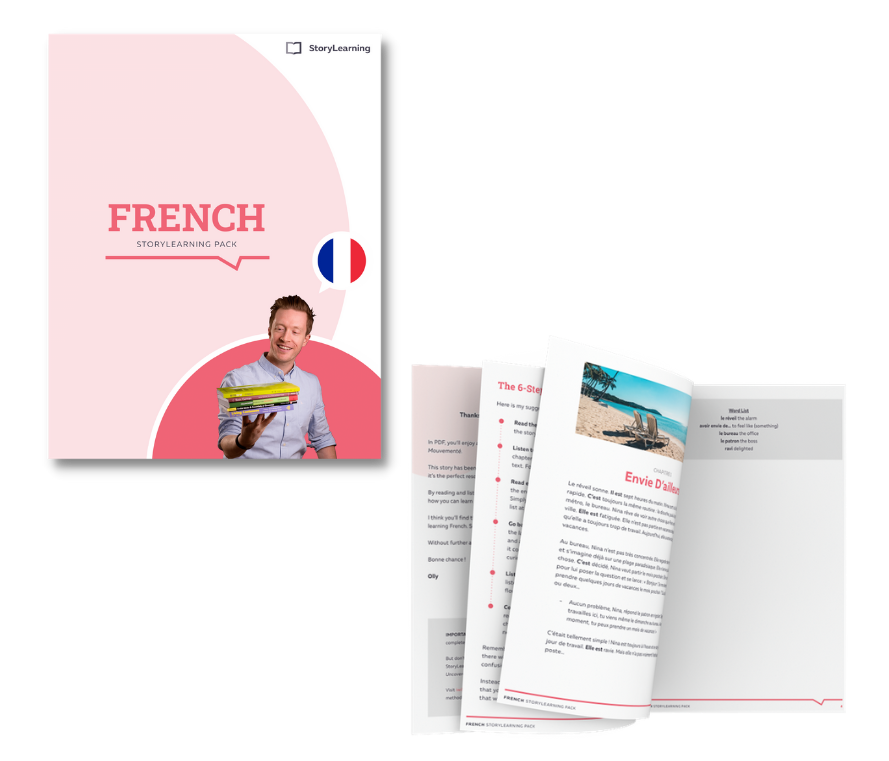
The same eight criteria are used on the German and French versions of this page, on my comparison of the best online Italian courses, and on my list of Italian learning resources.
There are no affiliate links on this page, and apart from my own course, I don't earn from anything here.
Full disclosure: I liked Langua so much that I invested in the company behind it.
The Bottom Line: Listen First, Then Talk Every Day

Here's the practical version: pair one deeper course with one regular speaking habit. Not one app that tries to do both. One tool builds the base, the other gets you talking.
For the course choose:
- Busuu if you want a clear route through the basics with real written corrections from fluent speakers.
- Babbel if you want the grammar explained clearly, in lessons that fit a busy week.
- StoryLearning's Italian Uncovered if you'd rather read and listen your way into Italian and don't need live speaking built in from day one.
I used this exact pairing for my Italian project. I did it in about three months. I was already an experienced learner and Italian is close to English, so don't take my timing as a promise.
Month one, I only listened and read simple stories, and didn't speak a word. Month two, I had a lesson on Skype every day, 30 to 60 minutes, while still listening and reading. Month three, I used lessons to fix my grammar.
After three months, I sat down with my friend Alberto and held a conversation for about 45 minutes in Italian. Speaking fluently is a consequence of speaking a lot, not a precursor.
For the speaking side, work down the ladder. italki puts you with a real person. Langua gives you AI conversation practice when a live tutor feels too much.
Start at the top and move down only as far as you need.
Pimsleur gives you scripted audio you can do while cooking or walking. It's an audio fallback, not a full course.
On a budget, Coffee Break Italian's free podcasts take you from A1 to B2, and a few italki lessons won't cost much because tutors start at $5 an hour. That's a cheap start, not a complete course. Use those free podcasts as your starting point, not your finish line.
If you only do one thing, book regular conversation practice. Book one lesson, then book the next one.
And just so you know: there are no affiliate links on this page, and I scored my own course on the same eight criteria as everyone else.
Best Alternatives To Duolingo For Italian: Your Questions
What is the best alternative to Duolingo for Italian?
The best alternative to Duolingo for Italian isn't one app. It's a pairing, and the right pairing depends on what's missing.
If you want structure with feedback from fluent speakers, Busuu's Italian course runs from A1 to B2. If speaking is the gap, italki puts you with live one-to-one tutors.
Coffee Break Italian is the pick if it has to be free, with podcasts at every level from A1 to B2.
If it's reading and listening you need, StoryLearning's Italian Uncovered teaches through one continuous story.
Is Duolingo enough to learn Italian?
No, not on its own.
Duolingo is a good start. In April 2026, its Italian course finally reached B2 content, where most learners used to finish at A2. But finishing the content isn't the same as holding a conversation.
I still get messages from learners with a 600-day streak who can't hold a conversation. Keep Duolingo for the groundwork, then add real conversation.
Is there a free alternative to Duolingo for Italian?
Yes, Coffee Break Italian. It's a free option for Italian, and it runs from A1 to B2.
Each level starts with a free podcast, and the teachers explain how the language works as you go. Busuu has a free tier too.
The catch is that neither gives you a person to talk to, so you don't get live feedback on your speaking.
Is Babbel or Busuu better for Italian?
Neither is clearly better for Italian. Both courses run from A1 to B2.
Choose Babbel if you want grammar explained in short dialogue lessons. One subscription covers all 14 languages.
Choose Busuu if you want fluent Italian speakers to correct your writing and speaking. That feedback isn't live.
Neither app gives you live conversation. So it comes down to which gap you're trying to fill.
How long does it take to learn Italian after Duolingo?
After Duolingo, about six months, if you put in an hour a day plus extra exposure. That's for a solid conversational level, and Italian is close enough to English to make that realistic.
The hours that count in those six months aren't more taps. They're hours of real Italian, and hours of real conversation.
How can I practise speaking Italian if I don't live in Italy?
Book lessons online with an Italian tutor.
italki tutors start at $5 an hour, live one-to-one online, and you can choose someone from Italy.
If you're not ready for a person, Langua gives you an AI partner that corrects you in real time. For hands-free scripted practice, Pimsleur's 30-minute audio lessons have you answering out loud.

Olly Richards
Creator of the StoryLearning® Method


Olly Richards is a renowned polyglot and language learning expert with over 15 years of experience teaching millions through his innovative StoryLearning® method. He is the creator of StoryLearning, one of the world's largest language learning blogs with 500,000+ monthly readers.
Olly has authored 30+ language learning books and courses, including the bestselling "Short Stories" series published by Teach Yourself.
When not developing new teaching methods, Richards practices what he preaches—he speaks 8 languages fluently and continues learning new ones through his own methodology.