
You're standing at a bakery counter in France.
After months of daily app practice, you thought this moment would feel different.
The person serving says it quickly: Et avec ceci ? (Anything else?)
You catch none of it.
The pause stretches. Heat climbs your face.
You point at a croissant and say, “This one, please,” in English.
Then you step aside, heart thumping, and wonder what all that practice was for.
Take a breath. That moment wasn't your fault, and you're nowhere near alone.
Here's the short version, and you can stop right after it.
For real speaking practice, italki puts you in front of a live French tutor, not a chatbot. For a structured French course with feedback from fluent speakers, Busuu runs from A1 to B2. If the tapping never suited you, StoryLearning's French Uncovered teaches through one long story instead of drills.
This page scores seven alternatives on the same eight criteria, StoryLearning's own course included. The other four are Babbel, Pimsleur, Langua and Assimil. The same eight criteria apply to my own course, too, and I'd rather you saw that scored honestly.
So the best alternative to Duolingo for French isn't one app: it's a pairing of one deeper course plus one regular speaking habit.
A course alone leaves your speaking untested, and a speaking habit alone gives you nothing structured to build on. The one without the other leaves you right back where you started.
There are no affiliate links on this page and no commission on anything here. One thing to declare: I've invested in Langua, so weigh what I say about it with that in mind.
Table of Contents
Why Your French Still Freezes After All Those Lessons
People write to me about this all the time. They tell me they've kept a 600-day streak, done every lesson, and still can't hold a conversation in French.
I want to say something plainly, because those messages bother me.
The effort was real. The discipline was real. If a method only ever asked you to tap and match, then the method is the thing that failed, not you.
You didn't lack discipline. You had more discipline than almost anyone. You just aimed it at a method that wasn't built for conversation.
I get the same details in those emails again and again. The phrases are in there somewhere. The streak is banked.
Then a real person speaks at full speed, and everything the app taught goes quiet. The person is still talking, and you're still translating.
In April 2026 Duolingo announced that French is one of nine courses where learners can now work through B2-level content. Before that, most learners could only finish content up to A2.
That's a real change, and I won't pretend otherwise. The course now goes further than it used to. But the new level doesn't answer the harder question.
On paper, it sounds like genuine progress. More levels, more material, more grammar.
But here's my honest view: having B2 content in an app is not the same as being able to follow a real French conversation.
The gap isn't the grammar you've learned. It's the way French actually sounds when it's spoken.
Take Je ne sais pas. It means “I don't know.”
In everyday speech the ne drops out, so you hear Je sais pas. Very often it's squeezed further into chais pas.
A textbook won't tell you that. If you've only ever read French, your ear has no hook for the sound.
Or take les amis, “the friends.” That final s on les is normally silent, but liaison runs it into the vowel that follows.
So les amis sounds like lé-za-mi. You don't hear three tidy words. You hear one continuous sound.
This isn't rare or advanced. It's how a friend talks over a drink.
A real French speaker won't slow down and put the ne back for you. The course can stretch to B2 and still leave you stranded the moment the conversation speeds up.
So what actually fixes a gap like that?
Two things.
Lots of real French you can follow, the kind where a voice is moving at full speed and you still catch the shape of the words.
And regular practice speaking, so those sounds stop being a surprise and start coming out of your own mouth.
The rest of this page sorts the main alternatives by which of those two jobs they actually do.
Some are built for one. A few are built for the other. The list below tells you which, and where each one falls short.
Best Alternative To Duolingo For French: The Comparison Table
| Provider | Best-for CEFR | Primary skill | Speaking support | Structure | Study load | Method | Price (as of October 2026) | Track record |
|---|---|---|---|---|---|---|---|---|
| Duolingo (the starting point) | A0 to B2 content (Duolingo, April 2026) | Vocabulary (recognition) | Scripted; Max adds AI conversation | Fully sequenced | Light, 5 to 15 min | Game-style drills with spaced review | Free (the whole course); Super and Max prices are set in the app and not published by Duolingo | Market leader |
| Babbel | A1 to B2, some C1 content | Mixed (grammar and dialogue) | Scripted (live classes are a separate product, Babbel Live) | Fully sequenced | Light to medium, 10 to 20 min | Dialogue lessons with explained grammar | About $8.95 a month on the 12-month plan ($107.40); lifetime $299.99, often discounted; all 14 languages | Long established |
| Busuu | A1 to B2 | Mixed | Feedback (community, not live); Premium Plus adds AI conversation | Fully sequenced, CEFR-mapped | Light to medium | Structured course plus community feedback | Free tier; Premium about $69.99 a year (about $5.83 a month); Premium Plus costs more | Established |
| StoryLearning (French Uncovered) | Beginner towards C1, across separate levels | Reading and listening | Guided (each course has a speaking section, built for use with a tutor you find and pay for separately) | Fully sequenced | Medium to deep | Comprehensible-input reading (one continuous story) | $297 per course, one-time (from $397); 7-day free trial; 365-day guarantee | Established indie brand |
| Pimsleur | A0 to about B1 (Level 5 is “intermediate”) | Listening and speaking | Scripted, plus AI pronunciation feedback | Fully sequenced | Medium, 30 min | Audio-immersion | $150 per level; $575 for all five levels; often discounted | Long established |
| italki | Any level | Speaking | Live human | Freeform | Deep, lesson length you choose | Live one-to-one tutoring | $5 to $50+ an hour, pay per lesson | Large, established marketplace |
| Langua | A2 to C1 (practice tool) | Speaking | AI conversation | Loose | Flexible | AI conversation with real-time correction | Free account to try; Standard $19.99 a month or $149.99 a year; Unlimited $29.99 a month or $199.99 a year | Newer (2024 onwards). Olly has invested in Langua |
| Assimil (French With Ease) | A1 to A2 (Assimil's label) | Reading and listening | None | Fully sequenced | Medium | Parallel-text dialogues | €49.90 (e-course) to €69.90 (book with audio), one-time; Assimil sells in euros | French publisher since 1929 |
1. Babbel: The Sensible Next Step
You can pass every app lesson and still go quiet the moment you need to speak. Babbel is built for adults who've noticed that gap.
It teaches through short, structured dialogues, with grammar explained as you go.
Lessons take about 10 to 20 minutes, so they fit into a real day. It feels like a proper course rather than a tap-the-tile game.
For French, Babbel's own page says its lessons run from A1 all the way to B2, with some content reaching into C1. One subscription covers all 14 of its languages now, and there's a one-time lifetime plan if you'd rather pay once.
The honest limit is speaking. The practice is scripted: you repeat set phrases into speech recognition and get a score. Nobody is waiting for you to answer, and the real conversation classes sit in a separate paid product, Babbel Live.
Best for: the French learner who wants a serious, structured path from beginner to upper intermediate and is happy doing most of it alone.
Not for: the learner whose aim is live conversation. The scripted speech work won't produce that on its own, so plan to add real speaking practice elsewhere.
2. Busuu: A Structured Course With A Second Pair Of Eyes
Here's something odd. Busuu‘s French course runs from A1 to B2, but its C1 content exists only for English.
That's a useful thing to know before you choose.
What you actually get is a structured, CEFR-mapped course from A1 to B2.
You work through lessons and you can send written and spoken exercises to fluent speakers in the Busuu community for feedback.
On price, Premium costs about $69.99 a year, as of October 2026. There's a free tier too, and Premium Plus adds AI conversations and French pronunciation practice.
Just know that the community feedback comes from volunteers. It arrives later, not in a live conversation, and the quality depends on who picks up your exercise.
Best for: the French learner who wants a structured route to B2 and values real human eyes on their written and spoken exercises.
Not for: the French learner whose real difficulty is live conversation. You can get corrections on a recording, but you won't get the back-and-forth that gets you speaking.
3. StoryLearning: My Course, Marked Harder Than The Rest
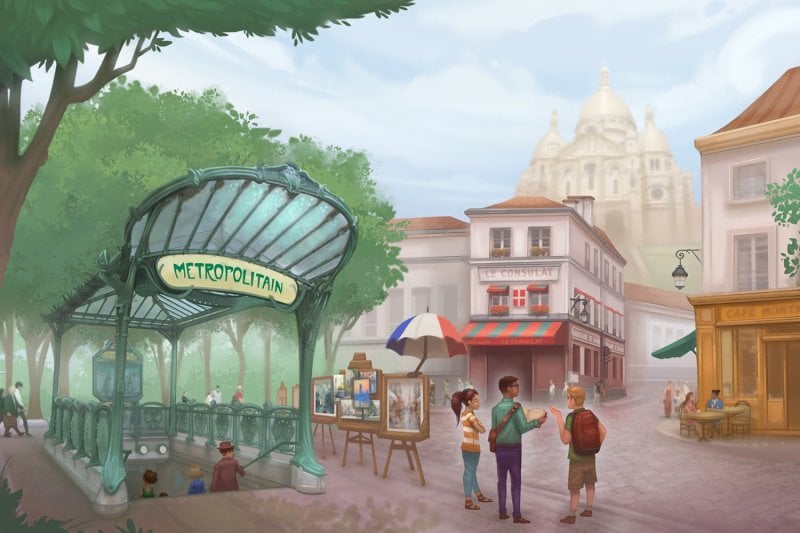
This one's mine, so I'm going to mark it harder than I would anyone else's. I built French Uncovered because I wanted a method that works through French you can actually follow, and I'll be frank about where it falls short.
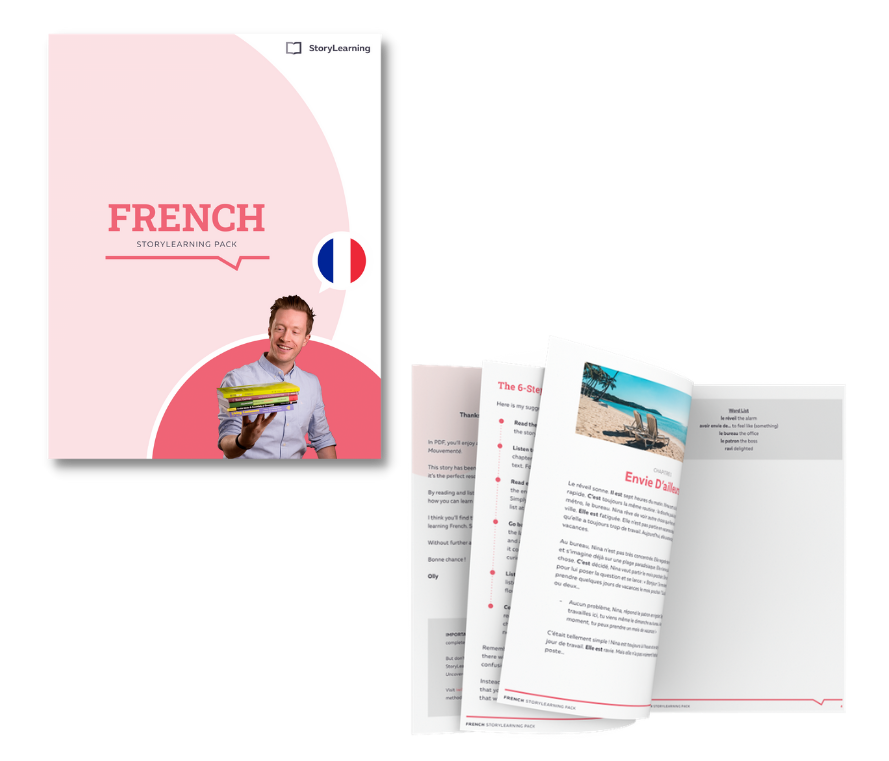
The method is a single continuous story in French. You read it, you listen to it, and the grammar is unpacked from the story rather than drilled in isolation. That's comprehensible input, which simply means learning from French you can mostly follow.
Each course has 10 chapters and video lessons with Diane, a native French teacher certified by the Alliance Française.
There are six levels from beginner to mastery. Three are on public sale: French Uncovered, Intermediate, and Advanced. The in-between levels open only once you finish the one before.
It's a sequenced ladder, not a pick-and-mix.
Intermediate aims to take you to an upper-intermediate B2 level. Advanced bridges the gap from B2 towards a confident C1. Any single course only takes you to roughly its own level.
On price, here it is in full. Each course is $297 one-time, reduced from $397, for lifetime access, with a 7-day free trial and a 365-day guarantee. That's the price as of October 2026.
I won't pretend that's cheap.
If you want to go from beginner to advanced, you'll need several courses. I'm not going to dress that up: it means several one-time payments, not one small purchase. You won't jump from zero to C1 in one purchase.
Lifetime access means you keep each course, but it doesn't mean you'll keep at it.
Now the weaknesses, and there are a few of them.
Speaking support is Guided only. There's no human on the other end, no conversation practice, and no pronunciation feedback. If you need someone to correct your accent, you won't get that here.
That may feel like a lot for a course with no live human in it.
The method finishes you with far more French you understand than you can spontaneously say. That gap is real. It won't unfreeze your mouth by itself.
If active speaking is your main block, you'll need something else alongside it.
It's also premium-priced and paid up front. And it asks for self-discipline, because there's no streak or game pushing you back in. There's no streak nudge at 9pm, no leaderboard, no notification.
The course assumes you'll show up because you want to.
If you stop, it stays stopped.
Best for: the learner who wants to read and listen to real French through a story, and will show up without gamified nudges.
Not for: anyone who needs live speaking practice as their main thing, wants the cheapest bite-sized lessons, or will struggle to keep going without an app prodding them.
4. Pimsleur: French You Can Learn With Your Eyes Closed
There's a strange promise behind Pimsleur: you can learn French while you're doing the washing up.
Each lesson is about 30 minutes of audio.
A voice prompts you to answer out loud, then gives you the correct response, and old phrases come back at spaced intervals. That's the method in one sitting, no screen required.
Pimsleur French runs to five levels, and Pimsleur describes Level 5 as reaching an intermediate level.
Each level lists at $150, and the complete five-level course at $575, both frequently discounted as of October 2026. The app also adds Voice Coach, which gives AI feedback on your pronunciation.
What you won't get here is much reading or grammar depth. The vocabulary is narrow, and the speaking is scripted, not free conversation. You're repeating set phrases, not thinking on your feet.
Best for: this is the course for a French learner who needs to build pronunciation and basic spoken phrases while walking the dog or driving, and who will actually do the daily 30 minutes.
Not for: skip it if you want to read French, understand grammar, or hold a free conversation, because scripted audio won't get you there by itself.
5. italki: Where A Real French Speaker Waits For Your Answer
Knowing the rules is not the same as returning a serve.
You can watch tennis for years, learn every shot, and still freeze the first time a ball comes at you at pace.
A real French speaker across the screen is the first time the ball comes back at you.
italki is a marketplace of independent tutors who meet you for live one-to-one video lessons. You pay per lesson, no subscription. Among the seven products scored on this page, italki is the only one built around live conversation with a person.
Teachers charge from $5 to $50+ an hour, as of October 2026, and many offer discounted trial lessons.
What it won't give you is structure. There's no built-in curriculum, and quality varies from tutor to tutor.
You and your tutor have to work out the plan, which is real work if you wanted a course to do it for you.
Best for: the French learner who understands more than they can say and needs a real person waiting for an answer.
Not for: anyone who wants a set curriculum handed to them, or who isn't ready to talk to a stranger on day one.
6. Langua: Rehearsal Before The Real Thing

The worst part of freezing in French isn't forgetting the word.
It's feeling foolish in front of someone who asked a simple question and is now waiting.
What if you could make the first hundred mistakes where nobody is watching?
I've invested in Langua, so weigh this section with that in mind. Langua gives you an AI partner you can talk or type to in French, and it corrects you as you go.
Here's the price. It's $19.99 a month or $149.99 a year on Standard, and $29.99 a month or $199.99 a year on Unlimited, as of October 2026. The Standard plan caps calls at 30 minutes a day, and a free account lets you try it.
It's practice, not a course. Langua has no curriculum, so it won't plan what you learn next. An AI isn't a person, however patient it feels.
Its transcription sometimes mishears you. And it's the newest product here, around since 2024, so it has the thinnest track record.
Best for: the French learner from A2 to C1 who wants somewhere to make mistakes without a real person watching.
Not for: the French learner who needs a clear path, human correction, or a course that tells them what to study next.
7. Assimil: The Old French Classic That Makes You Wait
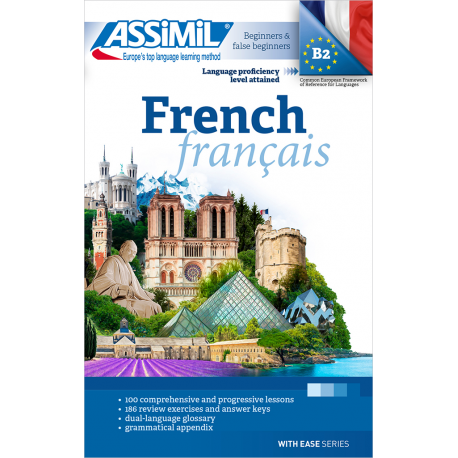
Assimil is a French course that's been around since 1929 still asks you to wait before you speak.
That's either reassuring or maddening, depending on how much patience you have left.
French With Ease is 100 lessons. Each one has French on one page, English on the facing page, and audio to listen along. You read and listen first, without forcing yourself to produce.
Then you go back over earlier lessons and translate into French. That's the whole engine. No streaks, no points, no speaking drills.
It's sold as a book with audio or an e-course, as a one-time purchase. Assimil labels it A1 to A2, beginner and false beginner level.
Where it falls short is just as plain. It's dry, it's old-fashioned, and there's no speaking feedback at all. You're working through pages, not talking to anyone.
Best for: a French learner who wants a calm, no-pressure route into reading and listening, and doesn't mind learning from a book.
Not for: anyone who needs to speak early or wants corrections. You'll finish with a solid base, but you'll still need live practice for conversation.
How I Scored This
Every product above is scored on the same eight criteria: best-for CEFR range, primary skill developed, speaking and output support, structure and guidance, time commitment, method, price and value, and evidence and track record. StoryLearning included.
Speaking support, weakest to strongest:
- None. No spoken output at all.
- Guided. Prompts to speak, but nothing listens and nothing comes back.
- Scripted. You repeat set phrases and software scores you.
- AI conversation. Unscripted practice with software that responds in real time, but no person is there.
- Feedback. A person responds to what you produced, but not live.
- Live human. Real conversation, in real time, with a person.
On that scale, StoryLearning sits at Guided: each Uncovered course has a speaking section, built to be used with a tutor you find and pay for separately, and nothing in the course itself listens or responds.
Prices are stated as of October 2026. Duolingo doesn't publish its Super or Max prices, so none are given for them.
There are no affiliate links on this page and no commission on anything here. One thing to declare: I've invested in Langua, so weigh what I say about it with that in mind.
The Bottom Line: Build Two Habits, Not One

Pair one deeper course with one regular speaking habit. That's the honest recommendation.
A course gives you something to say. A conversation habit makes you able to say it when it matters.
You've probably done the course-only version already. I did too.
The material started to make sense, but the words wouldn't come when I needed them. That's why the pairing matters.
For the deeper half, pick StoryLearning's French Uncovered, Busuu or Babbel. Babbel gives you the clearest grammar path from A1 to B2, with some C1 content. Busuu gives one organised route.
French Uncovered is mine, so I'd only send you there if reading and listening through a story actually appeals. Whatever you pick, don't expect the course to fix your speaking by itself.
For the speaking half, think of a ladder from top to bottom. italki puts you in front of a real person, and that's the gold standard.
Langua comes next, and I've invested in it, so you should know that before you trust me on it. Then Pimsleur gives you scripted audio when you need to stay hands-free, but it won't produce a free conversation on its own.
On a budget, Assimil plus a few italki lessons does more than most subscriptions. Assimil's French With Ease is labelled A1 to A2, so treat it as a cheap on-ramp, not the destination. Teachers on italki start at $5 an hour.
If you only do one thing, book regular conversation practice. Not another app, not another flashcard set, not another year of silent study.
I learned this the slow way in Tokyo. After years of study I could understand a lot of Japanese, but when it was my turn to speak, I froze.
Daily language exchanges changed that within weeks, more than any further study had. The grammar was in my head; the daily exchanges made my mouth keep up.
There are no affiliate links on this page. I scored my own course on the same eight criteria as everyone else, and named its weaknesses in plain text. That's the whole point.
Best Alternative To Duolingo For French: Your Questions
What is better than Duolingo for learning French?
Better than Duolingo for French means different things depending on what's missing.
If you need structure, Busuu's French course runs A1 to B2. If your problem is speaking, italki gives you live one-to-one tutors.
If reading and listening have stalled, StoryLearning's French Uncovered builds them through one continuous story instead of drills.
Is Duolingo enough to become fluent in French?
No, Duolingo won't make you fluent in French on its own. Duolingo now says French learners can work through B2-level content, since April 2026.
But B2 on screen isn't B2 in a conversation. Fluency needs real conversation, plus lots of French you can actually follow.
Use the app for the groundwork, then go and speak.
Why can't I understand spoken French after Duolingo?
After Duolingo, you can't understand spoken French because app French isn't street French.
In everyday speech, Je ne sais pas (I don't know) usually comes out as chais pas. That's the gap in one phrase.
The fix is hours of real French you can mostly follow, until your ear stops waiting for the textbook version.
Is Babbel or Busuu better for French?
Neither Babbel nor Busuu is clearly better for French. Both take French to about B2, so you'll want to choose by what you need next.
Pick Busuu if you're looking for feedback from fluent speakers on what you write and say. Pick Babbel if you want grammar explained clearly and one subscription that covers all 14 of its languages.
What is the cheapest way to learn French after Duolingo?
The cheapest route after Duolingo starts free, and the cheapest paid step up is a one-time Assimil French With Ease purchase plus occasional italki lessons from $5 an hour.
Duolingo's whole course is free, and Busuu has a free tier.
But Assimil labels French With Ease as A1 to A2, so it's a cheap start, not a complete route.
How do I start speaking French after using Duolingo?
Book a conversation with a tutor this week, even a short one. That's how you start speaking French.
If you're not ready for a real person yet, Langua lets you practise with an AI conversation partner that corrects you in real time. I've invested in it.
When you do want a person, italki offers live one-to-one tutors. For scripted speaking in the car, Pimsleur's 30-minute audio sessions have you answering out loud.

Olly Richards
Creator of the StoryLearning® Method


Olly Richards is a renowned polyglot and language learning expert with over 15 years of experience teaching millions through his innovative StoryLearning® method. He is the creator of StoryLearning, one of the world's largest language learning blogs with 500,000+ monthly readers.
Olly has authored 30+ language learning books and courses, including the bestselling "Short Stories" series published by Teach Yourself.
When not developing new teaching methods, Richards practices what he preaches—he speaks 8 languages fluently and continues learning new ones through his own methodology.