
You're on a German train after months of daily app practice. A passenger with a bag points at the empty seat beside you and asks, quickly, Ist hier noch frei? (Is this seat free?)
You catch none of it.
It's only four words, and you miss every one.
The pause hangs between you. He repeats it, slower this time, and heat climbs your face while the wheels click underneath the floor. You nod, shrug, and answer in English.
That isn't your fault, and you're not alone.
Here's the short version next. You can stop after it if you like.
If you're after real speaking practice, italki puts you with a live German tutor. For a structured course with feedback from fluent speakers, Busuu runs from A1 to B2. For a free course from Germany itself, Deutsche Welle covers A1 to C1.
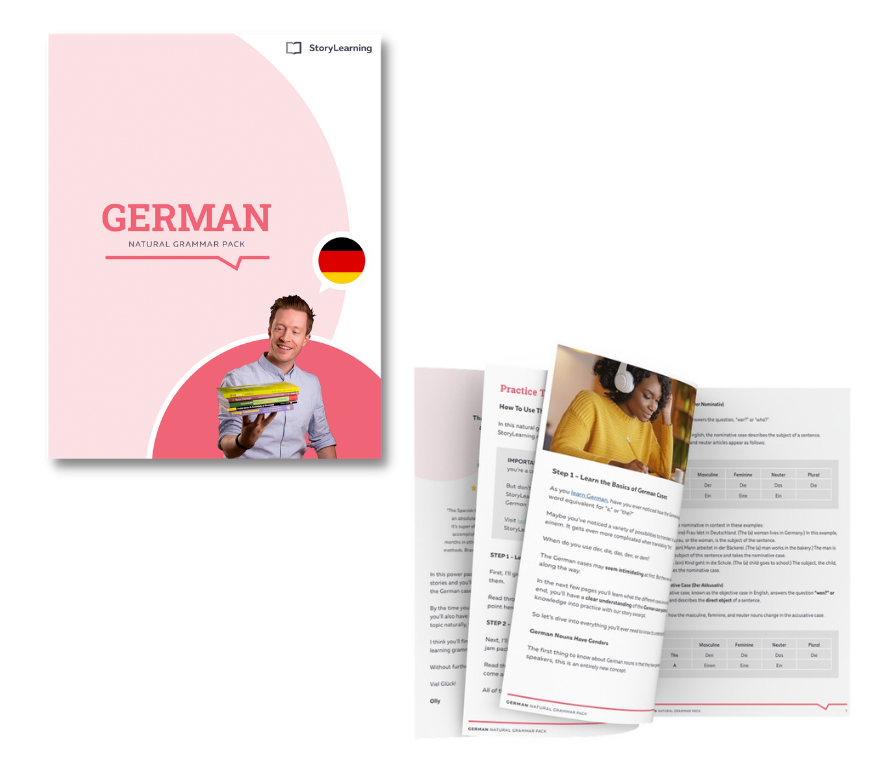
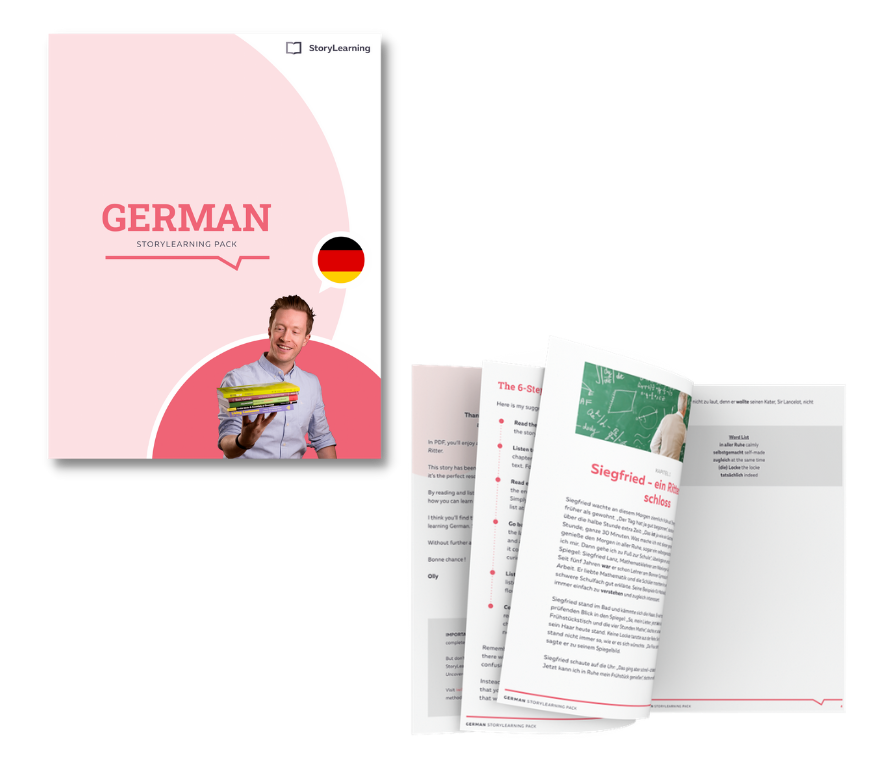
If the tapping never suited you, StoryLearning's German Uncovered teaches through one long story instead of drills.
This page scores seven alternatives on the same eight criteria, StoryLearning's own course included, and the other three are Babbel, Pimsleur and Langua.
The best alternative to Duolingo for German is a pairing, not one app. Pair one deeper course with one regular speaking habit.
A course without the habit leaves you able to complete exercises but silent when a real person answers. A habit without the course leaves you chatting around the grammar you never met.
Neither half gets you through a conversation alone. So the real choice isn't which app, it's which pair fits your week.
There are no affiliate links on this page and no commission on anything here. One thing to declare: I've invested in Langua, so weigh what I say about it with that in mind.
Table of Contents
Why App German Falls Apart When Germans Actually Talk
There's a version of German learning I've come to call the Parrot Method. You tap the card, the voice says a sentence, and the screen waits for you to repeat it back.
The tiles are there to be matched in the right order, and a green tick tells you you've done it correctly.
Then the next phrase arrives, and the next one after that. The screen might as well be saying “Repeat after me!” all day. Over time, you can reel off a whole sequence without ever choosing a single word yourself.
It feels like learning because your mouth is moving and the sounds are German. But you're not speaking German. You're copying a recording.
Here's why that matters. The German you practised is not the German people actually speak. Spoken German is faster, looser, and full of small changes the screen never shows you.
The app doesn't ask you to decide what to say next. It asks you to repeat what it just said, nothing more. The next word is always given to you.
After enough sessions, it becomes automatic: you can finish a lesson perfectly and still not be able to say the sentence unprompted later. That's the limit of the Parrot Method.
If you did this for months, you didn't fail. You put in real time and real discipline. The method gave you a narrow job, and the job was the problem, not you.
Duolingo announced in April 2026 that German is one of nine courses where learners can now work through B2-level content. Before that, most German learners could only finish content up to A2.
That sounds like a real step forward, and on paper it is. My view is more practical: B2 content on a screen is still not the same as following Germans when they actually talk.
Take Ich weiß nicht (I don't know), which you learned as three crisp words: ich, weiß, nicht. You'll hear it in a real conversation as something closer to weiß nich. The final t is often dropped.
You'll hear weiß nich at the market or halfway through a long answer. The sentence moves on while you're still waiting for the full word.
Or take Hast du einen Stift? (Do you have a pen?). In careful app German, the question is clear. In casual speech, einen shrinks to ‘nen: Hast du ‘nen Stift?
Those examples aren't rare. They're how German behaves the moment it leaves the screen. If your only model is recorded phrases, you're stranded the first time an ending disappears.
So what actually fixes this? Lots of real German you can follow, and regular practice speaking it.
The alternatives below are sorted by which of those two they actually give you.
Best Alternative To Duolingo For German: The Comparison Table
| Provider | Best-for CEFR | Primary skill | Speaking support | Structure | Study load | Method | Price (as of November 2026) | Track record |
|---|---|---|---|---|---|---|---|---|
| Duolingo (the starting point) | A0 to B2 content (Duolingo, April 2026) | Vocabulary (recognition) | Scripted; Max adds AI conversation | Fully sequenced | Light, 5 to 15 min | Game-style drills with spaced review | Free (the whole course); Super and Max priced in the app | Market leader |
| Babbel | A1 to B2, extra content towards C1 | Mixed (grammar and dialogue) | Scripted, plus Babbel Speak AI (live classes closed to individuals in July 2025) | Fully sequenced | Light to medium, 10 to 20 min | Dialogue lessons with explained grammar | About $8.95 a month on the 12-month plan ($107.40); lifetime $299.99, often discounted; all 14 languages | Long established |
| Busuu | A1 to B2 | Mixed | Feedback (community, not live); Premium Plus adds AI conversation | Fully sequenced, CEFR-mapped | Light to medium | Structured course plus community feedback | Free tier; Premium about $69.99 a year (about $5.83 a month); Premium Plus costs more | Established |
| StoryLearning (German Uncovered) | Beginner up to C2 across six levels including German; each level (1-6) is sold separately | Reading and listening | Guided (each course has a speaking section, built for use with a tutor you find and pay for separately) | Fully sequenced | Medium to deep, 20 to 45 min chapters | Comprehensible-input reading (one continuous story) | $297 per course, one-time (from $397); 7-day free trial; 365-day guarantee | Established indie brand |
| Pimsleur | A0 to about B1 (Level 5 is “intermediate”) | Listening and speaking | Scripted, plus AI pronunciation feedback | Fully sequenced | Medium, 30 min | Audio-immersion | $150 per level; $575 for all five levels; often discounted | Long established |
| italki | Any level | Speaking | Live human | Freeform | Deep, lesson length you choose | Live one-to-one tutoring | $5 to $50+ an hour, pay per lesson | Large, established marketplace |
| Langua | A2 to C1 (practice tool) | Speaking | AI conversation | Loose | Flexible | AI conversation with real-time correction | Free account to try; Standard $19.99 a month or $149.99 a year; Unlimited $29.99 a month or $199.99 a year | Newer (2024 onwards). Olly has invested in Langua |
| Deutsche Welle | A1 to C1 | Mixed (reading, listening, grammar) | None | Sequenced beginner courses plus free-standing material | Flexible | Video courses, news texts and exercises | Free | Germany's public international broadcaster |
1. Babbel: German Grammar, Actually Explained
You can tap the right German answers for months and still not know why the sentence changes shape. That's the wall most gamified apps leave you standing at.
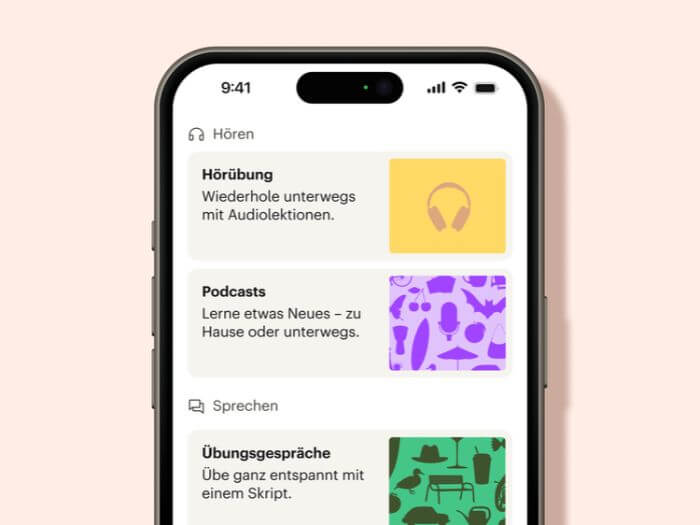
Babbel works differently. It's a structured dialogue course aimed at adults, with the grammar actually explained rather than left for you to infer. Lessons run 10 to 20 minutes.
The German path goes from A1 through B2, with additional content towards C1. One subscription covers all 14 languages. On price, it's about $8.95 a month on the 12-month plan, and the lifetime plan is $299.99, often discounted, as of November 2026.
Speaking is the weak spot. The practice is scripted: you repeat set phrases into speech recognition. Babbel's live classes for individuals shut in July 2025, and learners now get Babbel Speak, an AI speaking feature.
It's not the same as an unscripted conversation.
Best for: the German learner who's tired of guessing and wants a clear, adult explanation of why a sentence works.
Not for: the learner whose real problem is thinking on their feet in spoken German. The scripted speaking won't stretch you there, so plan to add real conversation practice.
2. Busuu: A Fluent Speaker Checks Your Homework
The lonely part of app learning isn't the streak. It's writing a German sentence and never knowing if a real person would understand it.
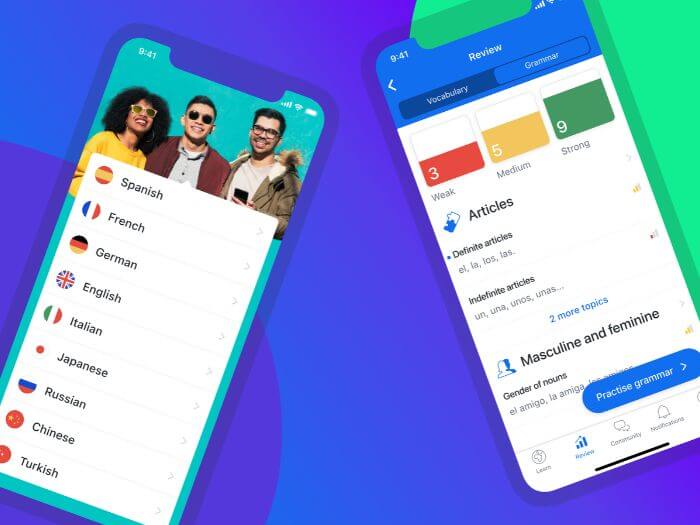
Busuu does something about that: you can send written and spoken exercises to fluent speakers in the Busuu community, who send corrections back.
The German course is structured and CEFR-mapped from A1 to B2. On price, there's a free tier, and Premium costs about $69.99 a year as of November 2026.
The human check is the real draw, but it isn't live. Corrections arrive later, and the quality varies because the correctors are volunteers.
Best for: the German learner who's done the tap-the-tile lessons and wants a structured A1 to B2 course where a real fluent speaker checks what they write and say.
Not for: anyone whose main need is live spoken German, because these corrections arrive later and are written or recorded, not in the moment.
3. StoryLearning: My Own Course, Weak Spots Named

This one is my own course, so I'll lean harder on its weaknesses than I would on anyone else's.
I won't talk it up. I'd rather you know the limits now than feel sold to later.
I've said it for years: “If you're not going to base your study on reading, tell me what you're going to do instead.” German Uncovered is built on that conviction.
You read and listen to one continuous story in German, and the grammar is unpacked from the story rather than drilled at you. The beginner course's story is Der Mann mit dem Hut, with native German audio.
That approach is called comprehensible input, which just means learning from German you can mostly follow.
You meet the language inside a story, not in isolated exercises. The story pulls you forward in a way a grammar table doesn't.
The level ladder runs from beginner to mastery, reaching C2. Three courses are on public sale: German Uncovered, Intermediate and Advanced. The in-between levels open only once you finish the one before.
Intermediate is for learners starting around B1 and aims to take you to upper-intermediate B2. Advanced bridges the gap from B2 towards a confident C1. A single course only takes you to roughly its own level.
Each course is $297 one-time, reduced from $397, for lifetime access, with a 7-day free trial and a 365-day guarantee, as of November 2026. Each course has 10 chapters.
Going from beginner to advanced means several courses, and I won't invent a total for you, because it depends where you start and how far you go.
Speaking support is Guided only. There's a speaking section in each course, but it's built for use with a tutor you find and pay for separately. Nothing in the course listens to you or answers back.
Across the method, you'll finish understanding far more German than you can say. You'll follow the story and still hesitate when the reply has to leave your own mouth.
It's premium priced and paid up front, and it asks for self-discipline, because there is no streak or game pushing you back in.
So the trade is this: you'll understand a lot of German, and you'll have to arrange the speaking yourself. The course gives you the materials, not the conversation partner.
Best for: the learner who wants to learn through stories, can pay up front for lifetime access, and doesn't need a live tutor built into the course.
Not for: anyone whose main priority is speaking from day one, who needs gamified nudges to keep showing up, or who wants a cheap monthly option. The speaking support won't get you talking without outside help, and the price is premium.
4. Pimsleur: German For The Car And The Dog Walk
Most German study assumes you're sitting in front of a screen. You're not. You're at the wheel, or holding a lead, but the language learning still needs to happen.
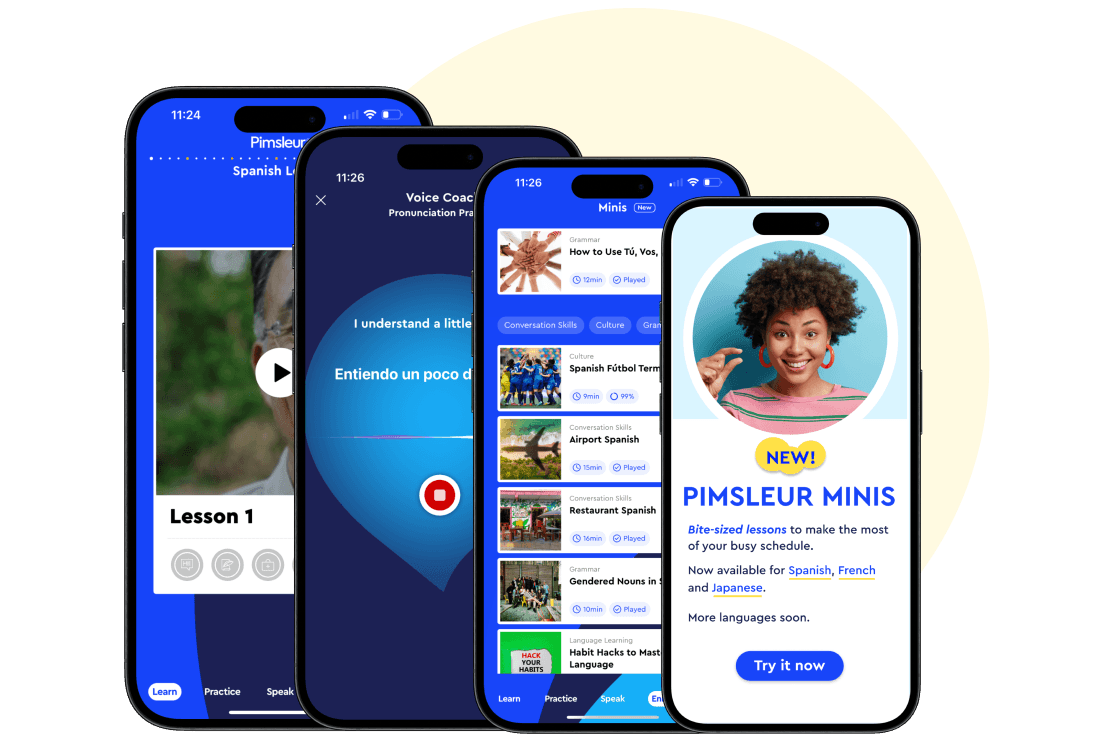
Pimsleur works on that problem. Each lesson is about 30 minutes of audio: a voice prompts you to answer out loud, then gives the correct response, and earlier phrases come back at spaced intervals.
The German course runs to five Premium levels, and Pimsleur says Level 5 takes you to an intermediate level.
As of November 2026, each level lists at $150 and the complete five-level course at $575, both often discounted. The app also adds Voice Coach, which gives AI feedback on pronunciation.
That's the bargain, though. The speaking is scripted, the vocabulary is narrow, and there's little reading or grammar depth. You'll learn to produce set phrases, not to build German sentences of your own.
Best for: the German learner who wants to make real use of dead time in the car or on the dog walk, and who will actually say the answers out loud.
Not for: the learner who needs to see German written down and understand why sentences work the way they do. This gives you the sound, not the German grammar.
5. italki: The Only One Here With A Person On The Other End
When I was learning Japanese in Tokyo, I understood a lot. I'd done the years of study, read plenty, sat through classes. But the moment it was my turn to speak, I froze.
What changed it wasn't another course. It was daily language exchanges, with a real person waiting for my answer. Within weeks, speaking felt ordinary.
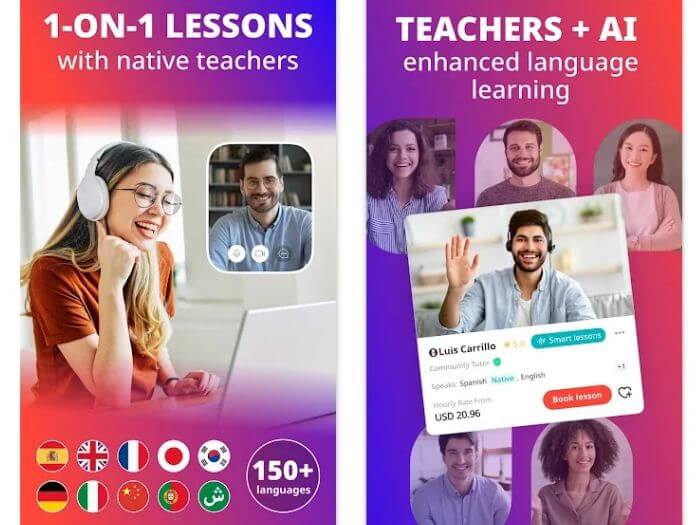
That's the whole reason italki exists. It's not an app with lessons. It's a marketplace of independent tutors who give live one-to-one video lessons.
Of the seven products scored on this page, it's the only one built around live conversation with a person. You pay per lesson; there's no subscription.
Tutors charge from $5 to $50+ an hour (as of November 2026), and many offer trial lessons, so you can test a tutor's style before committing.
There is no built-in curriculum, and quality varies from tutor to tutor. You or your tutor have to build the plan yourself. That's a real drawback if you want a structured German course handed to you.
Best for: the German learner who's coming from months of app tiles and can now recognise a lot, but still freezes when a real person asks a question and waits for an answer.
Not for: anyone who wants a set curriculum and clear levels. You'll need to rely on you tutor to plan out the lessons for you.
6. Langua: A Patient AI To Make Your Mistakes With
The first time a real German replies to you, the tidy sentences you practised on your phone don't survive. The person speaks faster, shortens the words, and waits. It's a lonely few seconds.
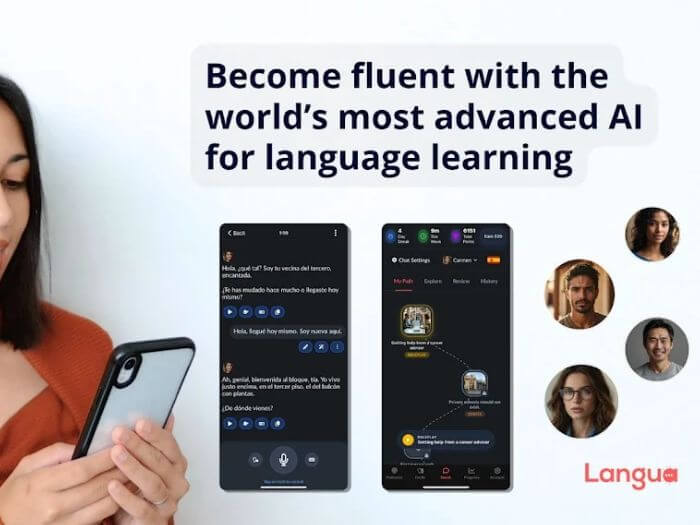
I've invested in Langua, so weigh this section with that in mind. It gives you an AI conversation partner you can talk or type to, and it corrects you in real time. It's practice for roughly A2 to C1, not a full course, and there's no curriculum.
Prices, as of November 2026: Standard is $19.99 a month or $149.99 a year, capped at 30 minutes a day. Unlimited is $29.99 a month or $199.99 a year, and a free account lets you try it before you pay.
What you're not getting is a course, and it's not a human. The transcription sometimes mishears you, and it's the newest product here, around since 2024.
Best for: the German learner around A2 to C1 who wants daily speaking practice without a human watching, with corrections in the moment.
Not for: anyone below A2, or anyone who wants a structured German course. You'll get the practice, not a plan as such.
7. Deutsche Welle: From Germany's Own Broadcaster
A German course that runs from A1 to C1 and costs nothing sounds too good to be real. This one comes from Germany's own public international broadcaster.
Deutsche Welle's method is a mix of a video story and a grammar workbook. Nicos Weg is its video course for beginners: it follows Nico from Spain on his adventure in Germany, with detailed grammar pages.
Deutschtrainer covers vocabulary and short sentences on 100 everyday topics, with bilingual audio.
It's free, as of November 2026, and there's a placement test to find your level.
There is no tutor and no feedback on your speaking. You can watch every episode and read every grammar page, and still never find out whether a real German would understand you. The material gives you plenty to study, but nothing checks what comes out of your mouth.
Best for: the German learner coming from daily app practice who wants structured material that reaches C1 without paying again.
Not for: anyone whose speaking is the bottleneck. It won't tell you how you sound, so you'll need a real person to talk to.
How I Scored This
Every product above is scored on the same eight criteria: best-for CEFR range, primary skill developed, speaking and output support, structure and guidance, time commitment, method, price and value, and evidence and track record. StoryLearning included.
Speaking support, weakest to strongest:
- None. No spoken output at all.
- Guided. Prompts to speak, but nothing listens and nothing comes back.
- Scripted. You repeat set phrases and software scores you.
- AI conversation. Unscripted practice with software that responds in real time, but no person is there.
- Feedback. A person responds to what you produced, but not live.
- Live human. Real conversation, in real time, with a person.
On that scale, StoryLearning sits at Guided: each Uncovered course has a speaking section, built to be used with a tutor you find and pay for separately, and nothing in the course itself listens or responds.
Prices are stated as of November 2026. Duolingo doesn't publish its Super or Max prices, so none are given for them.
The same eight criteria are used on the French and Spanish versions of this page, on the Duolingo alternatives for serious learners page, and on the comparison of online German courses for intermediate learners.
There are no affiliate links on this page and no commission on anything here. One thing to declare: I've invested in Langua, so weigh what I say about it with that in mind.
The Bottom Line: One Course, One Conversation Habit

My recommendation: Pair one deeper German course with one regular speaking habit. A course gives you the input. A conversation partner gives you the output. They're two separate jobs.
Babbel is for the learner who's tired of guessing and wants a clear, adult explanation of why a sentence works.
Busuu is for the learner who's done the tap-the-tile lessons and wants a structured A1 to B2 course where a real fluent speaker checks what they write and say.
StoryLearning's German Uncovered is for the learner who wants to learn through stories, can pay up front for lifetime access, and doesn't need a live tutor built into the course.
Then add a speaking habit. At the top is italki.
If you're coming from an app that rewarded correct taps, you understand more than you can say. italki puts you with a real person to correct you while you speak.
Below that is Langua, an AI conversation tool I've invested in, for daily speaking practice around A2 to C1 without a human watching, with corrections in the moment.
Pimsleur sits under that, scripted audio for the car or the dog walk. It gives you the sound, not the grammar, and it only works if you actually say the answers out loud.
If money's tight, Deutsche Welle's German courses are free from A1 to C1. Add a handful of italki lessons, where tutors start at $5 an hour.
That's a cheap start, not a complete course. Deutsche Welle gives you no feedback on how you sound, so you'll need a real person to talk to.
If you only do one thing, book regular conversation practice. You can know every rule in German grammar and still freeze when someone asks you a question.
Speaking is a skill, like tennis. You can watch the pros and know the rules, but until you've hit a thousand serves, you don't have it.
And, finally: there are no affiliate links on this page. I scored StoryLearning on the same eight criteria as everyone else.
FAQ Best Alternatives To Duolingo For German
What Is Better Than Duolingo For Learning German?
There isn't one better app for everyone, because it depends on what's missing.
If you want structure and a real fluent speaker checking your work, Busuu's German course runs A1 to B2. If speaking is the bottleneck, italki gives you live one-to-one tutors.
If free is the priority, Deutsche Welle's German courses run A1 to C1. And if you'd rather build reading and listening through one continuous story than tap through more exercises, StoryLearning's German Uncovered is worth a look.
Can Duolingo Get You To B2 In German?
Duolingo's German course can now carry you through B2 content, but B2 on a screen is not B2 in a conversation. Since April 2026, that path goes beyond the old A2 ceiling.
I still get messages from learners with a 600-day streak who can't hold a conversation. Finishing the B2 material isn't the same as using German when someone answers back.
Use the app for groundwork. Then go talk to a real person.
Is There A Free Alternative To Duolingo For German?
Yes. Deutsche Welle, Germany's public international broadcaster, offers free German courses from A1 to C1, including Nicos Weg, a video course for beginners. Busuu also has a free tier.
The catch: neither gives you feedback from a live person on your speaking. If conversation is what you're stuck on, you'll still need a real German speaker.
Should I Switch From Duolingo To Babbel For German?
Yes, switch if you want German grammar explained and structured dialogue lessons. Babbel's German course runs from A1 up to B2, with extra content towards C1, so it takes you well past the basics.
The catch is the speaking practice. It's scripted speech recognition, which doesn't stretch you to think on your feet. Pair Babbel with real conversation, and you've covered the gap.
One subscription covers all 14 of Babbel's languages, so you're not paying extra for German.
Why Can't I Understand German When People Speak It, Even After Duolingo?
You can't understand German after Duolingo because spoken German doesn't sound like app German.
The textbook form is Hast du einen Stift? (Have you got a pen?). In real life you'll usually hear Hast du ‘nen Stift?
The fix is hours of real German you can mostly follow, until you stop listening for the textbook version.
What Is The Best Way To Practise Speaking German After Duolingo?
The best way to practise speaking German after Duolingo is to book a real conversation with a person this week, even a short one. italki tutors start at $5 an hour.
If you're not ready for a person, try Langua. It gives you an AI conversation partner that corrects you in real time. I've invested in Langua, so you deserve to know that.
Or try Pimsleur's 30-minute audio lessons for scripted, hands-free practice where you answer out loud.

Olly Richards
Creator of the StoryLearning® Method


Olly Richards is a renowned polyglot and language learning expert with over 15 years of experience teaching millions through his innovative StoryLearning® method. He is the creator of StoryLearning, one of the world's largest language learning blogs with 500,000+ monthly readers.
Olly has authored 30+ language learning books and courses, including the bestselling "Short Stories" series published by Teach Yourself.
When not developing new teaching methods, Richards practices what he preaches—he speaks 8 languages fluently and continues learning new ones through his own methodology.