
People write to me with the same story.
They had a 600-day streak. They showed up every morning, tapped the right answers, and felt like they were getting somewhere. Then a real person spoke to them in the language, and their mind went empty.
It wasn't laziness. The practice they'd done never asked them to speak.
So they go looking for the one thing those lessons never gave them: speaking practice without an audience. Something they can do badly at first, alone, where nobody watches them trip over the first sentence.
That's the promise Jumpspeak makes. It's an app that advertises speaking practice with an AI, from the first lesson.
In this Jumpspeak review, I'm not going to sell it to you. Below, I'll show you what its own pages, terms and help centre say, so you can decide without a sales pitch.
Is Jumpspeak worth it? For one kind of learner, yes: someone learning Spanish, French, German, Italian or English who studies but freezes the moment they have to speak.
The real cost, as of September 2026, is $69 to $79 for the first 12 months bought on Jumpspeak's own website, and the checkout states it renews at $138 to $159 a year.
Jumpspeak teaches through short spoken conversation lessons and an AI tutor you talk to. For someone who freezes in conversation, that's the entire appeal. The question is whether the limits underneath it leave you enough practice.
The catch that isn't on the pricing page: on the standard Premium plan, conversation with the AI is capped at 7 minutes a day and 60 minutes a month.
I haven't used Jumpspeak, full stop, so this isn't a diary of a month with it. You're getting what its own pricing pages, checkout, terms, refund policy and help centre say, checked on one day in September 2026, plus its public ratings.
The rest of this page breaks down the cost in full, the small print, and who Jumpspeak actually suits.
Table of Contents
What Jumpspeak Actually Is, And How It Works
Most language apps promise conversation from day one, but the details of what you'll actually do in a lesson tend to sit behind the sign-up screen.
You're often asked to hand over a card before you know what a lesson actually looks like.
Jumpspeak is at least clear about the basics. It's run by Rype, Inc., of Miami, Florida, and as of September 2026 it's an app for iPhone, iPad and Android. There's no web or desktop version, and nothing works offline.
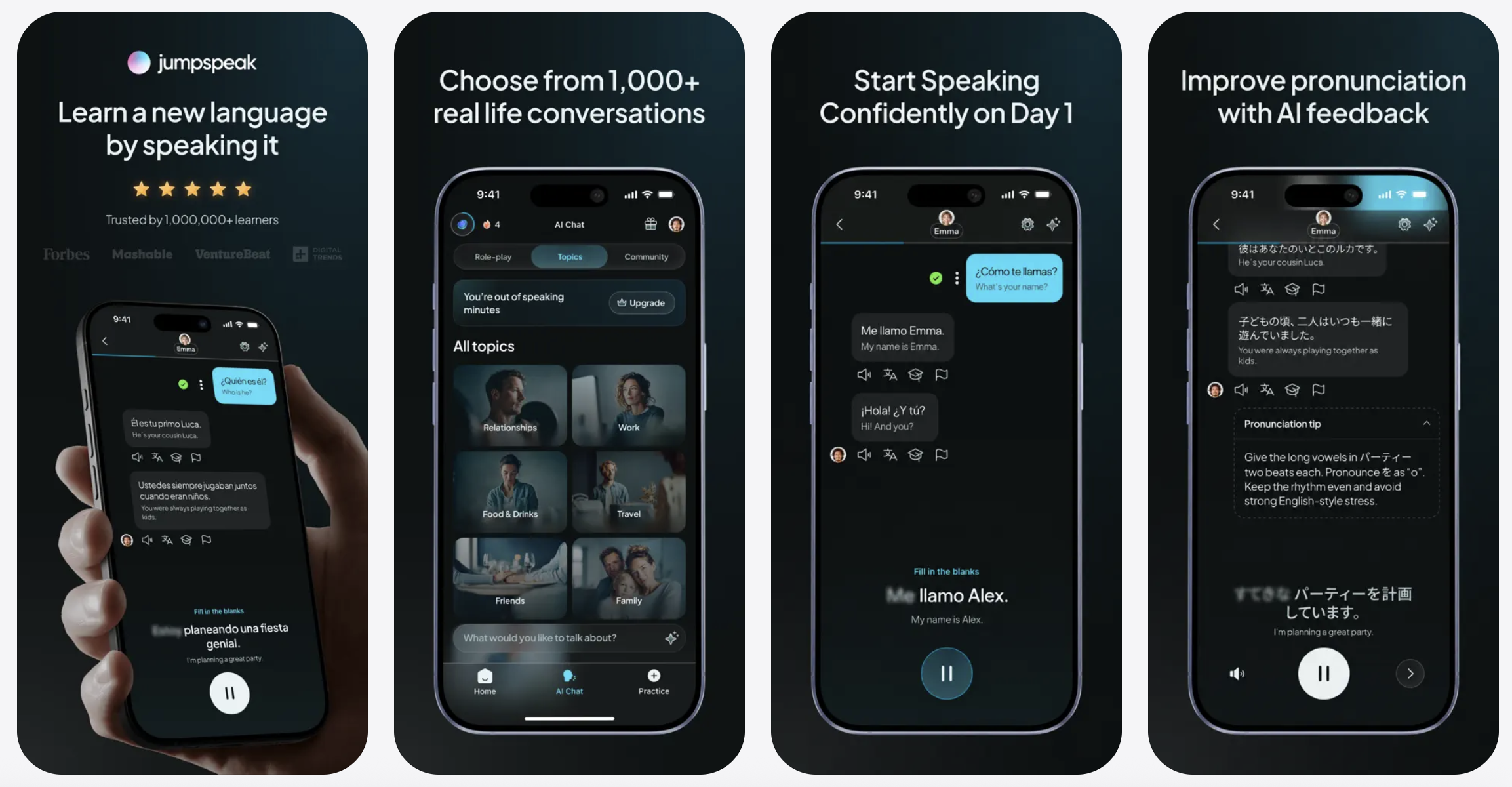
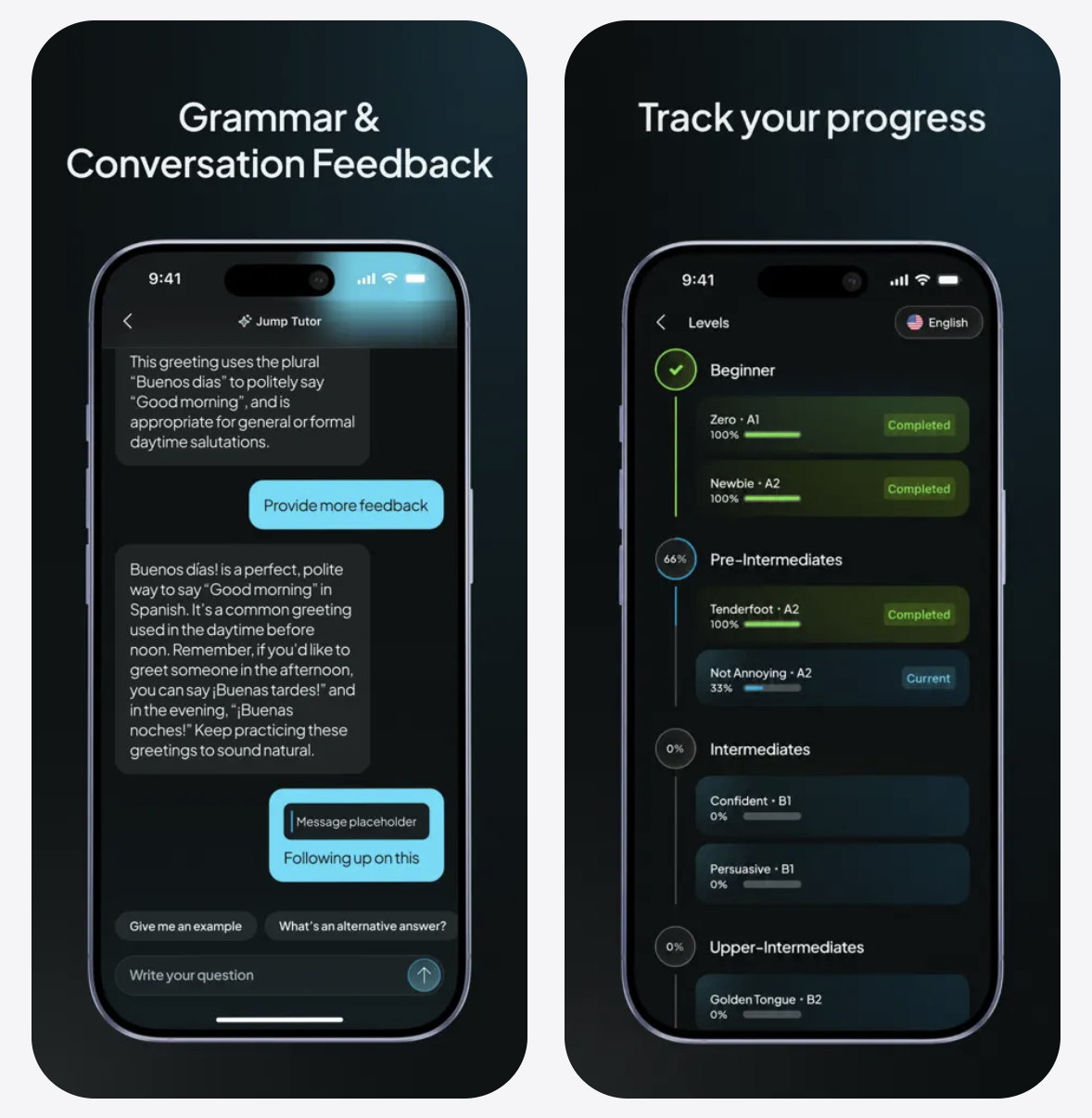
Each lesson has four parts: Listen, Write, Speak and Conversation. Most take about three minutes, so it's a small daily ask.
The library is substantial. There are more than 1,000 lessons, grouped by theme: travel, dating, work, food, health and getting around. There's also a Stories section of short audio dialogues with comprehension questions and a transcript you can open.
The centrepiece is the AI Tutor. You hold role-played conversations with a chatbot, by voice or by text. After each session it gives written feedback on grammar, vocabulary and speaking, and you can choose the scenario, the voice and the tone.
If you can't yet form a sentence, Bridge mode lets you speak or write in your own language while the AI answers in the language you're learning. Jumpspeak aims it at beginners. It's a bridge in the true sense: the AI carries the target language while you stay in your own.
Levels run from A1 to C1, grouped in five tiers, and they're not locked. You don't have to grind up from the bottom. You can start at any level, any time.
Speaking is a skill, like tennis. You can know the rules and watch the professionals, but until you've done it yourself many times you don't have it in your body. An app built around talking is, at minimum, a reasonable idea.
What Jumpspeak deliberately doesn't do is just as deliberate. It doesn't teach grammar as rules, and it doesn't use flashcards or spaced repetition. That's a choice, not an oversight: the app is designed to get you speaking, not to run a revision system.
The honest state of the speech recognition, in Jumpspeak's own words, is that it's highly accurate but not infallible. A slight mispronunciation can still pass. Background noise or a poor connection can cause it to reject a correct answer.
Then there's the price. It isn't one number, and it depends which of Jumpspeak's pages you land on.
How Much Does Jumpspeak Cost?
On the same day, two of Jumpspeak's own pages offered the same 12 month plan at two different prices. Every figure below is as of September 2026.
That's not a rounding error. It's the same plan, on the same day.
The pricing page showed $79. Another Jumpspeak offer page showed $69.
Both checkouts called the first year an intro offer. The word ‘intro' is doing a lot of work there. It tells you the first year isn't the permanent one.
The renewal line is the part that's easy to miss. The $79 offer renews at $159 a year.
The $69 offer renews at $138 a year.
The 3 month plan is $69. The checkout states it renews at $69 a quarter, which is $276 over a year.
Premium AI, the plan with no cap on AI conversation, is $199 a year after a 7 day free trial.
Lifetime Premium was $269 at the checkout.
There's a free version. It samples some lessons at each level and allows a limited number of AI conversations.
You can open it, have a look, and try a handful of conversations. That's enough to see the shape of the lessons.
But the standard Premium plan has no free trial. Jumpspeak's help centre says it comes with a 100 day money-back guarantee paid up front instead, on a first purchase made on Jumpspeak's own website.
The 7 day free trial is attached to some offers only, and Jumpspeak says free trials are not available to everyone. So a free version and a free trial are not the same thing here.
If you buy inside the app, the numbers are harder to reason about. On the US App Store in September 2026, Jumpspeak's in-app purchases were listed from $49.99 to $499.00, with names and prices only and no billing periods.
Any one of those prices might be a month, a year, or lifetime. The listing doesn't say.
Then there are the things around the price. At the checkout, there's an optional video masterclass at $37. It's shown against a higher figure and unticked by default.
Two Jumpspeak offer pages showed a sale ending today and a ten minute countdown. I reloaded one of those pages once. The countdown started again from ten minutes.
I didn't need to reload it again. Once was enough to see what the timer does.
A second page showed the same ten minute countdown on first load.
The homepage's main button opens a quiz that asks your age band before showing any price. The pricing page linked in the footer shows the prices directly.
So the price you're shown depends on which Jumpspeak page you land on, and a countdown sits over all of it. A countdown that restarts when the page reloads isn't telling you much about the price. It's telling you about the page.
What Jumpspeak Gets Right, And Where It Falls Short
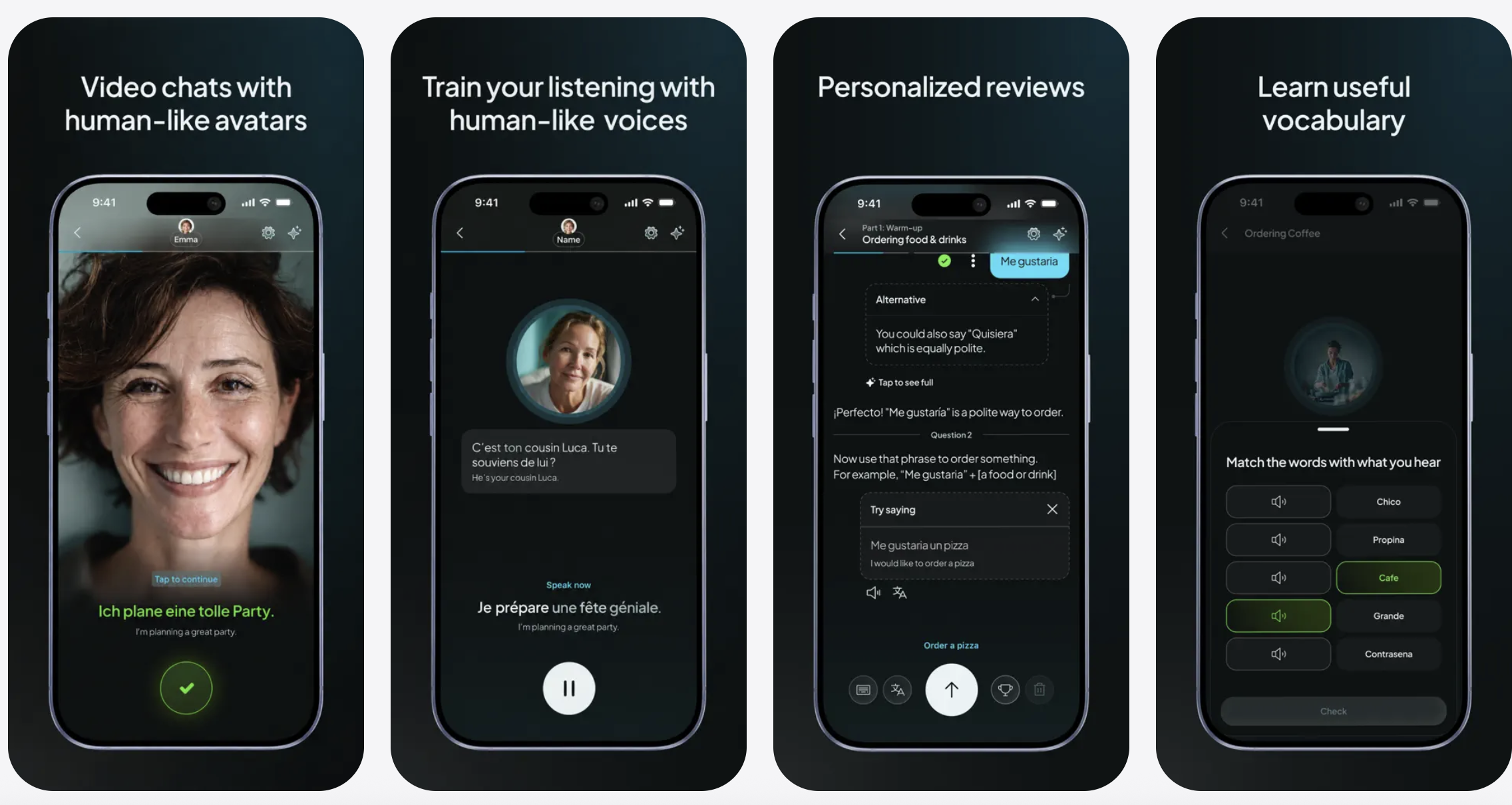
The part of speaking practice you avoid is the first sentence out loud, with no human listening. Jumpspeak is built around exactly that.
From the first lesson, you're speaking aloud in a real situation, and the only thing listening is AI. Bridge mode counts as AI conversation, so the cap below applies to it too.
On the standard Premium plan, AI conversation is capped at 7 minutes a day and 60 minutes a month, shared across every AI feature. The scripted lessons aren't capped, but the AI conversation is.
That cap isn't on the pricing page. It's written in the help centre instead.
Then there's the language question. As of September 2026, the homepage claims 23 languages and the FAQ says 20, and Jumpspeak's own pages don't agree on which ones get a full course.
The five languages listed earlier as having a full course are confirmed everywhere. The FAQ names 13 languages as AI tutoring only, and Portuguese and Dutch sit outside both lists.
So for many other languages, what you're buying is AI conversation only, but not for all of them. Check your own language on Jumpspeak's site before you pay.
Best for: the learner who wants to get past the fear of speaking aloud and will actually show up for short daily sessions.
Not for: anyone planning to rely on it as their main conversation practice, because the cap will run out fast.
Refunds, Renewals And Cancelling: The Small Print In Plain English
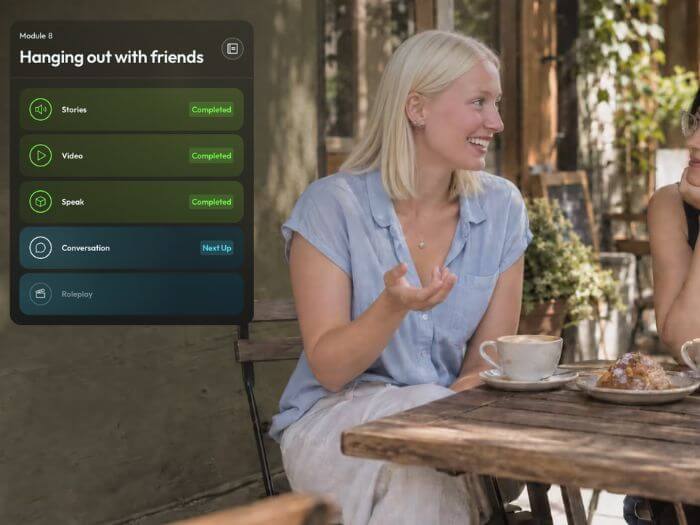
What happens if I change my mind? That's the question Jumpspeak's Refund Policy page, last updated 2 March 2026, answers. As of September 2026, here's how it reads in plain English, and it's worth knowing before you pay.
The headline guarantee is 100 days. Jumpspeak offers a full refund within 100 days of a first Premium purchase made through its own website. That's the longest window it offers.
One wrinkle is worth knowing. Jumpspeak's older terms of use and its newer refund policy don't agree in places. This section follows the newer refund policy.
The first condition is the one people overlook. If you bought through the Apple App Store or Google Play, Jumpspeak won't refund you at all. Apple or Google handle those purchases, and Jumpspeak says it has no access to or control over them.
You'll need to use Apple's or Google's refund process instead.
The second condition is the renewal. If a subscription renews and you want that charge back, you have 24 hours from the charge to ask. After 24 hours, it's non-refundable.
The third condition covers the smaller products. Premium AI, live tutoring and the masterclasses have a 30 day window. The policy says partial and prorated refunds aren't offered under any circumstances.
Every Jumpspeak subscription renews automatically unless you cancel it first. That includes a subscription bought at an intro price. Renewals are billed at the non-discounted rate, not the intro rate.
Jumpspeak's terms say: ‘you will not receive a notice from us that your trial period has ended or that the paying portion of your subscription has begun.' Its help centre repeats that you may not always get a reminder before a free trial ends. The reminder is your job.
Cancelling is not the same as getting a refund. Cancelling stops the subscription renewing, and that's it. You keep access until the end of the period you've paid for, but it doesn't refund what you've already paid.
Where you cancel depends on where you bought. A subscription bought on Jumpspeak's website is cancelled in the app or through Jumpspeak's billing portal.
One bought through Apple or Google is cancelled in their subscription settings, because Jumpspeak can't cancel those on your behalf.
If you buy, do four things before you enter your card details. Buy on the website, because that's the only purchase the 100 day guarantee covers. Read the renewal line at the checkout so you know what the full rate will be.
Put the renewal date in your calendar, or cancel the renewal the day you buy. That way you never have to find out whether 24 hours was enough. And if it's not for you, ask inside the guarantee window, not after it has closed.
Is Jumpspeak Legit?
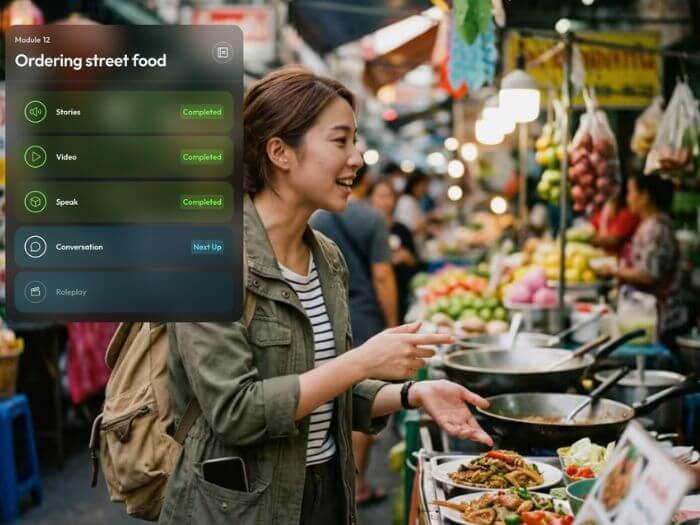
Yes, in the plain sense people mean. Jumpspeak is a real app from a real company, Rype, Inc., and it's been on the App Store since January 2021. Version 5.5.2 was released on 17 September 2026, two days before I checked, so treat everything below as a September 2026 snapshot.
On the US App Store, as of 19 September 2026, it was free to download and held 4.6 out of 5 from 15,855 ratings. On Google Play the same day it sat at 4.1 out of 5 from about 7,800 reviews, with more than 500,000 downloads.
I read both figures directly from apps.apple.com and play.google.com, both public listings rather than Jumpspeak's own marketing, and Google Play prints its number as reviews rather than ratings, so that's the word I'll use.
Those are the ratings from the two main app stores, and they're not trivial.
Trustpilot tells a more divided story. Its profile showed a TrustScore of 3.2 out of 5 from 2,225 reviews when I read it on 19 September 2026. 46 per cent of reviews were five stars, and 28 per cent were one star.
An average hides the split, and the split matters.
Trustpilot's own summary of recent reviews on that page says customers consistently report negative experiences with subscription arrangements, while the lessons and the customer support team are often praised.
The profile also shows the company has replied to 83 per cent of its negative reviews and has claimed the page since October 2020. Trustpilot states on the page that it does not fact-check reviews.
The Better Business Bureau profile for Jumpspeak showed a rating of F on 19 September 2026, with no accreditation, 67 complaints closed in the last three years, and 29 customer reviews.
The BBB says a rating represents its opinion of how a business is likely to interact with its customers, and that it is not a guarantee of a business's reliability or performance.
It also says customer reviews are not used in the letter-grade calculation, and the reasons behind this rating could not be read.
That's one named source among several, and I'm not going to lean on it any harder than that.
But the part that actually answers the question sits in Jumpspeak's own published terms and refund policy. A buyer should know three things before paying.
- The subscription renews at the full rate.
- The window to get a refund on a renewal charge is 24 hours.
- The guarantee does not cover purchases made in the app stores.
All three are written in Jumpspeak's published terms and refund policy. If you know them before you pay, you're unlikely to become the next complaint. Those terms, not the ratings, decide how you'll feel once the first renewal lands.
What I'd Read Alongside Jumpspeak
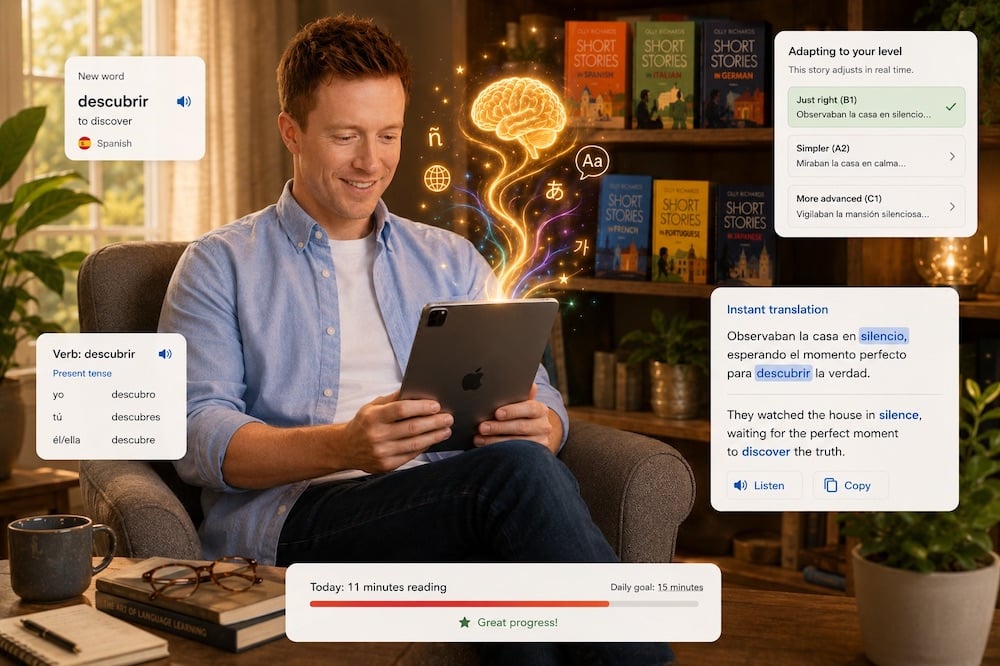
My own product, the StoryLearning App, is a reading app and won't replace Jumpspeak. I'll lean harder on the StoryLearning App's weaknesses than I did on Jumpspeak's, because the StoryLearning App is my own.
What Jumpspeak gives you that the StoryLearning App doesn't is speaking out loud from the first lesson, with pronunciation scoring and a conversation partner, to an AI rather than a person.
But a word you learn on Monday and can't find on Friday hasn't gone anywhere. It just hasn't turned up since. Reading is where language keeps turning up, in sentences and stories, so I suggest 15 minutes a day of reading.
If you're not going to base your study on reading, tell me what you're going to do instead.
The stories are written for you, by AI, for your level, in genres you pick from a list of eight. You save words as you read, and they come back in later stories at growing intervals until they stick, which is spaced repetition inside new stories, not on cards.
You can trial the audio narration with a free audio each month, and full narration for every story is available on a separate plan.
The approach is usually called comprehensible input, which just means learning from stories you can mostly understand.
The StoryLearning App costs $15 a month or $135 a year, in US dollars, as of September 2026. A subscription gives you up to 20 new stories a month, across all your languages together. There's no free trial, and no free version.
The StoryLearning App has no speaking practice of any kind, and no conversation with an AI or a tutor. It's not for complete beginners, because you need an elementary A2 foundation before the stories work.
Jumpspeak's levels start at A1, so Jumpspeak is built for someone starting from nothing, and at the very start you can't use the StoryLearning App yet.
The monthly story allowance is capped at 20 new stories, shared across every language you study. The StoryLearning App launched in 2026. It runs in a web browser on a phone, tablet or computer, and there's nothing to install.
It's not in the App Store or Google Play, and you can't read offline. It covers ten languages, all of them European. If you're learning anything outside that set, you can't use the StoryLearning App at all.
Best for: the learner who wants to read their way into the language for 15 minutes a day, and who already has an A2 foundation.
Not for: a complete beginner with no foundation, anyone who wants speaking practice, an App Store download or offline reading, and anyone learning a language outside the StoryLearning App's ten European languages.
The StoryLearning App
Price: $15 a month, or $135 a year (US dollars), as of September 2026
Free trial: none
New stories: up to 20 a month, across all your languages (re-reads not counted)
Audio: a free audio each month to trial the narration; full narration for every story on a separate plan
Languages: Danish, Dutch, English, French, German, Italian, Norwegian, Portuguese, Spanish and Swedish, with separate Spain and Latin American Spanish, and European and Brazilian Portuguese
Level: from about A2 (elementary) to advanced; not for complete beginners
Where it runs: web browser on a phone, tablet or computer; not in the App Store or Google Play
Jumpspeak Review Bottom Line: Is Jumpspeak Worth It?
Buy Jumpspeak if
- your language is one of the five with a full structured course,
- you've got the words but freeze when someone speaks to you,
- and you'll buy on Jumpspeak's own website at the first-year price with the renewal date written down.
If that isn't you, skip it.
It's a narrow yes for a specific learner, and a clean no for everyone else. The plan itself matters less than those conditions.
Before anything else, check that your own language is properly covered. That single check decides more than any feature list will. If your language isn't one of the full courses, you're paying for a much thinner experience than the marketing suggests.
I know why an app built around talking has a sound premise. When I lived in Japan, I'd already spent a couple of years studying Japanese, taking classes and working through textbooks and flashcards. I could understand a fair amount, but I panicked whenever I tried to speak.
In Tokyo I stopped studying and arranged language exchanges every evening after work: an hour of English, an hour of Japanese. After three weeks I'd gone from anxious and fumbling to genuinely confident. After three or four months my Japanese had transformed.
The difference wasn't new knowledge. It was using what I already had out loud.
That's why Jumpspeak's core idea isn't silly, whatever its limits. The premise is sound. The conditions are narrow.
If you buy it, do one thing straight away: write the renewal date down somewhere you'll see it. Then open the app and talk.
If you want to take a look at other apps that solve the speaking problem, Pimsleur is another solution, although it's not AI conversation. If you do want to chat to an AI, have a look at my review of AI language apps and look for AI speaking options like Duolingo Max.
Jumpspeak FAQ
How much does Jumpspeak cost?
Jumpspeak's first-year price is $69 to $79, but the checkout states it renews at $138 to $159 a year, as of September 2026.
If you'd rather pay quarterly, Premium is $69 for three months and renews at $69 a quarter. Premium AI, which removes the cap on AI conversation, is $199 a year, and Lifetime Premium was $269.
One thing to know: that first-year figure depends on which Jumpspeak page you land on, so the number you see may not match the figure I've quoted here.
Is Jumpspeak legit?
Yes, Jumpspeak's legit: a real app from a real company, sold openly, with a 100 day money-back guarantee on a first purchase made on its website. That guarantee doesn't cover app store purchases.
On the US App Store in September 2026 it was rated 4.6 out of 5 from 15,855 ratings. On Trustpilot in September 2026 it sat at 3.2 out of 5 from 2,225 reviews, 46 per cent five stars, 28 per cent one star.
Trustpilot's summary points to subscription arrangements, covered by Jumpspeak's terms. Read before you buy.
Is Jumpspeak worth it?
Jumpspeak is worth it only for a narrow kind of learner: someone studying Spanish, French, German, Italian or English who already knows the words but freezes when it's time to speak.
If you're outside those five, it's probably not for you unless you've checked: many of Jumpspeak's other languages are AI conversation only, and the standard plan caps that at 7 minutes a day.
Buy on Jumpspeak's website at $69 to $79 for the first 12 months. Know it renews at $138 to $159 a year, as of September 2026.
Does Jumpspeak have a free trial?
Jumpspeak offers a 7 day free trial on some offers only, not on the standard plan. The standard plan has no trial. Instead it comes with a 100 day money-back guarantee on a first purchase made on Jumpspeak's own website, and app store purchases aren't covered, as of September 2026.
If you do take a trial, read the billing terms first. Jumpspeak says it converts to a paid subscription automatically, and you won't get a notice when the trial ends or the paying part begins.
How do I cancel Jumpspeak and get a refund?
Cancel a Jumpspeak website purchase in the app under Settings or its billing portal. If you bought through the App Store or Google Play, cancel in Apple's or Google's subscription settings, because Jumpspeak can't cancel those for you.
Refunds differ: a first Premium purchase on Jumpspeak's website can be refunded in full within 100 days, but a renewal only within 24 hours. App Store and Google Play purchases are refunded by Apple or Google, not Jumpspeak.
Cancelling stops the next charge, and access runs to the end of the period.
Which languages does Jumpspeak teach?
Jumpspeak's full course covers five languages: Spanish, French, German, Italian and English.
Beyond those five, its own pages don't agree about what you get. Its FAQ names 13 languages as AI tutoring only, but Portuguese and Dutch fit neither group.
So many of the others are AI conversation only, not all of them. The homepage claims 23 languages, the FAQ says 20.
Check your language on Jumpspeak's website before you pay.
Is Jumpspeak better than Duolingo?
Jumpspeak isn't better than Duolingo, and it isn't worse: they do different jobs.
Duolingo is a free app with quick, bite-sized lessons in more than 40 languages, plus a paid tier. Jumpspeak is paid and built around speaking aloud to an AI from lesson one.
If you've got a long streak and still freeze when someone speaks to you, speaking practice is missing.
It only holds if your language is one of the five with a full course, and the standard plan caps AI conversation at 7 minutes a day.

Olly Richards
Creator of the StoryLearning® Method


Olly Richards is a renowned polyglot and language learning expert with over 15 years of experience teaching millions through his innovative StoryLearning® method. He is the creator of StoryLearning, one of the world's largest language learning blogs with 500,000+ monthly readers.
Olly has authored 30+ language learning books and courses, including the bestselling "Short Stories" series published by Teach Yourself.
When not developing new teaching methods, Richards practices what he preaches—he speaks 8 languages fluently and continues learning new ones through his own methodology.